
Scroll through Facebook for more than a few minutes and you’ll almost certainly see them.
Ads claiming ordinary people are making hundreds of dollars per day from home using a “simple online system.” Sometimes it’s a video showing someone working from a laptop on the beach. Other times it’s a screenshot of massive earnings supposedly generated by an automated business.
The message is always the same:
- Quit your job
- Make money online
- Work from home with your laptop
For someone searching for a side hustle or a way to escape the traditional 9-to-5 grind, these ads can be incredibly tempting.
But here’s the reality most people don’t see.
Behind many of these Facebook work-from-home ads is a carefully designed marketing funnel built to convert curiosity into sales. While not all funnels are scams, many of them are designed to lead beginners through a series of upsells that can quickly cost thousands of dollars.
Many of these Facebook side hustle ads follow the same funnel structure designed to move beginners toward paid training programs.
At Scam Busters USA, we’ve investigated numerous programs that are frequently promoted through Facebook ads, including:
- Legendary Marketer
- Commission Hero
- Laptop Rich Challenge
- Freedom Income
- My Home Cashflow System
While each program markets itself differently, the structure behind these opportunities is often nearly identical.
The problem is that many beginners don’t realize how these funnels work until they’re already deep inside the sales process.
That’s why understanding the truth behind Facebook work-from-home ads is so important.
In this investigation, we’re going to break down:
- How Facebook income ads actually work
- Why these ads keep appearing in your feed
- The funnel system behind many online income offers
- Warning signs of misleading work-from-home opportunities
- Why beginners often struggle to make money with these systems
Most importantly, we’ll explain what legitimate online business training actually looks like so you can avoid expensive mistakes and focus on building something sustainable.
Let’s start with the question most people ask first.
Why are there so many work-from-home ads on Facebook in the first place?
Why Facebook Is Flooded With Work-From-Home Ads
To understand why these ads appear so frequently, you first need to understand how Facebook advertising works.
Facebook isn’t creating these work-from-home opportunities. Instead, the platform simply provides an advertising system that allows businesses and marketers to promote their offers to targeted audiences.
Anyone with a marketing budget can create an ad and run it on Facebook.
This means thousands of advertisers are competing for the attention of people who are interested in things like:
- Side hustles
- Online income
- Working from home
- Entrepreneurship
Facebook’s algorithm is extremely good at identifying these interests. Once someone clicks on or interacts with one “make money online” ad, the platform quickly assumes that person is interested in similar opportunities.
That’s why you’ll often start seeing more and more of these ads appearing in your feed.
From Facebook’s perspective, it’s simply showing you content that matches your interests.
From the advertiser’s perspective, Facebook is one of the most powerful tools available for reaching beginners who are curious about making money online.
The Role of Affiliate Marketing
Many of these ads are created by affiliate marketers promoting online courses or business opportunities.
Affiliate marketing itself is not a scam. In fact, it’s one of the most common online business models used today. If you’re unfamiliar with how it works, you can read our guide: The How-To Guide of Affiliate Marketing.
In simple terms, affiliate marketers earn commissions by promoting other companies’ products.
When someone clicks their referral link and makes a purchase, the marketer receives a percentage of the sale.
This model can be completely legitimate when it’s used ethically and transparently. In fact, many successful online entrepreneurs rely on affiliate marketing as part of their business strategy. You can explore more about the skills required in our article on essential skills for online entrepreneurs.
The problem begins when marketers start promoting opportunities using unrealistic promises or misleading advertising.
Why These Ads Keep Appearing
Another reason these work-from-home ads are so common is simple economics.
If an advertiser spends $100 on Facebook ads and earns $300 in commissions from people buying a course or program, the system becomes extremely profitable.
When a funnel starts converting well, marketers simply increase their ad budgets and run more ads.
This is why the same opportunity may appear repeatedly in your feed, sometimes promoted by multiple advertisers at the same time.
In many cases, these ads lead to funnels promoting programs that promise fast financial success with minimal effort.
But as we’ve seen across many investigations on Scam Busters USA, including systems like the Invisible Affiliate System, the reality behind these opportunities is often very different from what the advertisements suggest.
Understanding how Facebook advertising and affiliate marketing work is the first step in recognizing why these work-from-home ads are everywhere.
But the most important thing to understand isn’t the ads themselves.
It’s the funnel that begins after you click them.
Because once someone clicks one of these ads, they’re usually entering a carefully designed marketing system built to guide them toward a purchase.
Let’s take a closer look at how that funnel works.
How the Facebook Online Income Funnel Works
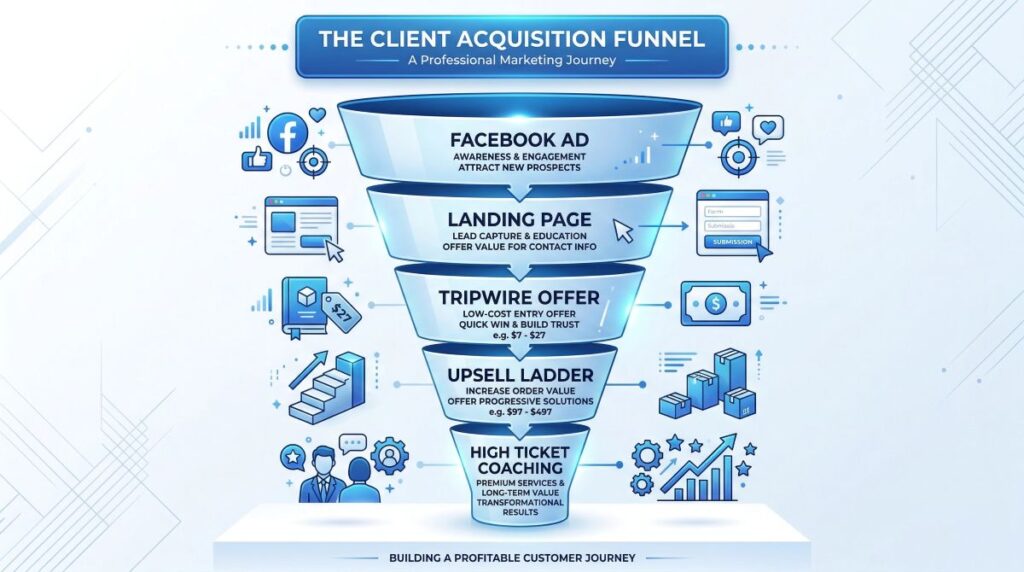
Once someone clicks on one of these work-from-home ads, they usually enter what’s known as a sales funnel.
A funnel is simply a step-by-step marketing process designed to guide someone from curiosity to making a purchase.
In theory, funnels are a normal part of online marketing. Many legitimate businesses use them to introduce products or services to potential customers.
The issue with many of the “make money online” funnels promoted on Facebook is how aggressively they are structured to push beginners toward expensive upsells.
Let’s look at how these funnels typically work.
Step 1: The Facebook Advertisement
Everything begins with the advertisement itself.
These ads are designed to capture attention quickly and trigger curiosity. They often promise things like:
- Making money online with little experience
- A simple system anyone can follow
- Automated income using AI or marketing tools
- The ability to quit your job and work from home
Sometimes the ads feature screenshots of income dashboards or testimonials from people claiming they made thousands of dollars.
The goal of the ad isn’t to explain the opportunity in detail.
The goal is simply to get you to click.
Step 2: The Landing Page
After clicking the ad, visitors are usually sent to a landing page.
This page might ask you to:
- Enter your email address
- Watch a presentation video
- Register for a “free training” webinar
The page often introduces a new concept or system that promises to reveal the “secret” to making money online.
At this stage, the funnel is primarily designed to capture your contact information and build curiosity.
Step 3: The Sales Presentation
Next comes a longer sales presentation.
This might be a video or webinar that explains how the opportunity supposedly works.
These presentations often include:
- A personal success story
- Screenshots of earnings
- Testimonials from students or members
- Claims that the system is beginner-friendly
While some information may be legitimate, the presentation is usually structured to lead toward the first purchase in the funnel.
Many of the programs we’ve investigated follow this structure, including opportunities like Legendary Marketer, Commission Hero, and the Laptop Rich Challenge.
Each one uses a slightly different marketing angle, but the funnel design is often very similar.
Step 4: The Entry-Level Offer
Once the presentation ends, visitors are usually offered a relatively inexpensive product.
This might cost:
- $7
- $27
- $97
In marketing, this type of low-priced front-end product is often called a tripwire offer.
A tripwire is designed to convert a curious visitor into a paying customer as quickly as possible. The price is intentionally kept low so the purchase feels like a small risk.
These entry-level products are often marketed as:
- A starter course
- A blueprint for online income
- A beginner training system
But in many funnels, the tripwire is not the main product.
Instead, it acts as the gateway into a larger sales funnel, where additional training programs, coaching packages, and automation tools are introduced later.
This is why many beginners believe they’re buying a simple starter course, only to discover that the funnel continues with much more expensive offers.
Step 5: The Upsell Ladder
After someone buys the first product, additional offers usually follow.
These upsells may include:
- Advanced training programs
- Done-for-you marketing systems
- Coaching packages
- High-ticket masterminds
This is where the costs can increase dramatically.
Some funnels promote coaching programs that cost thousands of dollars, which can be overwhelming for beginners who originally believed they were buying a small starter course.
Programs like Freedom Income and My Home Cashflow System have been associated with funnel structures that rely heavily on upsells after the initial purchase.
Why These Funnels Work So Well
Despite the criticism surrounding many online income funnels, they continue to succeed for a simple reason:
They tap into powerful emotions.
People who click these ads are often looking for:
- Financial freedom
- A way to work from home
- A way to escape a stressful job
- A chance to build something of their own
These motivations are completely understandable.
The problem is that many funnels focus more on selling the next product than actually teaching the skills required to build a sustainable online business.
Understanding this funnel structure can help you recognize when an opportunity is designed primarily to generate sales rather than provide meaningful training.
Warning Signs of Facebook Work-From-Home Scams
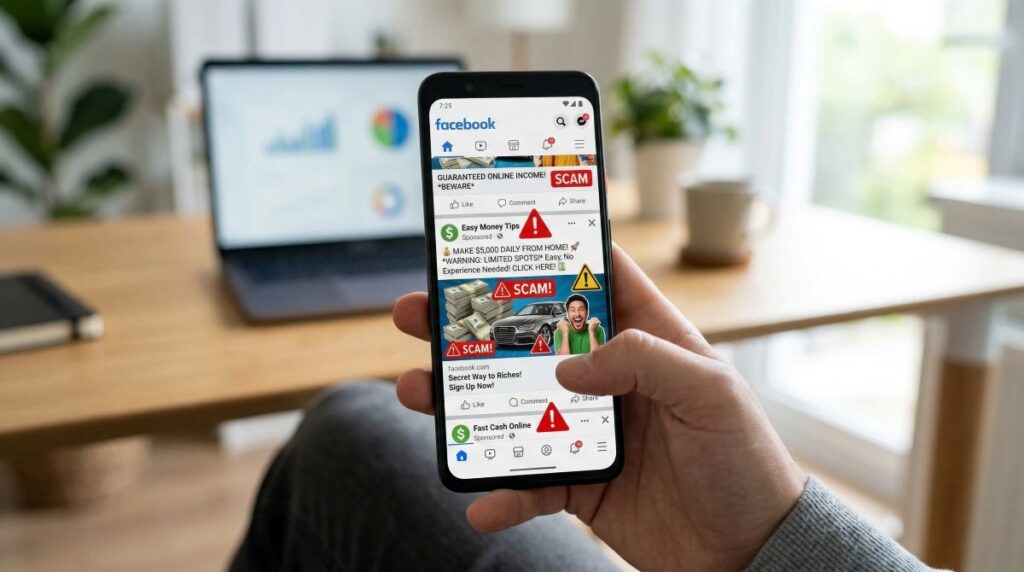
Not every opportunity promoted on Facebook is a scam.
There are legitimate ways to build income online, and many real businesses advertise on social media platforms every day.
However, there are several warning signs that appear repeatedly in misleading work-from-home advertisements. Learning to recognize these red flags can help you avoid expensive mistakes.
The Federal Trade Commission (FTC) warns that scammers frequently advertise fake work-from-home opportunities promising large earnings with little effort. In reality, these schemes often attempt to collect upfront payments or personal information from victims rather than provide legitimate work.
Unrealistic Income Claims
One of the biggest warning signs is the promise of fast and easy money.
Ads might claim things like:
- “Make $500 per day from your laptop.”
- “Earn $10,000 per month working just a few hours a week.”
- “This AI system does all the work for you.”
These types of claims are designed to attract attention and trigger curiosity.
The reality is that building any legitimate online business takes time, learning, and consistent effort.
Even successful affiliate marketers often spend months building websites, creating content, and learning marketing skills before seeing significant income.
If an ad suggests you can skip the work and immediately generate large amounts of money, it should raise serious questions.
Fake Scarcity and Urgency
Another common tactic used in these funnels is manufactured urgency.
You might see messages such as:
- “Only 25 spots remaining.”
- “Registration closes tonight.”
- “Last chance to join before the price increases.”
These tactics are designed to pressure people into making quick decisions before they have time to research the opportunity.
In many cases, these countdown timers and “limited spots” are simply marketing tools rather than real limitations.
If you return to the same page days later, the offer is often still available.
Hidden Upsells
Many Facebook income funnels begin with a low-cost tripwire offer, but that initial purchase rarely represents the full cost of the system.
After someone buys the first product, additional offers may appear, such as:
- advanced courses
- coaching programs
- done-for-you systems
- automation tools
These upsells can sometimes cost hundreds or even thousands of dollars.
This doesn’t automatically mean the program is a scam, but it’s important for beginners to understand that the advertised price is often only the entry point into a larger funnel.
Some programs heavily promoted through social media advertising have been criticized for relying on aggressive upsell structures, including systems like the Invisible Affiliate System, which we examined in our review here:
The Invisible Affiliate System Review – Why You Should Think Twice Before Joining.
Overly Polished Testimonials
Another red flag appears in the form of testimonials that seem too perfect to be realistic.
Many presentations include interviews with students who claim they achieved incredible success within a short period of time.
While some of these stories may be genuine, others can be:
- selectively chosen success cases
- affiliate marketers promoting the program
- exaggerated income claims
A legitimate training platform should focus more on teaching skills than showcasing extraordinary results.
Lack of Transparency
Finally, many questionable online income offers fail to clearly explain:
- who created the program
- what the total cost will be
- what skills are actually required
- how long it typically takes to see results
If the only information available is a sales presentation and testimonials, that’s usually a sign the funnel is focused more on selling than educating.
Before joining any opportunity, it’s always wise to research independent reviews and investigations to understand what the program actually offers.
Why Many Beginners Lose Money in These Funnels
One of the biggest problems with many Facebook work-from-home funnels isn’t necessarily the concept of affiliate marketing itself.
The real issue is that many beginners enter these systems without understanding the skills required to build a sustainable online business.
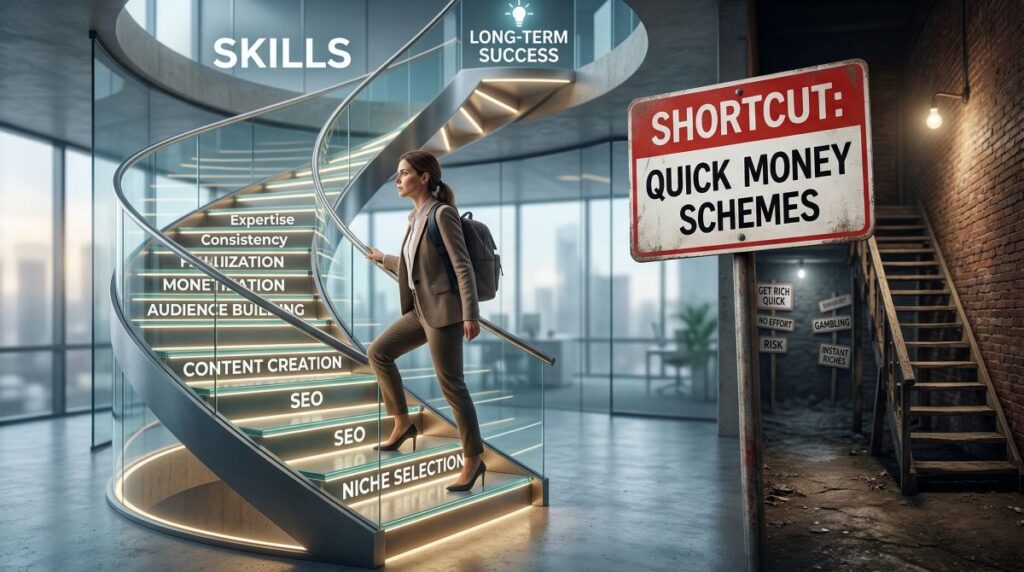
Most advertisements promote the idea that a simple system will do the work automatically. In reality, successful online entrepreneurs typically spend significant time learning important skills such as:
- Choosing a profitable niche
- Understanding how affiliate marketing works
- Building websites or landing pages
- Creating helpful content
- Generating traffic through search engines or advertising
Without these foundational skills, beginners often struggle to see meaningful results.
That’s why many new marketers jump from one opportunity to another, constantly searching for the next “system” that promises faster success.
The Cycle of Opportunity Hopping
A pattern often develops where beginners purchase one program, become frustrated when results don’t appear quickly, and then move on to another opportunity that promises an easier solution.
This cycle can lead to spending large amounts of money on training programs without ever building a real online business.
In many cases, the problem isn’t the concept of affiliate marketing itself.
It’s the lack of foundational education and long-term strategy.
If you’re new to online business, learning the basics is essential. We explain many of these core concepts in our guide:
The How-To Guide of Affiliate Marketing
Successful entrepreneurs also tend to develop a variety of skills over time, including marketing strategy, content creation, and audience building. Our article on Essential Skills for Online Entrepreneurs explores many of these areas in more detail.
Building Skills vs. Chasing Systems
Another major difference between legitimate training and aggressive sales funnels is the focus of the education.
Programs that emphasize long-term business building usually focus on teaching practical skills and realistic expectations.
By contrast, many social media funnels focus heavily on promoting a specific system or opportunity rather than helping people develop the knowledge needed to succeed independently.
Understanding this distinction can help beginners avoid the trap of constantly chasing the next “secret system” instead of focusing on building a real business.
As we explain in our article Exposing Online Scams and the Legit Path to Success, sustainable online income usually comes from developing skills, creating value, and building an audience over time.
A More Legitimate Way to Learn Affiliate Marketing
By now it should be clear that many Facebook work-from-home ads are designed to push visitors into marketing funnels built around low-cost tripwire offers and expensive upsells.
While not every opportunity promoted on Facebook is automatically a scam, beginners should approach these systems with caution. Many of them focus heavily on selling additional products rather than teaching the foundational skills needed to build a long-term online business.
The truth is that making money online is possible, but it rarely happens overnight.
Successful online entrepreneurs typically spend time learning important skills such as:
- niche selection
- content creation
- search engine optimization (SEO)
- audience building
- ethical affiliate marketing strategies
Without these skills, even the most expensive coaching program or automated system is unlikely to produce consistent results.
Training That Focuses on Real Business Skills
Instead of chasing the next “secret system” advertised on social media, beginners are usually better served by learning how to build their own online business from the ground up.
That means understanding how affiliate marketing actually works, developing marketing skills, and building digital assets such as websites and content that can generate traffic over time.
One platform that focuses on teaching these long-term skills is Wealthy Affiliate.
Unlike many funnels promoted through Facebook ads, the training inside Wealthy Affiliate focuses on building your own independent online business rather than promoting a specific system.
If you’re curious about how the platform works, you can read my full investigation here:
My Honest Wealthy Affiliate Review – An Up-To-Date Look Inside
In that review, I break down what the training includes, how the platform works, and why it has remained one of the most established affiliate marketing training communities online.
The Bottom Line on Facebook Work-From-Home Ads
Facebook work-from-home ads are everywhere because they work.
Advertisers can reach millions of people searching for financial opportunities, and many funnels are designed specifically to convert curiosity into sales.
But understanding how these funnels operate gives you a powerful advantage.
Once you recognize the patterns — tripwire offers, upsell ladders, and aggressive marketing tactics — it becomes much easier to separate legitimate opportunities from systems designed primarily to generate sales.
If you’re serious about learning how online business really works, focus on education that teaches skills, strategy, and long-term growth, rather than promises of instant income.
See the Training I’ve Been Using Since 2014
If you want to learn how affiliate marketing actually works and build your own website instead of chasing social media funnels, you can explore the training platform I personally recommend.
Affiliate Disclaimer: Scam Busters USA may earn a commission if you purchase through links in this article, at no extra cost to you. That said, I do my best to recommend only training and tools I believe offer a more ethical and sustainable path than the misleading funnels and hype-filled programs discussed on this site.
Have you ever clicked one of these Facebook work-from-home ads? Share your experience in the comments so other readers can learn from it.
About The Author

Hi, I’m Jason Taft, the founder of Scam Busters USA. I’ve been researching online income programs and affiliate marketing since 2011, after personally falling into several misleading and overhyped opportunities myself. That experience pushed me to start this website so others wouldn’t have to waste time and money the way I did.
Since 2014, I’ve focused on learning and building legitimate online income through ethical affiliate marketing and real skill development. My goal is simple: expose scams, break down confusing sales funnels, and help beginners and intermediates find trustworthy training and tools that actually work long term.
I personally go through many of the programs I review, documenting the sales process, upsells, and real user experience so you can make informed decisions. Transparency, honesty, and consumer protection are at the core of everything I publish.
If you’d like to learn more about my background and journey, you can read my full story here:
About Me.