
If you’ve spent any time on Facebook or Instagram lately, chances are you’ve seen ads promising that you can make thousands of dollars per week by simply uploading videos and letting a “done-for-you system” do the rest. The message is always the same: no experience, no selling, no tech skills required. Just follow the steps and watch the income roll in.
After more than a decade in the affiliate marketing and online business space, I’ve learned that whenever a system sounds this simple, there is usually much more happening behind the scenes. I’ve personally seen hundreds of programs come and go, often rebranded under new names but built on the same high-ticket funnel structure.
That’s exactly why I decided to investigate Freedom Blueprint.
I didn’t just read the sales page or skim a few reviews. I went through the funnel myself. I purchased the front-end offer, documented the checkout process, followed the upsells, and traced the system all the way to its high-ticket backend. I also analyzed the domains, infrastructure, and marketing ecosystem supporting this program.
What I discovered was not just a single course, but an entire funnel system designed to move beginners from a low-cost entry product into a much more expensive coaching program.
In this review, I’m going to walk you through exactly what I found. We’ll look at the real structure behind Freedom Blueprint, how it connects to Freedom Escape Xcelerator and the 7-Figure Accelerator, the true cost of getting started, and the risks beginners should understand before spending thousands of dollars.
My goal here is not to attack anyone or create fear. It’s to give you clear, honest information so you can make an informed decision and avoid the mistakes that keep many new entrepreneurs stuck in expensive cycles.
If you’re serious about building a real online business, this investigation may save you time, money, and frustration.
WHO IS PHILIP JOHANSEN?

Philip Johansen is positioned as the creator and primary mentor behind Freedom Blueprint and the broader Freedom Escape Xcelerator system. According to the marketing materials, he is an online entrepreneur who built a successful business through affiliate marketing, automation, and high-ticket consulting.
Much of his branding focuses on helping aspiring entrepreneurs escape the traditional 9-to-5 lifestyle by leveraging viral content, funnels, and automated sales systems. His programs often emphasize the idea of building a location-independent lifestyle while scaling to six or seven figures in online income.
This messaging is not unique. It follows a model that has become increasingly common in the make-money-online space over the past decade. Many programs teach variations of the same core concept:
- Attract leads using social media or viral content.
- Send those leads into a funnel.
- Promote high-ticket offers and coaching programs.
- Earn commissions while helping others do the same.
What makes Freedom Blueprint interesting is how it is positioned as an entry point into a larger ecosystem rather than a standalone training course.
Through my research and firsthand experience going through the funnel, it became clear that Freedom Blueprint serves as the front-end offer designed to introduce beginners to Philip’s overall system. From there, users are guided toward higher-ticket programs such as Freedom Escape Xcelerator or similar mentorship opportunities.
This structure is similar to many other programs I’ve investigated, including Smartphone Freedom Lifestyle Review – Max Tornow and Badass Class Review – Scam, Legit, or Overhyped?, where the initial product is only the first step in a longer sales journey.
It’s important to understand that this type of funnel model is not inherently unethical. Many legitimate businesses use tiered offers and mentorship programs. However, beginners should be aware of the full path before entering the system so they can evaluate both the potential benefits and risks.
WHAT IS FREEDOM BLUEPRINT?
Freedom Blueprint is marketed as a beginner-friendly system designed to help individuals start making money online using social media, content, and automated funnels. The program claims that users can generate income by posting simple videos or images that drive traffic into a done-for-you backend system.
The core appeal is simplicity. The marketing focuses heavily on removing barriers that typically stop beginners from starting an online business. Instead of building websites, learning SEO, or developing products, users are told they can leverage an existing system that handles most of the technical work.
This approach is attractive, especially for those who feel overwhelmed by traditional business models. However, it also raises important questions about long-term sustainability and ownership.
For example, when you rely entirely on a done-for-you system:
- You do not control the funnel.
- You do not control the product.
- You do not control the customer relationships.
- Your income depends on the continued operation of the platform.
These are key considerations I’ve discussed in depth in Essential Skills For Online Entrepreneurs, where building real assets and long-term skills is emphasized as the foundation for lasting success.
Freedom Blueprint positions itself as the starting point of a journey toward financial freedom. But as I discovered during my investigation, the real opportunity and financial commitment often lie beyond the front-end offer.
In the next section, I’ll walk you through my firsthand experience purchasing Freedom Blueprint, including the checkout process, upsells, and the steps that lead toward the higher-ticket backend system.
MY FIRST-HAND EXPERIENCE BUYING FREEDOM BLUEPRINT
After purchasing Freedom Blueprint, I wanted to see exactly what a new customer experiences from the inside. This is where many reviews stop, but in my experience, the real story usually begins after the initial purchase.
Almost immediately after checkout, I began receiving follow-up emails encouraging me to attend a live training session. These emails positioned the webinar as the next critical step in the process. The messaging focused heavily on urgency and excitement, suggesting that this training would reveal the “real system” behind the initial product.
The subject line I received was:
“Jason, We’re ON And About To Start!”
The email invited me to a free web class promising $1,000 to $5,000 per day using the same system. This is a classic progression in high-ticket funnel structures. The low-cost entry product builds initial trust, and the webinar becomes the bridge that leads customers toward the higher-priced backend.
This pattern is something I’ve seen repeatedly in other programs, including AI Freedom Launchpad Review – Scam or Legit? and Freedom Income By Robby Blanchard – Scam or Legit?, where the front-end offer mainly serves as a qualification step for a more expensive coaching system.
When I joined the webinar, the structure followed a familiar format:
• A long introduction building credibility and authority
• Personal success stories
• Lifestyle positioning and emotional triggers
• Testimonials and income claims
• Gradual framing of the “done-for-you” opportunity
While the content was motivational and high-energy, it was clear that the main goal was to transition attendees toward a larger commitment.
At this stage, the focus shifted from the initial Freedom Blueprint product to the broader Freedom Escape Xcelerator system. The messaging emphasized that true results required access to mentorship, advanced strategies, and full system implementation.
This is where many beginners may not realize that they are entering a multi-step funnel designed to lead to high-ticket coaching and ongoing expenses.
I eventually exited the webinar early, but based on my experience in the industry, this is typically the point where the most significant upsells are introduced.
The goal is not just to sell a course, but to enroll participants into a comprehensive program that may cost thousands of dollars.
In the next section, we’ll break down the full funnel structure so you can understand exactly how Freedom Blueprint connects to the larger ecosystem and what this means for beginners.
THE FUNNEL STRUCTURE AND WEBINAR PSYCHOLOGY
One detail that stood out during my investigation was how tightly controlled the webinar access was.
After registering for the training, I was given several time slots to choose from. This is a common strategy used in high-converting marketing funnels because it creates the perception of a live event and increases urgency. However, when I attempted to rejoin the session later, I discovered that the webinar had already expired and I was unable to access the replay.
Instead, I was prompted to reschedule for another session.
This type of structure is not unusual in the online marketing world, but it plays an important psychological role. By limiting access and emphasizing live attendance, the funnel increases the sense of scarcity and urgency. The goal is to encourage viewers to stay through the entire presentation and remain emotionally engaged until the final offer is revealed.
Many automated webinar systems use this model. Even when the presentation is pre-recorded, it is presented as a live experience. This approach allows marketers to refine the messaging, optimize conversions, and control when the audience is exposed to the main upsell.
During the training I attended, the structure followed a familiar progression that I’ve seen across multiple high-ticket funnel programs:
• Initial credibility building and personal backstory
• Emotional storytelling about escaping the 9-to-5 lifestyle
• Testimonials and lifestyle imagery
• Framing the opportunity as rare or time-sensitive
• Gradual transition toward the full system
• Preparation for a higher financial commitment
This pattern is also present in other systems I’ve reviewed, such as The Mobile Profit System Review – MobileProfits.co Legit or Recycled Funnel? and The Invisible Affiliate System Review – Why You Should Think Twice Before Joining, where the webinar serves as the bridge between a low-cost front-end product and a significantly more expensive backend program.
In this case, the messaging increasingly focused on the Freedom Escape Xcelerator and the broader high-ticket ecosystem rather than the original Freedom Blueprint product. This suggests that the front-end offer primarily functions as a lead-generation and qualification tool rather than a complete business solution.
To be clear, webinars are not inherently negative. Many legitimate companies use them to educate potential customers. However, it’s important for beginners to understand the full structure before committing. The emotional momentum created during these presentations can make it easier to agree to a high-ticket purchase without fully evaluating the long-term risks or responsibilities.
In the next section, we’ll break down the complete funnel so you can see exactly how Freedom Blueprint connects to Freedom Escape Xcelerator, the 7-Figure Accelerator, and the underlying Clickfunnels infrastructure.
The Full Funnel Breakdown (Freedom Blueprint → Freedom Escape Xcelerator → High Ticket)
At this point in my investigation, the most important question became clear:
What is Freedom Blueprint actually designed to do?
Because after going through the front-end offer, the webinar, and the backend presentation, one thing stood out immediately.
Freedom Blueprint is not the main product.
It’s the entry point.
And this is where many beginners get confused.
Step 1: The Low-Cost Entry Offer ($12.97)
The funnel begins with Freedom Blueprint, which is positioned as a beginner-friendly affiliate marketing training program. The price is intentionally low to reduce friction and increase conversions.
This strategy is known as a “tripwire offer.”
The goal is not to make significant profit on the front-end product. Instead, it’s designed to:
• Build trust
• Capture contact information
• Identify motivated buyers
• Qualify leads for higher-ticket offers
This is a common structure in the make-money-online space. However, many beginners believe they are purchasing a complete system when they are actually entering a larger sales ecosystem.
This same pattern appears in multiple funnels I’ve reviewed, including Badass Class Review – Scam, Legit, or Overhyped? and Smartphone Freedom Lifestyle Review – Max Tornow, where the front-end product serves as the gateway into a deeper and more expensive program.
Step 2: Email Follow-Up and Webinar Funnel
After purchasing or registering, the next phase begins immediately.
You are moved into a structured email sequence and invited to attend a free training webinar.
The messaging shifts from:
“Here’s a simple system anyone can use”
to:
“This is the real opportunity.”
This is where the focus begins moving toward the Freedom Escape Xcelerator and the high-ticket backend.
The webinar format plays a key role here because it allows the creator to:
• Build emotional connection
• Establish authority
• Frame objections before they arise
• Demonstrate lifestyle proof
• Create urgency
By the end of the webinar, the original product becomes less important. The focus is now on the larger business model and higher-level mentorship.
Step 3: Freedom Escape Xcelerator (High-Ticket Core Offer)
This is where the funnel becomes significantly more expensive.
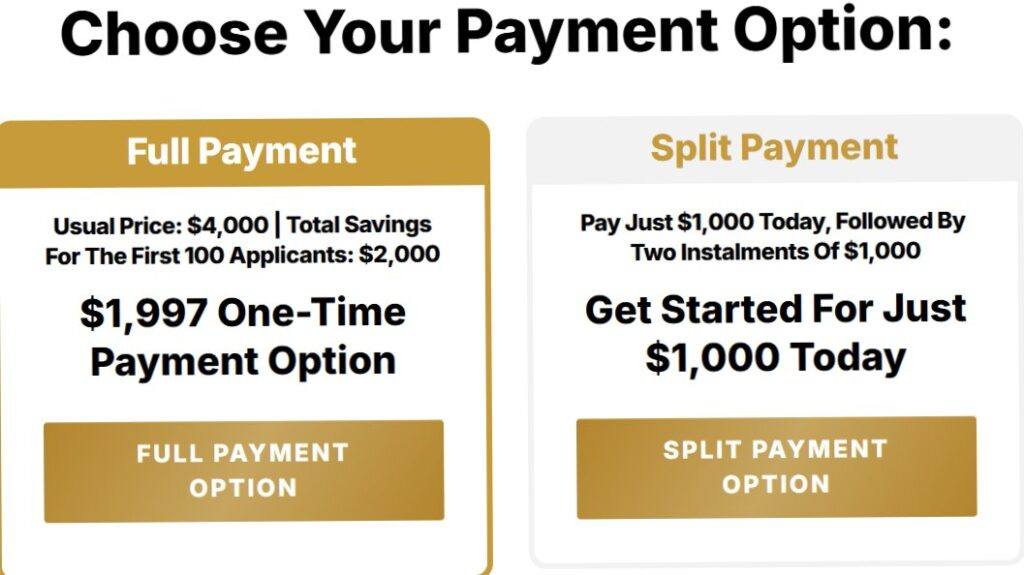
The Freedom Escape Xcelerator appears to be the central offer in the ecosystem, positioned as a full business system with coaching, done-for-you infrastructure, and automation.
The pricing structure typically includes:
• Full payment around $1,997
• Split payment options
• Additional backend offers
This is a major jump from the $12.97 entry point.
For beginners, this can be overwhelming because the emotional momentum built during the webinar makes the transition feel natural rather than dramatic.
This type of funnel structure is not unique. It closely resembles other programs built around high-ticket affiliate marketing and business opportunity coaching.
The core idea is simple:
Start with a low-risk entry.
Then introduce a higher-level system that promises faster results and more automation.
The challenge is that many buyers do not fully understand this progression before entering the funnel.
Step 4: Clickfunnels Infrastructure
One of the key discoveries during my investigation was that many of Philip Johansen’s funnels ultimately redirect to Clickfunnels or Clickfunnels-based systems.
This suggests that the backend business model may rely heavily on funnel building, high-ticket affiliate marketing, and lead generation rather than the simple “upload videos and pictures” messaging used in the front-end ads.
This is an important distinction.
Because building and scaling funnels requires:
• Marketing skill
• Traffic generation
• Conversion optimization
• Ongoing testing
• Budget or time investment
This is very different from the beginner-friendly simplicity often implied in early promotional materials.
If you want to understand the broader direction of where affiliate marketing is heading, this aligns closely with what I covered in Affiliate Marketing Trends 2026 – What Marketers Need To Know.
The Real Question Beginners Should Ask
The biggest issue here isn’t that this model exists.
It’s transparency.
Most beginners don’t realize they are entering a multi-stage funnel designed to guide them toward a high-ticket program.
If they did, they might ask better questions upfront:
• What is the full cost?
• What skills will I need to succeed?
• How long does this take to learn?
• What happens if I don’t buy the backend?
• Are there lower-risk ways to learn affiliate marketing first?
This is why understanding the entire ecosystem matters.
Because your decision should be based on the complete picture, not just the front-end promise.
If you’re new, you may want to compare this structure with other approaches that focus on long-term skill building rather than rapid scaling and automation. I explain this in more detail in The How-To Guide Of Affiliate Marketing and Essential Skills For Online Entrepreneurs.
The Philip Johansen Funnel Ecosystem (What Beginners Should Know)
Earlier in this review, I shared a brief overview of who Philip Johansen is and how his story is presented across multiple marketing funnels.
But after going through the Freedom Blueprint process myself, it became clear that understanding the individual behind the offer is only part of the picture.
The more important question is this:
How does the entire business ecosystem work?
Because what many beginners don’t realize is that Freedom Blueprint is not a standalone program. It appears to be part of a larger funnel-based marketing system designed to guide users toward higher-ticket opportunities.
This structure is not unique to Philip Johansen. It is a common model in the make-money-online space.
However, the way it is presented to beginners can significantly impact expectations and outcomes.
The Multi-Stage Funnel Strategy
The funnel I personally experienced followed a clear progression:
- A low-cost or free front-end offer
- Automated email follow-up
- Webinar-based authority building
- Higher-ticket coaching or mentorship
- Additional backend offers
This progression is designed to gradually increase trust and emotional investment before presenting larger financial commitments.
For experienced marketers, this is a standard sales model.
For beginners, it can feel like a sudden escalation.
This is why understanding the structure before entering any funnel is essential.
Why Multiple Funnels and Brand Variations Exist
During this investigation, I noticed multiple brand names and domain variations connected to similar messaging and offers.
Examples include:
• Freedom Blueprint
• Freedom Escape Xcelerator
• 7 Figure Accelerator
• Webinar funnels focused on automation and leverage
This does not automatically indicate anything negative.
Many digital marketers test different messaging, domains, and branding to improve conversion rates.
However, from a consumer perspective, this can create confusion if it is not clearly explained.
A beginner may believe they are purchasing one product, when in reality they are entering a broader ecosystem.
This same structure appears in other programs I’ve reviewed, such as AI Freedom Launchpad Review – Scam or Legit? and .During this investigation, I noticed multiple brand names and domain variations connected to similar messaging and offers.
Examples include:
• Freedom Blueprint
• Freedom Escape Xcelerator
• 7 Figure Accelerator
• Webinar funnels focused on automation and leverage
This does not automatically indicate anything negative.
Many digital marketers test different messaging, domains, and branding to improve conversion rates.
However, from a consumer perspective, this can create confusion if it is not clearly explained.
A beginner may believe they are purchasing one product, when in reality they are entering a broader ecosystem.
This same structure appears in other programs I’ve reviewed, such as AI Freedom Launchpad Review – Scam or Legit? and Adam’s Method Review – Scam or Legit? .
Clickfunnels as the Backend Infrastructure
One of the most important discoveries during this review is that many of these funnels ultimately redirect to Clickfunnels-based systems.
This strongly suggests that the real business model focuses on:
• Funnel building
• Lead generation
• High-ticket affiliate marketing
• Automated email follow-up
• Webinar sales
This is very different from the simplicity often emphasized in early advertisements.
Instead of “upload and earn,” this model requires learning real marketing skills.
These skills include:
• Traffic generation
• Conversion psychology
• Funnel optimization
• Audience building
• Long-term brand development
These are not beginner-level overnight results.
If you want to understand the skills required to succeed long-term, I explain these in Essential Skills For Online Entrepreneurs.
The Gap Between Marketing and Reality
This is one of the most important points in this entire review.
Marketing simplifies.
Business requires skill.
The danger is not the model itself. High-ticket affiliate marketing can be legitimate.
The danger is when beginners are drawn in by simplicity and later discover complexity without proper preparation.
This is why many people end up frustrated or stuck in cycles of buying new systems.
If you’ve experienced that before, you are not alone. I discuss this in detail in Exposing Online Scams And The Legit Path To Success.
Why This Matters Before You Join
Before purchasing any program, ask:
• Am I learning transferable skills?
• Do I understand the full funnel?
• What happens if the system changes?
• Will I own my business or rely on someone else’s infrastructure?
These questions can save you time, money, and frustration.
And they are rarely addressed in most promotional content.
Domain Transparency, WHOIS Research, and Funnel Longevity
One of the most overlooked steps when evaluating any online business opportunity is researching the infrastructure behind the offer.
Most people focus only on the sales page, testimonials, and income claims. Very few take the time to investigate the domains, registration history, and ownership structure of the websites involved.
As part of this review, I conducted a WHOIS lookup on the domains connected to the Freedom Blueprint and Freedom Escape Xcelerator ecosystem.
This information does not determine whether a program is legitimate or not. However, it provides valuable context about how the system is structured and how long it has been operating.
Domain Registration and Timeline
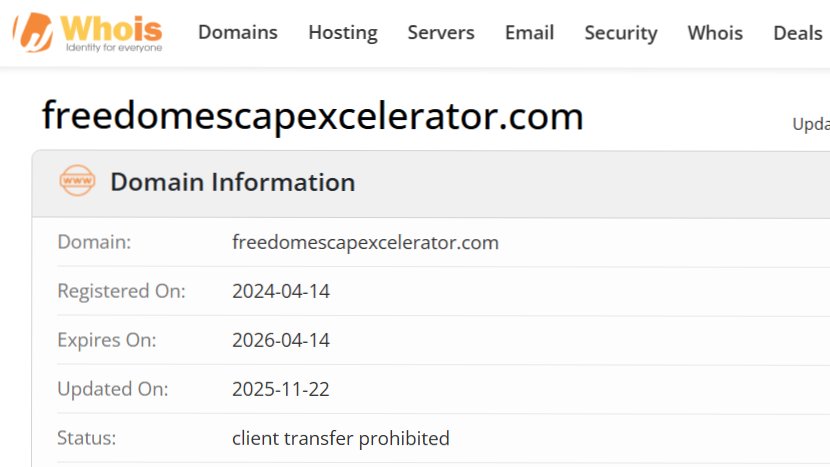
One of the first things that stood out during my research was the relatively recent registration of some of the domains used in this funnel.
For example, the domain connected to the Freedom Escape Xcelerator system appears to have been registered in 2024.
This is important for beginners to understand.
Many high-ticket marketing funnels are built on proven templates and systems that can be deployed quickly. New domains and branding do not necessarily mean the underlying business model is new.
In fact, it is common in the make-money-online industry for marketers to:
• Test new branding
• Launch new funnels
• Optimize messaging
• Replace underperforming campaigns
• Adapt to advertising platform changes
This allows marketers to improve conversions and scale more efficiently.
However, from a consumer perspective, it also means that the program you see today may be part of an evolving ecosystem rather than a long-established company.
Understanding this helps set realistic expectations and reduces emotional decision-making.
Privacy Protection and Ownership
Another detail I noticed during the WHOIS lookup was the use of privacy protection services.
This is not unusual.
Many legitimate businesses protect domain ownership to prevent spam, harassment, or security risks.
However, it also means that beginners cannot easily verify:
• Direct ownership
• Physical business location
• Corporate structure
• Long-term operational history
This reinforces the importance of evaluating the system itself rather than relying solely on branding.
Transparency, clear communication, and realistic expectations become even more important when detailed ownership information is not publicly available.
Why Funnel Marketers Use Multiple Domains
During this investigation, I also noticed that different funnels within the same ecosystem use separate domain names.
This strategy has several practical reasons:
• A/B testing marketing angles
• Audience segmentation
• Compliance with advertising platforms
• Reputation management
• Long-term scaling
For experienced marketers, this is normal.
For beginners, it can be confusing.
Someone may encounter multiple brand names without realizing they are connected.
This is one reason many buyers feel overwhelmed or uncertain about which program they originally joined.
I have documented similar patterns in programs such as Laptop Rich Challenge Review: Robby Blanchard Exposed and Freedom Affiliate Formula Review – Scam Or Legit?, where different funnels lead to the same backend systems.
Longevity and Sustainability
Another important question to consider is long-term sustainability.
When evaluating any opportunity, ask:
• How long has this specific system been active?
• What happens if the funnel changes or rebrands?
• Will your business continue if the platform evolves?
• Are you building independent skills or relying on proprietary systems?
These are not accusations or criticisms.
They are practical business questions.
Many successful entrepreneurs build their businesses around systems they do not own. However, this approach also introduces risk.
For beginners especially, understanding this risk is essential before making larger financial commitments.
If your goal is long-term stability and ownership, it is worth exploring multiple approaches and comparing models.
This is why I encourage readers to study foundational concepts such as audience building, content creation, and authority development. I discuss these in depth in The How-To Guide Of Affiliate Marketing.
The Bigger Picture
The takeaway from this research is simple:
Freedom Blueprint and related programs appear to be part of a modern funnel-based marketing ecosystem that evolves, tests, and adapts over time.
This is not inherently negative.
But it is very different from the simple “set it and forget it” message often used in front-end advertising.
Understanding the infrastructure behind the opportunity gives you a clearer and more realistic perspective before investing time and money.
In the next section, we’ll look at the most important part of this review:
The biggest red flags beginners should understand before joining programs like Freedom Blueprint.
The Biggest Red Flags Beginners Should Understand
Let’s be clear from the beginning.
The purpose of this section is not to label Freedom Blueprint or the Freedom Escape Xcelerator system as a scam. High-ticket affiliate marketing and funnel-based businesses are legitimate when done transparently and responsibly.
However, there are several important factors beginners should understand before entering this type of ecosystem.
These are not accusations. They are risk-awareness points that can help you make a smarter decision.
Unrealistic Expectations vs Business Reality
One of the biggest challenges in the make-money-online industry is the gap between marketing simplicity and business complexity.
Front-end messaging often focuses on:
• Uploading videos
• Posting simple content
• Passive income
• Automation
• Fast results
But the reality of building a sustainable online business usually involves:
• Skill development
• Testing and learning
• Consistent effort
• Audience building
• Long-term persistence
When beginners enter expecting quick results and encounter a steep learning curve, frustration can set in quickly.
This is not unique to Freedom Blueprint. I’ve documented similar patterns in programs like Is Modern Wealthy a Scam? Read This Before Paying $37 .
The High-Ticket Commitment
Another important consideration is the transition from a low-cost front-end product to a higher financial commitment.
This model works because the initial purchase lowers resistance. Over time, trust and emotional investment increase, making the larger offer feel like a natural next step.
For some people, this structure provides valuable mentorship and accountability.
For others, it can create financial pressure if expectations are not aligned with reality.
Before committing to any high-ticket program, ask yourself:
• Am I financially prepared for this investment?
• Do I fully understand the business model?
• Do I have the time to implement what I learn?
• What is my realistic timeline?
These questions apply to any business opportunity.
Dependence vs Ownership
One of the most overlooked risks in done-for-you systems is dependence.
When you rely entirely on someone else’s funnel, traffic strategy, and backend infrastructure, your business becomes tied to that system.
If the platform changes, your income may be affected.
Some people are comfortable with this model.
Others prefer building assets they control, such as websites, content, and long-term audiences.
Both approaches can work, but it is important to choose intentionally rather than by default.
If ownership and long-term stability matter to you, exploring models that focus on foundational skills can be beneficial. I discuss this in Passive Income Ideas For Digital Nomads.
Emotional Decision-Making
Funnels are designed to guide emotions.
This is not inherently bad. Good marketing always involves psychology.
However, when urgency, scarcity, and social proof are combined, it becomes easier to make decisions without full analysis.
This is why I always recommend:
• Take time before purchasing
• Research independently
• Compare multiple options
• Avoid impulse decisions
This applies to any online program, not just this one.
Why Many Beginners Struggle
The biggest reason beginners fail in affiliate marketing is not the system.
It is the gap between expectations and execution.
Common challenges include:
• Lack of consistency
• Information overload
• Shiny object syndrome
• Unrealistic timelines
• Fear of failure
No system can remove these challenges completely.
Success requires personal growth as much as technical knowledge.
This is something I’ve seen repeatedly since 2011, when my journey began.
Is There a Safer Way to Learn Affiliate Marketing?
After going through the entire Freedom Blueprint funnel and understanding how the backend ecosystem works, the real question most beginners should ask is simple:
Is there a better and safer way to learn affiliate marketing?
For some people, high-ticket coaching and done-for-you systems can work. But they are not the only path, and they are often not the best starting point for beginners.
Many successful online entrepreneurs build their businesses by focusing first on long-term skills rather than quick automation. These skills include:
• Understanding how traffic really works
• Building an audience and trust
• Creating helpful content
• Learning ethical marketing
• Developing assets they control
This is the foundation of sustainable income online.
Instead of relying on someone else’s funnel, this approach focuses on building your own platform and your own brand. Over time, this creates stability, flexibility, and independence.
If you want a realistic look at the full process, I recommend starting with Does Affiliate Marketing Really Work so you understand the fundamentals before committing to any expensive system.
My #1 Recommendation for Beginners
After more than a decade in the affiliate marketing industry and reviewing dozens of programs, my top recommendation for beginners remains the same.
If your goal is to build a real, long-term online business, you need training that focuses on skills, ownership, and sustainability rather than hype and automation.
That’s why I recommend starting with My Honest Wealthy Affiliate Review – An Up-To-Date Look Inside.
Unlike many high-ticket systems, this platform focuses on:
• Building your own website and brand
• Learning real SEO and content marketing
• Long-term traffic and audience growth
• Community and mentorship
• Affordable, structured training
This model may not promise overnight success, but it gives beginners the tools to create something they truly own.
If you are serious about building a business rather than chasing the next opportunity, this approach is worth exploring.
Affiliate Disclosure:
Some links on this page are affiliate links. This means if you choose to purchase through them, I may earn a small commission at no additional cost to you. I only recommend training and tools I personally trust and believe can help beginners avoid scams and build legitimate, long-term online income. Purchases made through these links help support the mission of Scam Busters USA and allow me to continue creating free investigative content.
You can also explore broader strategies in Work From Home In Pajamas – 25 Best Ways To Earn In 2026 if you are still comparing different paths.
Final Thoughts and Community Discussion
Freedom Blueprint is not just a simple beginner course. It appears to be part of a larger funnel-based ecosystem designed to move users toward higher-ticket coaching and mentorship.
For some individuals, this structure can provide guidance and support.
For others, it may create financial pressure or unrealistic expectations if they do not fully understand the journey ahead.
The key takeaway from this review is awareness.
Before investing in any online business opportunity:
• Understand the full funnel
• Know the total cost
• Learn the required skills
• Take time to research
• Focus on long-term sustainability
There is no shortcut to building a real business. But there are smarter and safer ways to start.
If you have gone through Freedom Blueprint or any similar program, I would genuinely like to hear your experience. Share your thoughts in the comments below so others can learn from your journey.
If you found this review helpful, please consider sharing it. You never know who it might protect from making an emotional decision.
About the Author

Hi, I’m Jason — the person behind Scam Busters USA. I’ve been involved in affiliate marketing and online business since 2011, and over the years I’ve seen just about every trend, opportunity, and funnel model come and go. I didn’t start out as an expert. Like many people, I struggled, made mistakes, and spent money on programs that promised more than they delivered. Those experiences shaped the mission of this website.
Today, my goal is simple. I investigate online income programs, document the real customer journey, and help everyday people make smarter decisions before they spend their hard-earned money. Instead of hype, I focus on transparency, long-term skill building, and ethical marketing that creates real assets and stability.
I believe affiliate marketing can be a legitimate and powerful path when it’s done the right way. But beginners deserve honest information and realistic expectations so they don’t get trapped in expensive cycles of chasing the next “shiny object.”
If you’ve gone through any of the programs I review, I’d genuinely love to hear your experience. Your feedback helps others learn and builds a stronger, more informed community.
If you’d like to learn more about my journey, why I started Scam Busters USA, and how I approach online business today, feel free to visit my About Me page.
Thank you for such a thorough and transparent investigation. I appreciate how you went beyond the sales page and actually documented the full funnel experience, which provides valuable context for beginners evaluating programs like this. Your explanation of the tripwire-to–high-ticket model and the importance of understanding the complete ecosystem is especially helpful. Articles like this play an important role in encouraging entrepreneurs to make informed, thoughtful decisions before investing in online opportunities.
Kavitha, I really appreciate you saying that, and for actually taking the time to read the full breakdown.
That’s exactly why I go through the entire funnel, not just the front-end pitch. A lot of these programs look great at first, but the real story shows up once you see how the tripwire leads into higher-ticket offers.
For beginners especially, that context can be the difference between making a smart decision… or getting pulled into something they didn’t fully understand.
My goal with these reviews is simple: help people slow down, ask the right questions, and avoid jumping into expensive funnels when there are more transparent ways to learn this business.
Appreciate you being here, and if you come across anything else you want me to dig into, feel free to share it.
Hi Jason,
This was a really eye-opening read. I’ve seen ads like this all over social media, and your breakdown of the funnel structure helped me understand what’s actually going on behind the scenes. I especially appreciated how you explained the transition from the low-cost entry to the high-ticket offers—it’s something most reviews don’t go into in this level of detail.
One thing I’m still curious about, though: for someone who actually goes all-in and buys the high-ticket program, what kind of ongoing costs should they realistically expect (ads, tools, subscriptions, etc.) beyond the initial investment?
Hi Daniella,
I’m really glad the breakdown helped, that transition from low-ticket to high-ticket is where most people don’t realize what they’re stepping into until they’re already in.
That’s a great question, and honestly, it’s where the real cost of these programs starts to show.
If someone goes all-in on a high-ticket program like this, the ongoing expenses can add up quickly. Most people end up paying for:
• Paid ads (Facebook, YouTube, TikTok) — this is usually the biggest cost, and it’s not uncommon to spend hundreds to thousands per month just testing campaigns
• Funnel builders and hosting — tools like ClickFunnels or similar platforms
• Email marketing services — monthly subscriptions depending on list size
• Tracking tools, domains, and miscellaneous software
• Sometimes upsells for additional coaching, masterminds, or “advanced” training
So even after the initial investment, which can already be in the thousands—you’re realistically looking at ongoing monthly costs that can range anywhere from a few hundred to well over $1,000+, especially if you’re trying to make the model work with paid traffic.
And here’s the part that doesn’t get talked about enough:
There’s no guarantee your ad spend will convert. A lot of people end up chasing break-even or losses while trying to “dial in” their funnel.
That’s why I tend to steer people toward building skills first, things like content, SEO, and organic traffic—before ever relying on paid ads. It’s a slower path, but it’s a lot more sustainable and far less risky.
Really appreciate you taking the time to ask that, this is exactly the kind of question more people should be asking before jumping in.