
Artificial intelligence has quickly become one of the hottest topics online, and with that surge in popularity has come a wave of so-called income opportunities promising regular people a chance to cash in. The pitch is usually the same: no special skills, no technical background, and no experience required. Just follow a simple system, spend a few minutes a day, and supposedly watch the money start rolling in. For anyone struggling financially or looking for a legitimate side hustle, that kind of promise can be hard to ignore.
But as we’ve seen time and time again, whenever a trend takes off, questionable marketers rush in to package that excitement into another “system” designed to sell the dream more than deliver the reality. That’s exactly what came to mind when I came across Project Apollo, an AI-themed opportunity being promoted through Facebook ads and a polished sales funnel built to spark curiosity fast.
At first glance, Project Apollo looks slick. The branding is modern, the presentation is designed to feel timely, and the message is carefully crafted to make it seem like you’ve stumbled onto a little-known shortcut tied to the artificial intelligence boom. If you’re new to online income opportunities, it may feel like the kind of thing worth checking out. And to be fair, that’s exactly how it’s meant to come across.
But once you move past the surface, some serious concerns start to appear. Beneath the polished presentation are familiar warning signs: bold income suggestions, a fake-news-style layout, questionable urgency tactics, vague explanations, and very little real transparency about who is behind it or how it truly works. For many people, that combination is often the first sign that the real product may not live up to the pitch.
That’s why I decided to put this review together. If you’re researching Project Apollo, you probably don’t need another glowing sales pitch. You need a closer look at what’s actually being presented, what red flags stand out, and whether this is something worth trusting with your time or money.
Before we get into the details, let’s make one thing clear: artificial intelligence itself is not a scam, and neither is the idea of making money online. There are legitimate ways to build income on the internet, just as there are real businesses using AI in meaningful ways. The problem is not the technology or the business model. The problem is how certain marketers wrap those ideas in hype, pressure, and half-truths to sell systems that often leave buyers disappointed.
If you’re serious about building something real online, that’s exactly why I usually point beginners toward My Honest Wealthy Affiliate Review; instead of flashy systems built around vague promises and urgency. A solid foundation, real training, and transparency will always beat another trendy shortcut.
In the sections that follow, we’ll take a closer look at how Project Apollo is marketed, what it claims to offer, who appears to be behind it, and the biggest red flags you should know before pulling out your credit card. My goal is simple: to help you see past the sales language and decide whether this is a genuine opportunity or just another dressed-up funnel riding the AI wave.
At the time of writing, Project Apollo does not appear to have a consistent or verifiable online presence outside of paid advertisements. That alone doesn’t automatically make it a scam—but it does make it significantly harder to verify and worth taking a closer look before moving forward.
What Is Project Apollo?
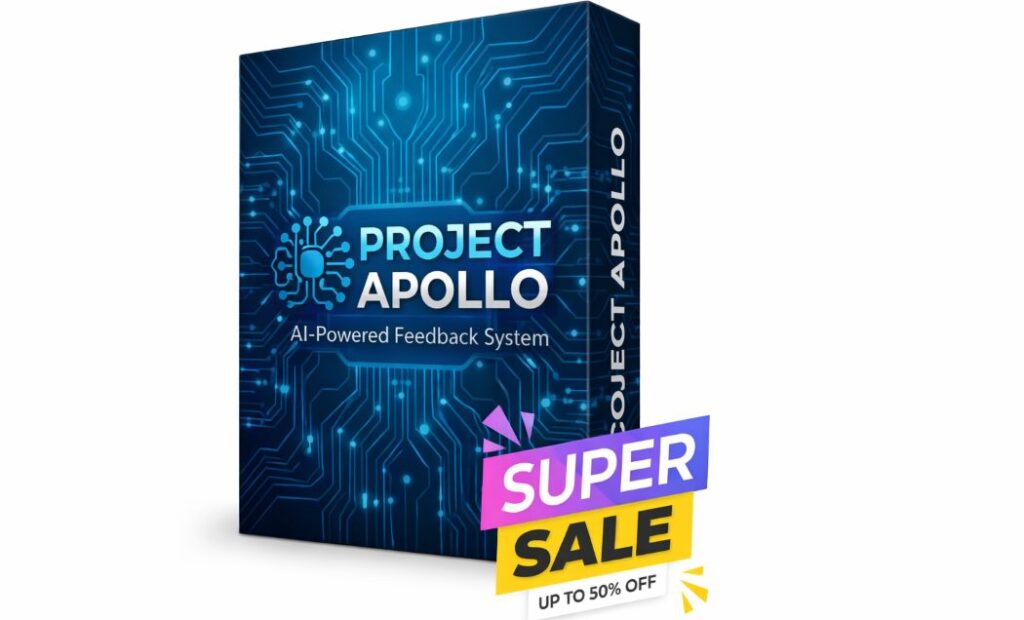
Project Apollo is being marketed as an AI-powered income opportunity that supposedly allows ordinary people to earn money by participating in the fast-growing artificial intelligence industry. The basic idea is simple on the surface: instead of needing advanced technical skills or a background in programming, users are told they can make money by providing basic human input that helps train or improve AI systems.
That pitch is designed to sound both modern and accessible. With artificial intelligence dominating headlines, Project Apollo taps into a very real curiosity many people have right now: how do you actually profit from AI without needing to become a software engineer? By framing the opportunity this way, the funnel makes it seem like anyone with an internet connection can start benefiting from the AI boom almost immediately.
According to the promotional material, Project Apollo presents itself as a beginner-friendly system that requires little time, little effort, and no prior experience. The message is clear: this is supposed to be a shortcut for regular people who want to earn online without going through the steep learning curve normally associated with building a digital business.
But one of the first problems with Project Apollo is that the explanation remains incredibly vague. While the marketing leans heavily on AI language, there is very little clarity upfront about what users are actually doing, what platform powers the opportunity, or how the income is truly generated. That lack of detail is important, because legitimate online opportunities usually explain the business model clearly before asking for your money.
At this stage, Project Apollo appears less like a transparent AI work platform and more like a sales funnel built around AI-themed messaging. And that distinction matters, because there’s a big difference between a real opportunity and a polished presentation designed to capitalize on a trend.
I also want to touch on one more important point before we move on. Whenever you see the word “shortcut” used in an ad or program like this, it’s worth slowing down and taking a closer look.
In my experience, there really are no shortcuts when it comes to building a sustainable online income. Affiliate marketing, like any legitimate business model, takes time, consistency, and a willingness to learn the fundamentals. So when a system leans heavily on the idea of fast results with minimal effort, it’s usually a sign that the marketing deserves a bit more scrutiny before you decide to invest.
How Project Apollo Claims to Work
At a high level, Project Apollo follows a very familiar pattern—one that I’ve seen repeated across dozens of online income funnels over the years. While the branding may be different and the theme may shift from one trend to another, the underlying structure tends to stay the same.
It usually begins with a social media ad, most commonly on platforms like Facebook. These ads are designed to grab attention quickly, often by tying the opportunity to something current and in demand—in this case, artificial intelligence. The message is simple and effective: ordinary people are supposedly earning money by doing basic tasks related to AI, and you can too.
Once you click the ad, you’re taken to a page that’s built to look like a news article or special report. This is where the presentation starts to lean heavily on credibility cues—references to well-known media outlets, bold headlines, and language that makes it feel like you’ve stumbled onto something legitimate and time-sensitive. In reality, these pages are typically part of the marketing funnel itself, not independent news sources.
From there, the next step is usually a video presentation. This is where the core pitch is delivered. The video often introduces the idea of a “system” or “method” that allows you to tap into the AI industry without needing technical skills. You’ll hear about how simple it is, how little time it takes, and how others are already seeing results. Terms like “automated,” “done-for-you,” and sometimes even “loophole” tend to show up here, all designed to make the process sound easier than it actually is.
As the video progresses, testimonials and success stories are often introduced to reinforce the message. These may appear as comments, screenshots, or short clips of people claiming to have made money using the system. While they’re meant to build trust, they’re rarely accompanied by enough detail to verify how those results were achieved—or whether they’re typical.
Eventually, the presentation leads to an offer. In the case of Project Apollo, that appears to be a one-time payment to gain access to the system. The pricing is positioned as affordable compared to the potential earnings, and there’s usually some form of urgency attached—limited-time discounts, warnings that spots are filling up, or reminders that the opportunity may not be available later.
After the purchase, what many people don’t realize is that this is often just the beginning of the funnel. Based on patterns seen in similar programs, it’s common for additional offers, upgrades, or “advanced” features to be introduced once you’re inside. These can range from optional tools to higher-ticket coaching or done-for-you services, depending on how the system is structured.
If this process sounds familiar, it’s because it closely mirrors other funnels I’ve broken down in reviews like Facebook Work From Home Ads: Scam or Legit? and The Invisible Affiliate System Review: Why You Should Think Twice Before Joining. Different names, different themes—but a very similar blueprint underneath.
Understanding this structure is important, because once you recognize the pattern, it becomes much easier to separate the presentation from the actual value being offered. And in many cases, that’s where the biggest disconnect starts to show.
Who’s Behind Project Apollo?
One of the first things I look for when evaluating any online income opportunity is transparency—specifically, who is actually behind it. A legitimate program should make it easy to identify the company, the creator, and their track record. That kind of openness builds trust and gives you a way to verify whether the people teaching you have real experience.
With Project Apollo, that clarity is noticeably absent.
As of this review, there’s no clearly identified founder, no verifiable company information, and no obvious track record tied to the people presenting the system. The sales material focuses heavily on the opportunity itself, but offers very little insight into who created it or why they’re qualified to teach others how to make money in this space.
Instead, what you’re presented with is a spokesperson-style presentation—someone walking you through the concept, explaining how the system works, and reinforcing the idea that this is a simple, accessible way to earn online. But beyond that presentation, there’s very little to go on. No detailed background, no portfolio of successful projects, and no transparent business presence that you can independently verify.
That lack of information matters more than most people realize.
In the affiliate marketing and “make money online” space, it’s very common for systems to be marketed without a clear creator attached. Sometimes that’s intentional. When a program begins to receive negative feedback or refund requests, it can be easier to distance the brand from any one individual and simply move on to the next version under a different name.
That’s part of a broader pattern I’ve covered in reviews like Adam’s Method Review: Scam or Legit? and The Mobile Profit System Review: MobileProfits.co Legit or Recycled Funnel?, where similar funnels appear under new branding but follow nearly identical structures behind the scenes.
Now, to be fair, not every program without a public-facing founder is automatically a scam. There are legitimate businesses that operate behind brand names rather than personal brands. But when you combine that lack of transparency with bold income claims, urgency-driven marketing, and a vague business model, it becomes much harder to give the benefit of the doubt.
At the end of the day, if you’re being asked to trust a system with your time and money, you should be able to clearly answer a simple question:
Who created this, and what proof do they have that it works?
With Project Apollo, that answer isn’t easy to find—and that alone is something worth taking seriously before moving forward.
Red Flags You Shouldn’t Ignore
After breaking down how Project Apollo is presented and what it claims to offer, a number of warning signs start to stand out. On their own, some of these might not seem like a major issue—but when you see them all together, they paint a much clearer picture.
Here are the biggest red flags to be aware of:
Fake “News” Style Presentation
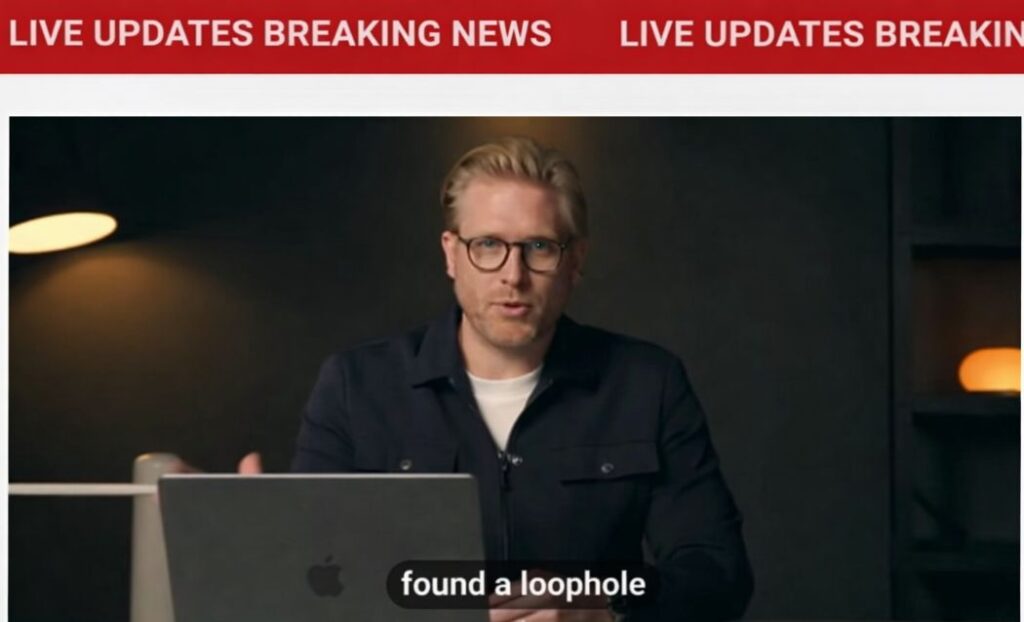
One of the first things that stands out is the way the landing page is designed to look like a news article or special report. You’ll often see references to major media outlets, bold headlines, and formatting that mimics legitimate journalism.
The problem is, these pages are not real news sources.
They’re part of the marketing funnel itself—designed to create a sense of credibility before you even hear the full pitch. This is something I’ve seen repeatedly in similar funnels, including Facebook Work From Home Ads: Scam or Legit?, where the presentation is built to feel trustworthy rather than actually be verifiable.
You’ve Been Selected” Messaging
Another common tactic is making it feel like you’ve been chosen or given exclusive access to something others don’t have. Phrases like “you’ve been selected,” “limited access,” or “only a small number of people qualify” are used to create a sense of urgency and importance.
In reality, these messages are typically shown to everyone who visits the page.
Their purpose is simple: to make you feel like you need to act quickly before the opportunity disappears.
Unrealistic Income Suggestions
Project Apollo leans heavily on the idea that you can start earning quickly with minimal effort. While the exact numbers may vary, the overall message suggests that making money is both easy and fast.
That’s where things start to break down.
As we touched on earlier, legitimate online income—especially through affiliate marketing or content-based models—takes time to build. When a system focuses more on speed and simplicity than on skill-building and long-term strategy, it’s worth questioning how realistic those claims really are.
Vague Business Model
Despite all the emphasis on AI and earning potential, there’s very little clarity about what you’re actually doing to generate income.
Are you working for a company?
Are you promoting products?
Are you running ads?
Are you building a website?
Those questions aren’t clearly answered upfront.
That lack of detail is a major concern, because legitimate opportunities typically explain exactly how the process works before asking you to pay.
Testimonial-Driven Marketing
The funnel relies heavily on testimonials and success-style comments to reinforce the message. These are often presented as proof that the system works.
But there are two problems with that:
- The results are rarely verified
- There’s no context around how those results were achieved
Without that context, it’s impossible to know whether those outcomes are typical, repeatable, or even real.
Urgency and Scarcity Tactics
You’ll likely notice countdown timers, warnings about limited availability, or reminders that the price may increase if you leave the page.
This is a classic pressure tactic.
The goal is to push you into making a decision quickly—before you’ve had time to fully research what you’re buying.
Funnel-First, Value-Second Approach
Perhaps the biggest red flag is the overall structure itself.
Everything is designed to move you toward a purchase:
- The ad
- The “news” page
- The video
- The testimonials
- The urgency
What’s missing is a clear, transparent explanation of the actual value being delivered.
This same pattern shows up in other programs I’ve reviewed, like The Invisible Affiliate System Review: Why You Should Think Twice Before Joining and 500 Day AI Funnel Review: Scam or Legit?, where the focus is placed more on selling the system than on explaining it.
When you step back and look at all of these together, a pattern starts to emerge. Project Apollo isn’t just presenting an opportunity—it’s following a well-worn funnel structure that prioritizes conversion over clarity.
And once you recognize that pattern, it becomes much easier to approach the offer with a more critical eye.
Pros and Cons of Project Apollo
Like any online program, it’s only fair to look at both sides. While there are several concerns we’ve already covered, there are also a few surface-level positives worth mentioning—at least from a beginner’s perspective.
Pros
Beginner-Friendly Messaging
Project Apollo is clearly designed to appeal to beginners. The language is simple, the concept is easy to understand, and it doesn’t require any prior technical knowledge to get started. For someone completely new to making money online, that can feel approachable.
Polished Presentation
From a marketing standpoint, the funnel is well put together. The branding is modern, the video presentation is smooth, and the overall experience is designed to keep your attention. That level of polish can give the impression that you’re dealing with something legitimate.
Cons
Lack of Transparency
There’s no clear information about who created Project Apollo, what company is behind it, or what real experience supports the system. That lack of transparency makes it difficult to verify anything being claimed.
If you ever feel misled by an online opportunity, you can file a complaint directly with the Federal Trade Commission or check company complaints through the Better Business Bureau.
Vague Business Model
Even after going through the presentation, it’s still unclear exactly how users are supposed to generate income. The focus stays on the outcome rather than the actual process.
Unrealistic Expectations
The marketing leans heavily on the idea of quick and easy results. As we’ve discussed, building real income online typically requires time, effort, and a clear strategy—none of which are emphasized here.
Heavy Reliance on Sales Tactics
From the fake news-style page to urgency messaging and testimonial-driven persuasion, the funnel is built more around convincing you to buy than explaining what you’re buying.
Potential for Upsells
While not always obvious upfront, similar funnels often introduce additional offers after the initial purchase. These can increase the total cost significantly beyond what you expected going in.
No Proven Track Record
Without a known creator or verifiable success stories, there’s no clear evidence that the system consistently works for the average user.
When you weigh everything together, the pros are mostly related to how the system is presented, while the cons are tied to how it actually operates. And that distinction is important, because a polished presentation doesn’t necessarily translate into real value.
Can You Actually Make Money With Project Apollo?
This is the question most people are really asking, even if they don’t say it out loud.
On the surface, Project Apollo is designed to make the answer feel like an easy “yes.” The messaging suggests that by following a simple system tied to artificial intelligence, you can start generating income quickly without needing experience or technical skills.
But when you step back and look at how online income actually works, the picture becomes a lot clearer.
Making money online—whether through affiliate marketing, content creation, freelancing, or any other model—requires a few core elements: a clear strategy, consistent effort, and a solid understanding of how value is created. That could mean building a website, generating traffic, promoting products, or developing a skill that people are willing to pay for.
With Project Apollo, those fundamentals are never clearly explained.
Instead, the focus stays on the outcome—earning money—without showing a transparent, step-by-step process for how that income is realistically generated. That’s a problem, because without a clear business model, it becomes very difficult to evaluate whether the opportunity is sustainable or even legitimate.
It’s also worth noting that legitimate AI-related work does exist. There are companies that pay people to help train data models, review content, or perform microtasks. But those opportunities are typically offered through established platforms, they pay modest rates, and they don’t require you to buy into a “system” to get started.
That’s a key distinction.
When an opportunity positions itself as a shortcut to fast income—especially in a space as complex as artificial intelligence—it’s important to ask where the money is actually coming from. If that question isn’t clearly answered, there’s a good chance the focus is less on creating value and more on selling the idea of making money.
Based on everything we’ve covered so far, Project Apollo appears to fall into that category. While it may provide some form of training or access to a system, there’s no clear evidence that it offers a reliable or repeatable path to income for the average beginner.
That doesn’t mean no one will ever make money from it. In many cases, a small percentage of users may see limited results—often those who already have some experience or who are willing to invest additional time and money into figuring things out.
But for most people, especially beginners, the gap between what’s promised and what’s delivered is likely to be significant.
And that’s really the takeaway here: the idea of making money online is real, but the path to doing it successfully is rarely as simple as these types of systems make it seem.
Frequently Asked Questions (FAQ)
Is Project Apollo legit or a scam?
Project Apollo appears to be a real product in the sense that you receive access to a system after payment. However, based on its marketing style, lack of transparency, and vague business model, it raises several red flags that make it difficult to fully trust. While it may not be an outright scam, it falls into the category of programs that many people find misleading or underdelivering.
How much does Project Apollo cost?
The initial cost appears to be a one-time payment, typically positioned as a discounted offer. However, as with many similar funnels, additional offers or upgrades may be introduced after purchase, which can increase the total cost beyond what is initially advertised.
Do you really make money with AI using this system?
Project Apollo suggests that you can earn money by participating in AI-related tasks, but it does not clearly explain how that income is generated. Legitimate AI work does exist, but it’s usually offered through established platforms and does not require buying into a system like this.
Are the testimonials on the page real?
The testimonials are presented in a way that makes them difficult to verify. There is little context provided about how the results were achieved, and no way to confirm whether those outcomes are typical. This is a common tactic used in sales funnels to build trust without providing full transparency.
Who created Project Apollo?
There is no clearly identified founder or company behind Project Apollo. The lack of transparency makes it difficult to verify who is responsible for the system or what experience they have in the industry.
Is Project Apollo beginner-friendly?
The system is marketed as beginner-friendly, and the messaging is designed to be simple and approachable. However, without a clear explanation of the business model or structured training, beginners may find it difficult to achieve meaningful results.
What’s a better alternative to Project Apollo?
If you’re serious about building an online income, it’s important to focus on platforms that provide clear training, real support, and a transparent business model. That’s why I recommend starting with My Honest Wealthy Affiliate Review, which walks through a more structured and beginner-friendly approach to affiliate marketing. Read My Review Here.
Disappearing Funnel Warning
One thing worth mentioning is how quickly Project Apollo seems to come and go.
At the time of researching this review, the funnel was actively being promoted through ads and landing pages. But shortly after, it became difficult to find any consistent presence online. That kind of behavior isn’t unusual in this space.
Many of these systems are run in short bursts. A new name appears, ads are pushed aggressively, and once negative feedback starts to build or performance drops, the funnel is either paused, rebranded, or replaced entirely.
I’ve seen this same pattern in other programs I’ve covered, including The Mobile Profit System Review: MobileProfits.co Legit or Recycled Funnel? and AI Freedom Launchpad Review: Scam or Legit?, where the structure stays the same but the name and presentation change.
This doesn’t automatically mean a program is a scam, but it does make it much harder to verify, trust, or rely on long-term. And if something disappears as quickly as it appears, that’s something you should take seriously before spending money.
Final Verdict: Is Project Apollo a Scam?
After breaking down how Project Apollo is presented, what it claims to offer, and the red flags surrounding it, one thing becomes clear: this is not the straightforward AI income opportunity it’s made out to be.
Project Apollo may not be a scam in the strict legal sense. After all, you are likely getting access to some form of product or training once you pay. But as we’ve seen time and time again in this space, that doesn’t necessarily mean it delivers on what’s promised.
The bigger issue here is the gap between expectation and reality.
On the surface, the system is marketed as a simple way to tap into the AI boom and start earning quickly with little effort. But underneath that messaging, there’s very little transparency about how the income is actually generated, who is behind the program, or what kind of results a typical user can realistically expect.
That combination—vague explanations, urgency-driven marketing, and heavy reliance on presentation over substance—is what causes many people to walk away feeling misled.
Not Illegal, But Raises Concerns
It’s important to draw a clear line here.
Project Apollo doesn’t appear to be an outright fraud where nothing is delivered. But it does follow a funnel structure that prioritizes selling the idea of making money over clearly explaining how that money is made.
And when that happens, it creates a situation where expectations are set high, but the actual value delivered may fall short—especially for beginners.
The Bigger Issue: Trend-Based Funnels
One thing worth pointing out is that Project Apollo doesn’t exist in a vacuum.
This type of funnel—built around a trending topic, packaged as a “simple system,” and promoted through aggressive advertising—has been repeated over and over again in different forms. The theme changes (AI, crypto, automation, passive income), but the structure stays the same.
I’ve seen this pattern in other reviews like 500 Day AI Funnel Review: Scam or Legit? and Super Affiliate AI Review: Read This Before You Buy, where the opportunity is built more around the trend than a proven, transparent business model.
Once you recognize that pattern, it becomes much easier to approach these types of offers with a more critical mindset.
A Better Way Forward
If you’re serious about building an online income, the goal shouldn’t be to find the next shortcut—it should be to build something sustainable.
That means:
- Learning real skills
- Understanding how traffic and conversions work
- Building something you control
That’s why I consistently point readers toward Wealthy Affiliate as a better alternative. Instead of relying on hype or urgency, it focuses on teaching affiliate marketing step-by-step, with real support and a transparent structure.
The Bottom Line
Project Apollo is best approached with caution.
While it may not be an outright scam, it shows many of the same warning signs seen in other underdelivering online systems. If you’re considering it, take the time to do your research, ask questions, and make sure you fully understand what you’re paying for before making a decision.
Because at the end of the day, the difference between success and frustration online usually comes down to one thing:
Whether you choose a path built on real fundamentals—or one built on promises.
About The Author

Hi, I’m Jason Taft, the founder of Scam Busters USA. I’ve been researching online income programs and affiliate marketing since 2011, after personally falling into several misleading and overhyped opportunities myself. That experience pushed me to start this website so others wouldn’t have to waste time and money the way I did.
Since 2014, I’ve focused on learning and building legitimate online income through ethical affiliate marketing and real skill development. My goal is simple: expose scams, break down confusing sales funnels, and help beginners and intermediates find trustworthy training and tools that actually work long term.
I personally go through many of the programs I review, documenting the sales process, upsells, and real user experience so you can make informed decisions. Transparency, honesty, and consumer protection are at the core of everything I publish.
If you’d like to learn more about my background and journey, you can read my full story here:
About Me.
Have You Tried Project Apollo?
If you’ve had any experience with Project Apollo—good or bad—I’d love to hear from you.
Drop a comment below and share your thoughts. Your experience could help someone else avoid a mistake or make a more informed decision.
Affiliate Disclaimer: Some of the links on this website are affiliate links, which means I may earn a small commission if you choose to make a purchase through them. This comes at no additional cost to you and helps support the mission of Scam Busters USA to expose scams and share legitimate online business opportunities.