

If you’ve spent any time researching affiliate marketing programs, you start to notice a pattern pretty quickly.
Big promises. Flashy pages. Income screenshots. Loud personalities selling a dream that feels just a little too polished.
Spark by ClickBank doesn’t feel like that at all.
That’s actually why it catches so many people’s attention.
It looks professional. Calm. Organized. It sits inside the ClickBank platform — a company that has been around for decades and processes millions of dollars in digital sales. There’s no hype video. No guru energy. No pressure tactics.
Compared to most things beginners run into online, Spark feels legitimate. Safe, even.
And to be fair, it is far more legitimate than many of the programs being promoted across social media today.
But here’s the part most reviews skip over:
Legitimate is not the same thing as being the right starting point for a beginner.
That’s the catch.
Spark teaches real concepts. Useful mechanics. Practical steps. But it quietly assumes you already understand parts of affiliate marketing that most beginners simply haven’t learned yet.
This review is not here to call Spark a scam. It isn’t.
This review is here to explain why so many beginners join Spark with good intentions, follow the steps exactly as shown, and still walk away saying, “This didn’t work for me.”
And the reason has very little to do with effort — and a lot to do with missing foundation.
This is the same pattern I’ve seen before when explaining why essential skills for online entrepreneurs matter more than any platform or program, where beginners follow the steps exactly but still struggle because the foundation was never built first.
Before we talk about what Spark does well — and it does several things well — it helps to understand why ClickBank felt the need to create this program in the first place.
Affiliate disclosure: This article contains affiliate links. If you choose to use them, I may earn a commission at no extra cost to you. I only recommend training and tools I personally believe are helpful for beginners building real skills.
Why ClickBank Created Spark
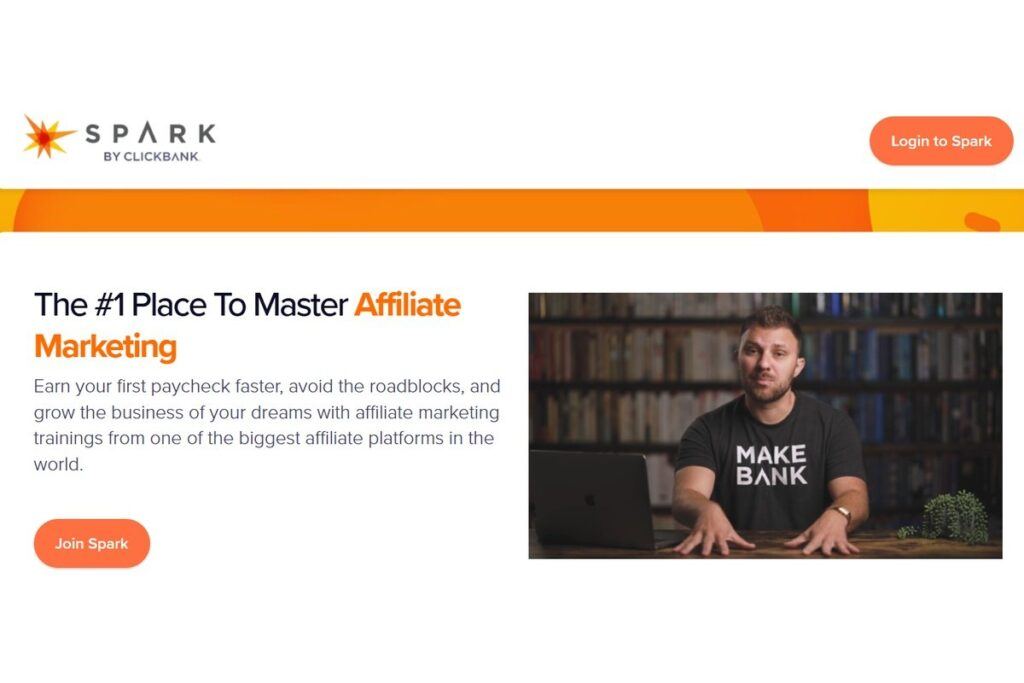
To understand Spark, you have to understand the problem ClickBank has been dealing with for years.
ClickBank is one of the largest digital marketplaces in the world. Thousands of products. Thousands of affiliates. Millions of dollars moving through the platform every month.
And for a long time, there was a recurring issue:
Beginners were signing up as affiliates with no real understanding of how affiliate marketing works.
They would grab an offer, throw up a quick landing page, run some ads, and hope for the best. When it didn’t work, they would quit. When it did work briefly, refunds often followed because the traffic wasn’t targeted and expectations weren’t set correctly.
This created problems for everyone:
Vendors dealing with refund rates.
ClickBank dealing with reputation issues.
Beginners losing money and leaving frustrated.
Spark is ClickBank’s attempt to correct that pattern.
Instead of letting brand-new affiliates jump in blindly, Spark slows the process down. It walks users through how ClickBank works, how offers are structured, how funnels are used, and how promotions are typically set up inside the marketplace.
In many ways, Spark is ClickBank trying to protect beginners from making reckless mistakes that have hurt both affiliates and vendors for years.
And to be fair, that’s a good thing.
The intention behind Spark is not hype. It’s not guru-driven. It’s a platform trying to create more responsible affiliates inside its own ecosystem.
But this is also where the subtle issue begins to form — because Spark is designed to help people operate inside ClickBank more effectively, not necessarily to teach someone how to build an independent affiliate business from the ground up.
What Spark by ClickBank Actually Teaches Well
To be fair to Spark, there are several things it teaches very well.
First, it does an excellent job explaining how the ClickBank marketplace works. For someone who has never logged into ClickBank before, this alone removes a lot of confusion. You learn how offers are structured, what gravity means, how commissions are paid, and how the vendor–affiliate relationship functions.
Second, Spark introduces the concept of funnels in a way that feels organized rather than overwhelming. Instead of telling beginners to “go build a website” with no direction, it shows a step-by-step process for promoting an offer using a simple funnel structure.
That clarity is helpful.
Spark also does a good job walking users through offer selection. Many beginners pick products randomly. Spark teaches people to look at the numbers, evaluate the page, and think a little more strategically before promoting something.
That’s a big improvement over the typical beginner approach.
There is structure. There is process. There is logic.
And for someone who already understands traffic and how visitors are generated, this kind of structured walkthrough can actually be very useful.
This is important to recognize because Spark is not careless training. It is thoughtful, organized, and built by a company that understands the common mistakes affiliates make inside its own platform.
The problem is not what Spark teaches.
The problem is what Spark assumes you already know before you get there.
This is very similar to lessons I shared after a failed affiliate campaign where doing the steps correctly still didn’t lead to the results I expected.
What Spark by ClickBank Costs (And Why That Matters More Than You Think)
Spark is not free, and the pricing structure is an important part of understanding whether this platform is a good fit for a beginner.
Spark runs on a subscription model with multiple tiers. The entry point is typically around the $47 per month range after a short introductory offer. From there, users are encouraged to move into higher plans that can range into the hundreds of dollars per year, and in some cases well into the four-figure range for advanced access.
On the surface, that doesn’t sound unreasonable for training.
But the key detail most reviews skip is this:
Spark is built for people who are ready to use what they learn immediately.
If you don’t already understand traffic, funnels, and offer matching, it’s very easy to spend two, three, or even six months inside the platform while trying to “figure it out.”
At $47 per month, that’s already pushing toward $300. Stay longer while you experiment and the total cost climbs quickly. Move into higher tiers because you think the “next level” will unlock the missing piece, and the investment rises even faster.
This isn’t an aggressive upsell funnel in the traditional sense. It’s something more subtle.
The structure of the training makes it feel like you’re always one step away from getting it to work — which leads many beginners to keep paying while they search for clarity that was never taught at the beginning.
That’s not because Spark is dishonest. It’s because the platform assumes you’re ready to execute from day one.
For someone who already understands how to generate traffic and build funnels, this cost can feel completely reasonable.
For a beginner still trying to understand how affiliate marketing actually works, those monthly payments can start to feel expensive very quickly.
And this ties directly into the silent problem most reviews never explain.
The Silent Problem Most Reviews Don’t Mention
Here’s the part that almost no Spark review talks about.
Spark teaches you how to promote offers.
It does not teach you how to become an affiliate marketer first.
That sounds subtle, but it’s a massive difference.
From the very beginning, the focus is on choosing a product, setting up a funnel, and getting traffic to an offer. Everything is built around the idea that you are sending people directly into a promotion inside the ClickBank marketplace.
What’s missing is the part where you learn how to create visibility, how to attract the right audience, and how to build something that belongs to you instead of the platform.
Spark assumes traffic is something you’ll figure out.
It assumes you understand how to get people to your funnel.
It assumes you already know how to match an audience to an offer.
Most beginners don’t.
So they follow the steps exactly as shown. They build the funnel. They pick the product. They feel like they’re doing affiliate marketing correctly.
But they’re skipping the part that actually makes affiliate marketing work long term.
This is the same issue I’ve seen when reviewing funnel-heavy programs like Commission Hero that teach promotion mechanics before audience building.
And that’s where frustration starts to build — not because Spark is wrong, but because Spark is starting in the middle of the process instead of the beginning.
Why Many Beginners Say “It Didn’t Work for Me”
If you read enough comments, forum posts, and beginner experiences with programs like Spark, you’ll notice a familiar sentence show up again and again:
“I followed the steps, but it didn’t work for me.”
This usually isn’t coming from people who were lazy or careless. It’s coming from people who genuinely tried to do everything correctly.
They picked an offer.
They built the funnel.
They attempted to send traffic.
On paper, they did exactly what they were taught.
The frustration comes from the fact that nothing seems to “stick.” Traffic feels expensive. Conversions feel unpredictable. And there’s no real understanding of why things aren’t working — only the feeling that more tweaking is needed.
So beginners start adjusting headlines. Changing offers. Rebuilding pages. Trying different angles.
But they’re adjusting the surface without realizing the real issue is underneath.
They never learned how to create demand before presenting an offer.
They never learned how to attract people who are already searching for a solution.
They never learned how to build something that works even when ads are turned off.
This is the same misunderstanding I’ve written about when explaining how many people chase online income without first understanding how traffic and visibility actually work in modern affiliate marketing.
And that’s why Spark can feel confusing to beginners. Not because the training is bad — but because it begins at a point in the journey that most people haven’t reached yet.
Who Spark Is Actually Good For
At this point, it’s important to be very clear about something:
Spark is not useless.
In fact, for the right person, Spark can be very helpful.
Spark works well for people who already understand how to generate traffic. People who are comfortable running ads. People who understand how funnels convert visitors into leads. People who have experimented with affiliate marketing before and simply want a more organized way to operate inside the ClickBank marketplace.
For an intermediate marketer, Spark can feel like a helpful system that brings structure to something they already know how to do.
It’s also useful for affiliates who prefer working inside marketplaces and promoting existing offers rather than building long-term assets like content platforms, audiences, or brands.
That’s a key distinction.
Spark is built for operating efficiently inside ClickBank.
It is not built to teach someone how to become an independent affiliate marketer from scratch.
And when you look at it through that lens, Spark makes much more sense.
The frustration only appears when beginners mistake it for a starting point rather than a tool for someone further along in the journey.
If you’re looking for more realistic paths beginners can start with, I’ve outlined several in my guide to working from home without falling into common affiliate traps.
The Missing Piece Spark Doesn’t Cover
By now, the pattern should be becoming clear.
Spark shows you how to operate inside a marketplace.
What it doesn’t really show you is how to build something that exists outside of it.
There’s very little focus on creating visibility. No real emphasis on understanding what people are already searching for. No training on how to build content, platforms, or assets that continue working for you long after a campaign ends.
Everything begins with the offer.
But long-term affiliate marketing success almost always begins with the audience.
That’s the piece Spark quietly skips.
Beginners are shown how to send people into a funnel, but not how to attract the right people in the first place. They’re taught how to promote a product, but not how to become a trusted source that people actively seek out.
This is the exact skill gap that took me years to understand when I first started in affiliate marketing.
I chased platforms. I chased funnels. I chased offers.
What finally changed things for me was discovering a skill-based training community that I’ve personally recommended as My #1 Starting Point Since 2014 — not because it focused on marketplaces or funnels, but because it taught me how to build visibility first, understand search intent, and create assets I actually owned.
Once you understand that difference, Spark starts to make a lot more sense — not as a starting point, but as a tool you might use later in the journey.
Spark vs Skill-Based Affiliate Training
At this point, the difference becomes very clear.
Spark is built around a product-first model.
You start with an offer. You build a funnel. You figure out how to get people into that funnel.
Skill-based affiliate marketing works in the opposite direction.
You start with an audience. You understand what they’re searching for. You create content that solves problems. Then you match offers to people who already trust you.
One approach depends heavily on platforms, funnels, and continuous traffic efforts.
The other builds assets that continue working for you whether you’re actively promoting something or not.
This is why many beginners feel like they’re constantly “chasing” results with funnel-style systems. Every campaign feels temporary. Every offer feels replaceable. And when traffic stops, everything stops.
When you build skills around visibility, content, and audience intent, you’re no longer dependent on a single offer, a single marketplace, or a single method of promotion.
You own the process.
This is the difference between operating inside a system and learning how to build a business.
In the next section, we’ll break this down into a simple side-by-side comparison so you can clearly see where Spark fits — and where it doesn’t — for someone just getting started.
| Spark by ClickBank | Skill-Based Affiliate Training |
|---|---|
| Starts with a product or offer | Starts with an audience and search intent |
| Focuses on funnels and promotion first | Focuses on visibility and content first |
| Requires traffic before results happen | Builds traffic as part of the process |
| Operates inside the ClickBank marketplace | Works across any niche, platform, or marketplace |
| Campaign-based and temporary | Asset-based and long term |
| Often leads beginners toward paid ads quickly | Teaches how to generate organic traffic first |
| Dependent on funnels and offers converting | Dependent on skills you control |
| Feels like “doing affiliate marketing” | Teaches how affiliate marketing actually works |
Start With the Foundation First
I started affiliate marketing back in 2011, and like many beginners, I went through a string of weak programs, overhyped systems, and training that didn’t deliver what they promised.
One of the biggest offenders for me personally was a program called Plug In Profit Site by Stone Evans. It looked legitimate. It sounded simple. But like many programs from that era, it focused on plugging into a system without teaching the underlying skills that actually make affiliate marketing work.
I chased platforms. I chased offers. I chased shortcuts.
And none of it really worked the way I thought it would.
Then in 2014, I found a skill-based training community that completely changed how I understood affiliate marketing. Instead of starting with products, funnels, and promotions, I finally learned how to build visibility, understand search intent, and create assets I actually owned.
That shift is what made everything else start to make sense.
It’s also why, for more than a decade now, I’ve recommended the same starting point to beginners — not because it promises fast money, but because it teaches the exact foundation that programs like Spark quietly assume you already have.
Once you learn those skills, tools like Spark can actually become useful later. Without them, it’s easy to feel like you’re always missing something.
Affiliate Disclosure
Some links on this page are affiliate links. This means that if you choose to purchase through them, I may earn a small commission at no additional cost to you. I only recommend programs and training I personally trust and believe will genuinely help beginners and intermediates avoid scams and build legitimate online income.
If you want a deeper look at the training that finally made this click for me, you can read My Honest Wealthy Affiliate Review where I break down exactly what beginners are actually taught and why it works so well as a starting point.
Final Verdict: Legit, Helpful… But Incomplete for Most Beginners
So where does all of this leave Spark?
Spark is legitimate.
It’s thoughtfully built. It teaches real mechanics. It helps people understand how to operate inside the ClickBank marketplace more responsibly than many affiliates have in the past.
For the right person, Spark can absolutely be useful.
But for most beginners, it starts at the wrong point in the journey.
It begins with offers, funnels, and promotion before teaching the foundational skills that make those things work long term.
That’s why so many people can follow the steps exactly and still feel like something is missing.
They’re not failing because Spark is bad.
They’re struggling because Spark assumes knowledge they haven’t been taught yet.
If you already understand traffic, audience intent, and how to create visibility, Spark can be a helpful tool.
If you’re brand new to affiliate marketing and looking for a true starting point, Spark is more like chapter five of a book you haven’t read from the beginning.
And that’s an important distinction most reviews never make.
Frequently Asked Questions About Spark by ClickBank
Is Spark by ClickBank a scam?
No. Spark is a legitimate training program created by ClickBank to help affiliates better understand how to promote offers inside their marketplace. The issue is not legitimacy — it’s whether it’s the right starting point for beginners.
Can a beginner make money with Spark?
Yes, but it’s much harder than most people expect. Spark assumes you already understand how to generate traffic, match an audience to an offer, and build visibility. Without those skills, beginners often feel stuck even when following the steps correctly.
Do you need to run ads to make Spark work?
In most cases, yes. Spark’s model leans heavily toward funnels and traffic generation. Many users end up experimenting with paid ads because there is little emphasis on organic visibility or content-based traffic.
Is Spark enough to build a long-term affiliate business?
For most beginners, no. Spark helps you operate inside ClickBank, but it doesn’t teach how to build assets you own, such as content platforms, audiences, or search visibility that work long term.
How does Spark compare to skill-based affiliate training?
Spark focuses on promoting offers first. Skill-based training focuses on building visibility, understanding search intent, and creating assets first — which makes promoting offers much easier later. That foundational difference is what determines whether beginners feel confident or confused.
About the Author

My name is Jason Taft, and I’ve been involved in affiliate marketing since 2011.
Like many beginners, my early years were filled with trial and error, weak programs, and lessons learned the hard way. I bought into systems that promised simplicity but never explained the skills required to make them work. I chased shortcuts, trusted the wrong training, and spent a lot of time figuring out what doesn’t work before I finally understood what does.
In 2014, everything changed when I shifted from chasing platforms to learning the actual skills behind affiliate marketing. That turning point is what allowed me to start building real assets, real visibility, and real understanding of how this industry actually works.
Today, I run Scam Busters USA to help beginners avoid the same mistakes I made and to provide calm, experience-based reviews that cut through hype and confusion.
I don’t review programs from the outside. I review them from the perspective of someone who has lived through the ups and downs of this industry for over a decade.
You can learn more about my background and journey on my About Me page.
If you decide to follow My #1 Recommendation, you won’t be left on your own. I’m active inside the community every day, and I personally help beginners who join through my link understand how to apply the training the right way — without the confusion and frustration I experienced early on.
Thanks for this great review on Spark. I used to use Clickbank a lot when I started marketing, but I hated the fact that they start taking your commissions away if you don’t make sales for 90 days. Then the entire platform changed, and I couldn’t make head or tail of it, so I left it. Maybe that is why Spark is now become so useful, as a tool to help you to understand the platform, however, I understand that this tool is not free.
What is great about Clickbank is that the commissions are higher than most other places as they are working with digital products, so I should actually go in and see if I can work it all out again.
Great point, Michel, and I hear you on the 90-day rule. A lot of people don’t realize that part until they’ve already lost commissions, and it definitely leaves a bad taste.
You’re also right that ClickBank changed quite a bit over the years. The layout, the marketplace, the way offers are presented, it’s not as beginner-friendly as it once felt, which is exactly why tools like Spark started popping up to “bridge the gap.”
The tricky part (like you mentioned) is that Spark isn’t free, and at that point you have to ask whether you’re paying to understand a platform… or whether you’d be better off learning the core skills that let you use any platform confidently.
And you’re absolutely right about one thing: digital products on ClickBank can offer very high commissions. That’s still a big advantage — if you know how to pick good offers and bring the right traffic to them.
Appreciate you sharing your experience here. It’s helpful for readers who might be feeling the same frustration you went through.