

If you’ve been in affiliate marketing for any length of time, you’ve probably seen ads like this:
“Paste your affiliate link once and wake up to free traffic every day.”
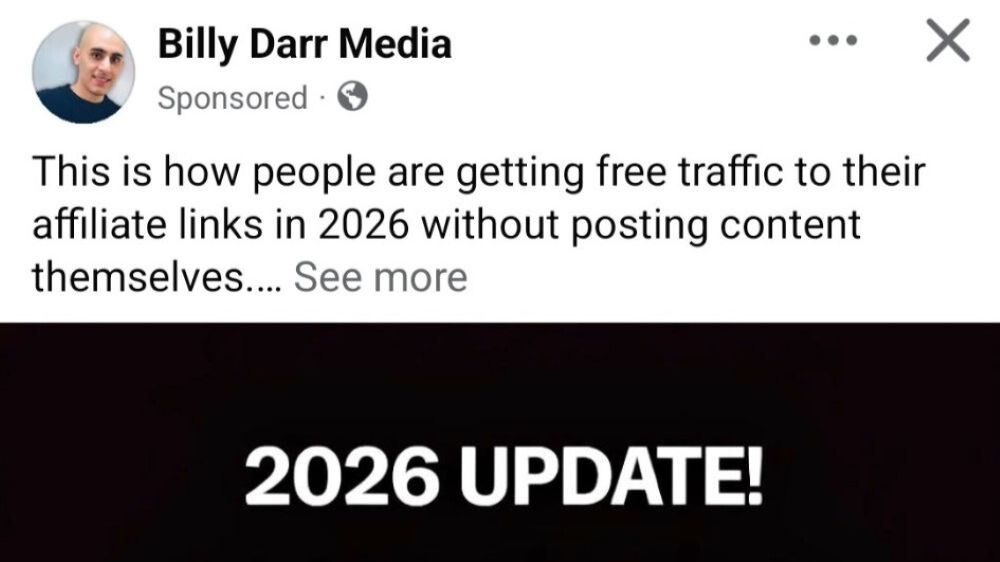
Recently, I started seeing a new version of this claim all over Facebook. This time, it’s powered by “AI” and promises to automatically promote your affiliate links on TikTok 24/7 without you doing any work.
The product is called The Automatic Affiliate, and according to the ads, it’s supposed to eliminate the hardest parts of affiliate marketing:
- Creating content
- Posting daily
- Learning traffic
- Spending money on ads
Instead, you just connect your TikTok account, paste your link, and let the AI handle everything.
Sounds incredible… right?
But here’s the truth.
I’ve been in affiliate marketing since 2011, and successfully building online income since 2014. I’ve watched these types of funnels evolve over the years. The technology changes. The buzzwords change. But the core promise stays exactly the same.
“Free traffic with no work.”
So in this review, I went through the funnel myself, captured screenshots, and analyzed exactly how this system works, who it’s really for, and whether it’s actually legitimate or just another recycled automation hype product.
If you’re thinking about buying The Automatic Affiliate, this honest breakdown will help you make a smarter decision.
The Facebook Ad That Started It All
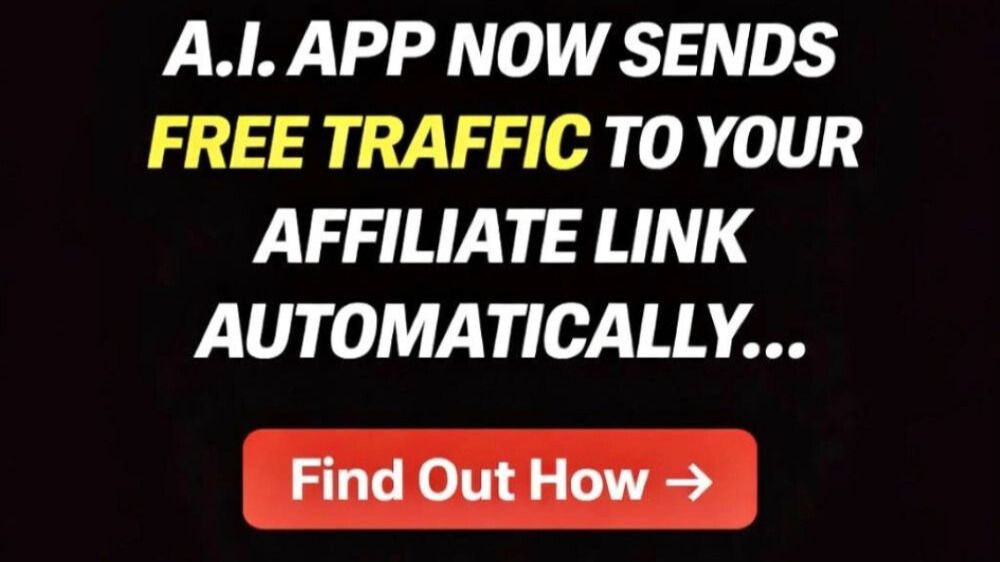
The first time I saw The Automatic Affiliate, it showed up in my Facebook feed with a bold claim:
“AI now sends FREE traffic to your affiliate links automatically.”
If you’ve been in this space long enough, you know that phrase alone should trigger some skepticism.
The ad promises:
- No content creation
- No paid ads
- No learning curve
- No experience required
- Just paste your link and let the AI do the work
At first glance, this sounds like the ultimate beginner solution. But if something sounds too easy in affiliate marketing, it usually is.
I’ve reviewed dozens of funnels over the years, and the pattern here looked very familiar. In fact, it reminded me of other automation-heavy systems I’ve broken down before, like my Super Affiliate AI Review and my review of The Invisible Affiliate System.
Different branding. Same promise.
So I clicked the ad and went through the funnel myself.
The Psychology Behind This Funnel
Before we even get into the product, it’s important to understand what this funnel is doing psychologically.
The landing page starts by validating real frustrations.
It talks about how:
- Promoting affiliate links is exhausting
- Making TikToks is hard
- Posting daily feels like a full-time job
- Paid ads destroy your margins
- Beginners feel invisible online
Here’s the thing.
All of that is true.
Affiliate marketing is not easy. Traffic takes time to build. Content takes effort. Skills take practice.
But instead of teaching beginners how to solve those problems, this funnel uses them to position a “magic solution.”
This exact pattern is something I’ve discussed in detail before in Exposing Online Scams and the Legit Path to Success.
First, they create emotional tension. Then they remove every legitimate solution so their offer becomes the only path forward.
The Core Claim: AI Promotes Your Affiliate Links for You
The main promise of The Automatic Affiliate is simple:
Connect your TikTok account, paste your affiliate link, and let AI automatically create and post viral content 24/7.
This sounds powerful. But when you step back and analyze it logically, several major problems appear.
First, TikTok is not a passive traffic platform.
It rewards:
- Engagement
- Authenticity
- Real creators
- Human interaction
Mass automation and spam content usually lead to account bans or shadowbans.
Second, if this technology truly worked the way they claim, it would be incredibly valuable.
Which leads to an obvious question:
Why would anyone sell it for $7?
The $7 Entry Trap (And What Happens Next)
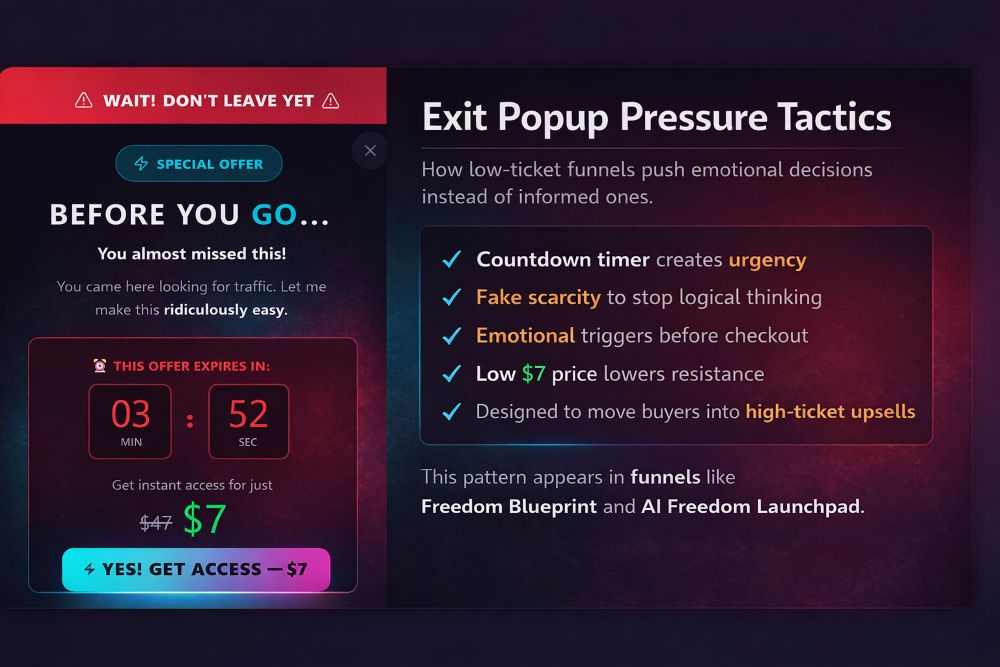
This is where the real funnel structure becomes clear.
The Automatic Affiliate starts with a very low entry price. This is known as a tripwire offer. The goal is not profit. The goal is volume.
Once you enter the ecosystem, you are typically exposed to:
- Upsells
- Coaching programs
- Recurring tools
- High-ticket offers
This model is not unique. In fact, I’ve seen nearly identical strategies used in funnels like Freedom Blueprint and AI Freedom Launchpad.
The $7 price point is designed to lower your defenses and get you into the system before you have time to research.
Why “Free Traffic” Is One of the Biggest Lies in Affiliate Marketing
There is no such thing as free traffic without effort.
Even organic traffic requires:
- Time
- Learning
- Consistency
- Testing
Many beginners fall for this because they haven’t yet learned how real affiliate marketing works.
This is why I always encourage new marketers to focus on skill development first, something I explain in Essential Skills for Online Entrepreneurs and The How-To Guide of Affiliate Marketing.
Automation can enhance a real strategy. But it cannot replace one.
The Reality of AI in Affiliate Marketing Today
AI is an incredible tool. I use it myself.
But here’s the difference.
Legitimate AI tools help you:
- Research
- Write
- Analyze
- Optimize
They do not magically create viral content and send buyers to your affiliate links without any involvement.
The Automatic Affiliate leans heavily on the buzzword “AI” because it builds trust and curiosity.
This trend is becoming more common across the industry, which I’ve explored in Affiliate Marketing Trends 2026: What Marketers Need to Know.
The danger is that beginners confuse automation with business building.
They are not the same.
The TikTok Automation Problem Most Beginners Don’t Understand
One of the biggest risks with systems like this is platform dependency.
If your entire strategy depends on:
- One traffic source
- One platform
- One automation system
You are building on unstable ground.
This is why many beginners struggle after following systems like Smartphone Freedom Lifestyle and The Mobile Profit System.
They never build real assets.
They do not own:
- Their audience
- Their traffic
- Their platform
And when the algorithm changes, everything disappears.
Who Created The Automatic Affiliate?

The creator behind The Automatic Affiliate is presented as Billy Darr, a digital product vendor who has been active in the affiliate marketing and software launch space in recent years. He is known for releasing automation-focused tools that aim to simplify various aspects of online marketing, particularly traffic generation and content creation.
Billy Darr appears to be part of a growing group of online entrepreneurs who specialize in launching cloud-based software products through affiliate marketplaces such as WarriorPlus, JVZoo, and similar platforms. These tools are often marketed around current trends like AI automation, TikTok traffic, YouTube channel growth, and “done-for-you” marketing systems.
Over the past few years, vendors in this space have released multiple products designed to automate tasks such as:
- Posting content
- Generating traffic
- Creating funnels
- Promoting affiliate links
- Building audiences without showing your face
Some of his other software-style launches include tools focused on YouTube automation, affiliate funnel creation, and AI-powered traffic strategies.
While many of these products are legitimate in the sense that buyers receive access after purchase, they are often part of a fast-moving launch model. In this business model, new tools are released regularly as trends change, which can lead to shorter product lifespans and mixed long-term results for beginners.
Because of this, some experienced marketers refer to these types of launches as “shiny object” products. These are tools that promise quick results with minimal effort but may not provide the foundational skills needed to build a stable, long-term affiliate business.
This doesn’t mean every product in this category is a scam. However, it’s important for beginners to understand the difference between automation tools and real business education. Sustainable affiliate marketing usually requires learning core skills such as content creation, traffic generation, and audience building.
Understanding the creator and the business model behind these launches can help you make more informed decisions before investing your time or money.
Major Red Flags I Found Inside The Automatic Affiliate Funnel
After going through the funnel myself, several warning signs stood out. None of these individually prove something is a scam, but when you see them together, they should raise serious concerns.
Unrealistic Income Claims
The entire marketing message revolves around “automatic” traffic and commissions. In real affiliate marketing, there is no such thing as passive income without first building a system, audience, and skill set.
Any platform that promises income with little to no effort is usually selling a dream, not a sustainable business model.
Overuse of the Word “AI”
Right now, AI is the hottest buzzword in marketing. Many programs use it to create perceived value even when the underlying system is nothing more than basic automation.
The Automatic Affiliate heavily relies on this psychological trigger. But automation is not the same as intelligence, and it certainly isn’t a replacement for strategy.
Platform Dependency
The entire system depends on TikTok. This means:
- Your account could be banned
- Your content could be shadowbanned
- The algorithm could change overnight
- Your traffic could disappear instantly
When your business depends on a single platform you don’t control, you’re not building a real business.
The Low-Ticket Entry With High-Ticket Upsells
The $7 entry point is designed to lower resistance. From years of experience reviewing funnels like this, the real monetization often happens later through coaching, masterminds, or recurring tools.
Many beginners don’t realize this until they’re already emotionally invested.
No Real Skill Development
Perhaps the biggest red flag is that this system does not teach transferable skills.
If the software stops working or the platform shuts down, you are left with nothing.
That is the opposite of long-term affiliate marketing.
The Long-Term Affiliate Marketing Model That Actually Works
After more than a decade in this space, here’s what I’ve learned.
The affiliates who succeed long-term don’t chase shortcuts. They focus on building assets they control. That means:
- Websites
- Content
- Search traffic
- Email lists
- Authority
This is the exact opposite of the “done-for-you” or automation-first model.
When I finally found a legitimate training community in 2014, everything changed. Instead of promising overnight success, they focused on:
- Skill development
- Real marketing fundamentals
- Long-term growth
- Ownership of your business
That shift is what allowed me to move from years of frustration to consistent progress.
If you want to understand this model in more detail, I break it down inside My Honest Wealthy Affiliate Review: An Up-To-Date Look Inside and explain how beginners can start building real assets from day one.
This approach is slower at first, but it creates stability, confidence, and long-term income potential.
And most importantly, you are never dependent on a single platform or piece of software.
If you want to see the exact training and community that helped me move from years of frustration to building real online income, you can start with a free account and explore it for yourself.
There’s no credit card required, and you’ll be able to see how real affiliate marketing works before making any decisions.
I’m being straight with you here and doing you a solid, because I’ve been down the DFY (Done For You) path before and I lost thousands of dollars to programs just like this. My first run in with a so called Done for you platform was called Plug In Profit Site. Stone Evens really took me for a ride back in 2011 and from that point on, I decided I would expose these bottom feeders, preying on complete newbies for what they really are.
Stone Evens Ignited a fire in me and I swore to expose him and every program like his PIPS platform that mislead beginners to line their own pockets and mislead people.
I Now investigate the sketchy programs so you don’t fall victim to their schemes, and yes I did find training that actually works, but I spent 3 years of failure, from 2011 – 2014 until I found a LEGIT community that delivers what they promise.
The Real Pros and Cons of The Automatic Affiliate
Pros:
Low entry cost
Beginner-friendly concept
Appeals to people who struggle with traffic
Introduces automation ideas
Cons:
- Unrealistic expectations
- Over-reliance on one platform
- Potential account risks
- No real skill development
- No long-term business ownership
- Encourages passive thinking instead of active learning
For beginners, the biggest risk is not losing $7.
It’s losing time, confidence, and direction, and don’t forget the inevitable High ticket Up-Sell that will follow. $7 is just the beginning of the nightmare that follows.
Why Beginners Fall For Systems Like This
This is not about intelligence. It’s about psychology.
Most people are not lazy. They are overwhelmed.
When you first discover affiliate marketing, you quickly realize:
- There are thousands of tools
- Dozens of traffic methods
- Conflicting advice everywhere
- A steep learning curve
Programs like The Automatic Affiliate promise relief from that confusion.
They sell simplicity.
But real success comes from clarity, not shortcuts.
This is why education and guidance matter so much. Once you understand how traffic, trust, and conversions actually work, these funnels lose their power.
The Automatic Affiliate FAQ
Is The Automatic Affiliate a scam?
It may not be a scam in the traditional sense because you do receive access to a product after purchasing. However, the marketing claims can be misleading and create unrealistic expectations for beginners.
Can AI really send free traffic to affiliate links?
No. AI can help with content creation and research, but it cannot replace real marketing strategies such as SEO, audience building, and trust development.
Is TikTok a reliable long-term affiliate traffic source?
TikTok can be effective, but relying on a single platform is risky. Algorithms change, accounts get banned, and traffic can disappear overnight.
Why do so many beginner affiliate systems use low entry prices?
Low-ticket offers reduce resistance and allow marketers to build large email lists. The real revenue often comes from upsells and higher-priced programs later.
What should beginners focus on instead?
Beginners should focus on building real skills, understanding traffic, and creating long-term assets such as websites and content.
Final Verdict: Is The Automatic Affiliate Legit?
The Automatic Affiliate is not necessarily a scam in the sense that you receive something after purchasing.
However, the marketing claims are extremely misleading. Just like Adams Method, and I know this one too, because I’ve been inside and exposed the truth.
The idea that you can generate consistent affiliate income by simply pasting a link and letting AI handle everything is unrealistic.
For beginners, this type of system often delays real progress and creates the illusion that success should be easy.
In reality, sustainable affiliate marketing requires learning, effort, and time.
If your goal is to build a long-term online business, it is far more valuable to invest in real education and skill-building rather than chasing automated shortcuts.
Your Turn
Have you seen this ad on Facebook or TikTok?
Did you try The Automatic Affiliate?
What was your experience?
Leave a comment below and share your thoughts. Your feedback could help someone else avoid a costly mistake.
Recommended Next Steps
If you’re serious about building a legitimate affiliate marketing business, I recommend starting with training that focuses on long-term growth, ownership, and real skills.
Start your free training here
Affiliate Disclosure:
Some links on this page are affiliate links. This means if you choose to purchase through them, I may earn a small commission at no additional cost to you. I only recommend training, tools, and programs that I personally trust and believe can help beginners and intermediate marketers avoid scams and build a legitimate, long-term online business.
Scam Busters USA was created to bring transparency back to the affiliate marketing industry. My goal is not to hype products or push high-ticket coaching, but to give you honest, first-hand insights so you can make informed decisions. Any commissions earned through this site help support ongoing investigations, testing, and educational content designed to protect others from misleading or predatory marketing practices.
About the Author
Hi, I’m Jason.

I’ve been involved in affiliate marketing since 2011, and I’ve been successfully building online income streams since 2014. But my journey didn’t start with success. Like many beginners, I was drawn in by promises of easy money, automated systems, and “done-for-you” business models. I lost time, money, and confidence chasing shortcuts that never worked.
That experience is exactly why I created Scam Busters USA.
I know what it feels like to be overwhelmed, skeptical, and unsure of who to trust. I’ve been where you are right now, trying to figure out what’s real and what’s just another funnel designed to take your money.
Today, my focus is on building real, sustainable online businesses based on skills, ownership, and long-term growth. I believe affiliate marketing is one of the most powerful opportunities available—but only when it’s done the right way.
Through this site, I share honest reviews, first-hand investigations, and practical guidance so you can avoid the mistakes I made and move forward with confidence.
If you’ve had an experience with any of the programs I review, I encourage you to share your story in the comments. Your insight could help someone else avoid a costly mistake and find a better path forward.
This is a really solid breakdown, Jason. I like how you didn’t just jump straight to calling it a scam, but actually walked through how the funnel works and why the claims don’t hold up in the real world. The part that stood out most to me was your explanation of the “free traffic” angle. That’s where a lot of beginners get pulled in, especially when they’re already overwhelmed. You explained it in a way that makes it clear without sounding harsh or dismissive, which is important.
I also think your point about platform dependency deserves more attention. A lot of people don’t realize how risky it is to rely entirely on something like TikTok until it’s too late. One account issue or algorithm change and everything disappears overnight. It’s also refreshing to see you emphasize skill-building instead of shortcuts. That’s something a lot of these low-ticket funnels completely ignore, and it’s usually why people end up going in circles. Overall, this feels like an honest review written from experience, not just opinion. Definitely helpful for anyone who’s considering jumping into one of these “AI does everything for you” systems.
Hey Shafna,
I really appreciate you taking the time to write this—seriously, this is the kind of feedback that tells me the message is landing the way it’s supposed to.
You nailed exactly what I was trying to do with that review. Not everything is an outright “scam” in the sense of being fake… but that doesn’t make it a good or sustainable way to build income either. A lot of these funnels live in that gray area where the marketing promise is what really misleads people, especially beginners who are already overwhelmed and looking for something simple.
That “free traffic” angle is a big one. It sounds great on the surface, but like you said, that’s where people get pulled in. What they don’t realize is that it usually means relying on platforms you don’t control—and that’s where the real risk comes in.
I’m glad you brought up platform dependency too, because that’s something I’ve personally experienced. When your entire strategy depends on TikTok, Facebook, or any one platform, you’re building on borrowed ground. One algorithm shift, one account issue, and everything you worked for can disappear overnight. That’s not a business—that’s a gamble.
At the end of the day, the reason I emphasize skill-building so much is because that’s the only thing that sticks. Traffic strategies change. Platforms come and go. But if you understand how to create content, build trust, and actually help people solve problems, you’re not starting over every time something changes.
Really appreciate your thoughtful comment, Shafna. This is exactly the kind of conversation that helps others see through the noise and make better decisions.
– Jason