
If you’ve spent any time researching ways to make money online, chances are you’ve come across ClickFunnels.
Maybe it was through a YouTube ad.
A webinar.
A “One Funnel Away” success story.
Or a social media marketer claiming a simple sales funnel changed their entire life overnight.
At first glance, ClickFunnels looks like a powerful all-in-one business platform built to help entrepreneurs sell products, generate leads, and automate online marketing.
And to be fair — parts of that are true.
ClickFunnels is a legitimate company with a massive following, a recognizable brand, and a platform that many experienced marketers genuinely use.
But after spending time digging deeper into the ecosystem surrounding ClickFunnels, I think there’s a much bigger conversation beginners need to hear.
Because this isn’t just a website builder.
It’s an entire funnel-marketing culture built around:
- upsells
- automation
- recurring subscriptions
- high-ticket offers
- AI-powered sales systems
- and the idea that you may be “one funnel away” from financial freedom.
That’s where things can start becoming confusing for beginners.
In this ClickFunnels review, I’m not going to give you another hype-filled software pitch.
Instead, I want to break down:
- what ClickFunnels actually does
- how funnel marketing really works
- the hidden costs beginners often underestimate
- the psychology behind modern funnel culture
- and whether ClickFunnels is realistically worth it for the average person trying to build an online business today.
Because there’s a big difference between building funnels…
…and building a real long-term business.
TL;DR
ClickFunnels is a legitimate funnel-building platform used by real marketers and businesses to create landing pages, sales funnels, email sequences, checkout pages, and automated marketing systems.
But for many beginners, the reality behind ClickFunnels is far more complicated than the marketing often makes it appear.
While the platform itself is real, the surrounding funnel ecosystem frequently promotes:
- aggressive upsells
- expensive coaching programs
- paid traffic dependency
- “done-for-you” AI funnels
- and unrealistic online income expectations.
That doesn’t automatically make ClickFunnels a scam.
However, I do believe many beginners underestimate:
- the true cost of funnel marketing
- how difficult traffic generation actually is
- and how quickly funnel stacking can become overwhelming.
In my opinion, ClickFunnels makes far more sense for:
- experienced marketers
- businesses already selling products
- advertisers running paid traffic
- and people who already understand sales psychology.
For complete beginners with limited budgets, the learning curve — and the ongoing costs — can become difficult very quickly.
And that’s where many people start looking for more stable, long-term business models focused on:
- organic traffic
- SEO
- content marketing
- and skill development instead of chasing the next “magic funnel.”
If you’re completely new to affiliate marketing or online business, I strongly recommend learning how the industry actually works before jumping into expensive funnel systems and high-pressure marketing environments.
You can start here:
Quick Verdict
Is ClickFunnels Legit?
Yes. ClickFunnels is a legitimate funnel-building platform used by real marketers and online businesses.
Is It Beginner Friendly?
Not always.
Many beginners underestimate:
- the learning curve
- ongoing monthly costs
- upsells
- and how difficult traffic generation actually is.
What I Personally Think
ClickFunnels can be a powerful tool in the right hands.
But I also think the surrounding funnel-marketing culture often creates unrealistic expectations about how easy online income really is.
Biggest Beginner Mistake
Thinking the funnel itself is the business.
In reality, success still depends on:
- traffic
- marketing skills
- consistency
- and building real long-term value.
What Is ClickFunnels and How Does It Work?
At its core, ClickFunnels is an online sales funnel builder designed to help businesses capture leads, sell products, and automate parts of the marketing process.
Instead of building a traditional website with multiple pages and navigation menus, ClickFunnels focuses on guiding visitors through a specific sales path — commonly called a funnel.
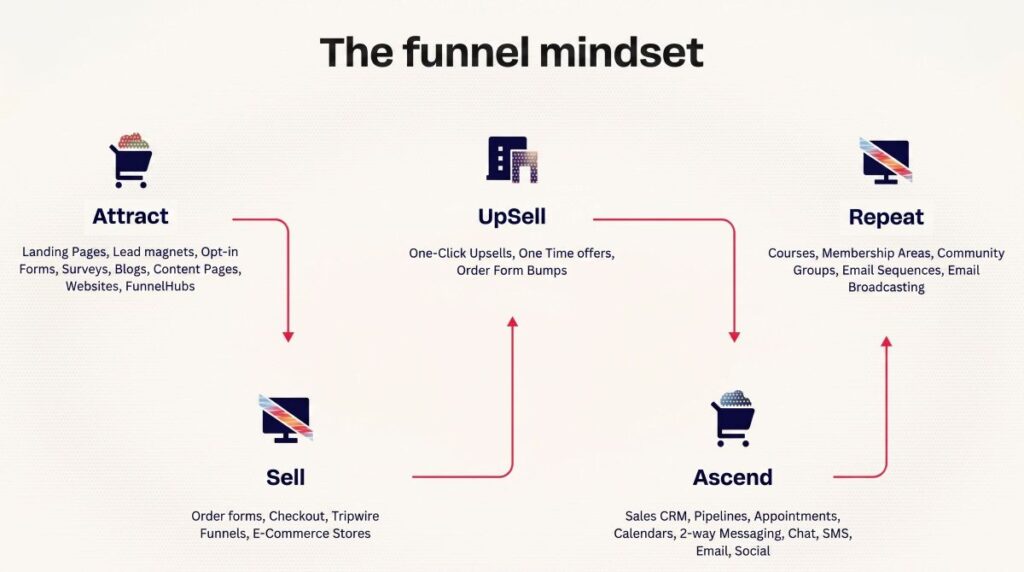
A typical funnel might include:
- a landing page
- an email opt-in form
- a sales page
- upsells or add-ons
- checkout pages
- and automated follow-up emails.
The idea is to move visitors step-by-step toward a desired action, whether that’s:
- buying a product
- joining a webinar
- scheduling a call
- subscribing to a service
- or entering a high-ticket coaching funnel.
Over the years, ClickFunnels expanded far beyond simple landing pages.
Today, the platform includes tools for:
- email marketing
- memberships
- ecommerce
- webinar funnels
- affiliate management
- AI-assisted funnel building
- and sales automation.
This is one of the reasons ClickFunnels became so popular in the online marketing world.
For experienced marketers, it can be an extremely powerful system.
But for beginners, the sheer amount of moving parts can also become overwhelming very quickly — especially when combined with paid advertising, upsells, coaching programs, and the constant pressure to “scale” faster.
That’s where understanding the larger funnel ecosystem becomes important.
Why ClickFunnels Became So Popular
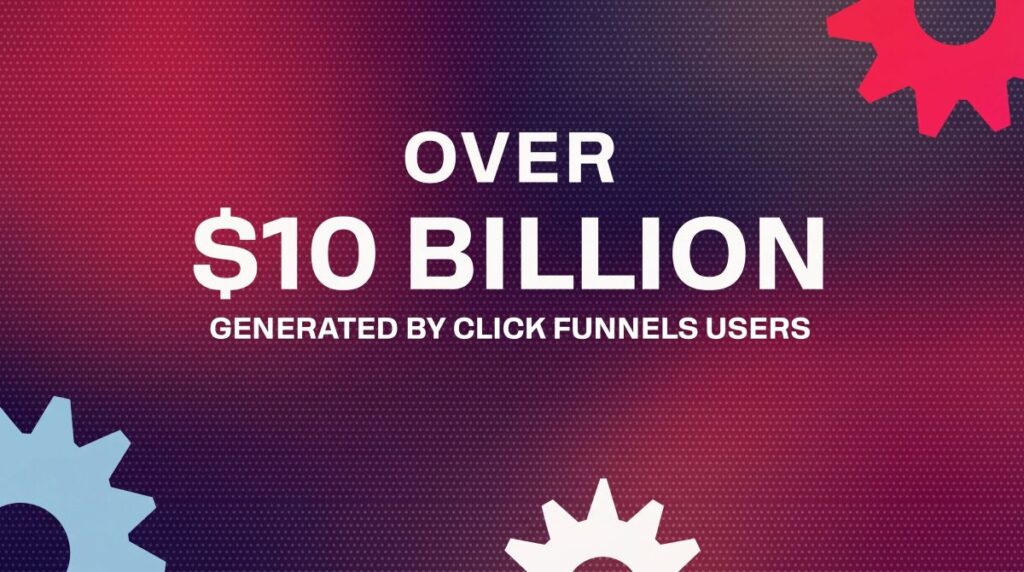
To understand why ClickFunnels exploded in popularity, you have to look beyond the software itself.
ClickFunnels didn’t just market landing pages.
It marketed the idea of transformation.
Over the years, the platform became heavily associated with:
- online entrepreneurship
- financial freedom
- “One Funnel Away” success stories
- high-energy live events
- and the belief that almost anyone could build an online business with the right funnel.
That message resonated with a massive audience.
Especially during the rise of:
- affiliate marketing
- coaching programs
- digital courses
- ecommerce
- webinar funnels
- and more recently, AI-powered marketing systems.
At the center of all this was Russell Brunson, who became one of the most recognizable figures in modern funnel marketing.
His books, events, training programs, and “One Funnel Away” messaging helped create an entire ecosystem built around funnel-building culture.
And to be fair, some people genuinely have built successful businesses using these strategies.
But I also think this is where many beginners start developing unrealistic expectations about online income.
When you constantly see:
- income screenshots
- sold-out events
- luxury lifestyle marketing
- testimonials
- and phrases like “you’re one funnel away” from success…
it becomes very easy to believe the software itself is the shortcut.
In reality, most successful marketers using ClickFunnels already understand:
- traffic generation
- copywriting
- offer creation
- customer psychology
- email marketing
- and long-term business strategy.
That’s a very different situation than a complete beginner opening their first funnel account hoping the platform itself will create income automatically.
And honestly, this same “shortcut marketing” mentality shows up across a large part of the make money online industry today.
I’ve covered similar funnel systems and high-pressure marketing environments in investigations like:
- One Comma Club Challenge Review
- Invisible Affiliate System Review
- Freedom Affiliate Formula Review
- Adams Method Review
because many of these programs rely on the same core idea:
that the right funnel can completely transform your financial future almost overnight.
That’s where separating marketing psychology from business reality becomes extremely important.
The Psychology Behind Funnel Marketing
One thing I noticed while researching ClickFunnels is that the platform doesn’t simply market software.
It markets momentum.
Almost every part of the funnel ecosystem is designed to make people feel like they’re standing right on the edge of a breakthrough:
- live events
- success stories
- countdown timers
- social proof
- income claims
- “one funnel away” messaging
- high-energy entrepreneur culture
- AI-powered business promises
And to be fair, motivation itself is not a bad thing.
The problem starts when emotional momentum begins replacing realistic business expectations.
For beginners especially, this type of environment can create the impression that:
- success happens quickly
- funnels do most of the work
- automation replaces skill-building
- and traffic magically appears once a funnel is live.
But in reality, most profitable online businesses still require:
- audience building
- content creation
- traffic generation
- testing
- patience
- and long-term consistency.
That’s one reason I’ve investigated so many funnel-based opportunities over the past few years.
Because many of them follow a very similar psychological structure:
- create excitement
- simplify the process
- amplify potential income
- introduce urgency
- and position the system as the missing piece.
I’ve seen variations of this same formula in investigations like:
- The Invisible Affiliate System Review
- Freedom Affiliate Formula Review
- Adams Method Review
- $500/Day AI Funnel Review
- Mobile Profit System Review
Even though the branding changes, the emotional sales structure is often remarkably similar.
And honestly, that doesn’t automatically make every funnel platform a scam.
But it DOES mean beginners need to slow down and evaluate these systems carefully before assuming they’re buying a shortcut to online income.
That’s why understanding how funnel marketing works psychologically is just as important as understanding the software itself.
Check out my Start Here page if you’re looking for a more stable, beginner-friendly approach to building online income.
The Real Cost of Building Funnels
One thing many beginners underestimate about ClickFunnels is that the monthly subscription is usually only the beginning.
Once you enter the funnel-building world, additional costs can start stacking up very quickly.
Depending on the business model, many users eventually end up paying for:
- email marketing tools
- domains and hosting
- AI writing software
- paid advertising
- tracking tools
- funnel templates
- coaching programs
- automation platforms
- webinar software
- and outsourced content or copywriting.
For experienced marketers running successful campaigns, these costs may simply be part of doing business.
But for beginners trying to build an online income stream from scratch, the financial pressure can become overwhelming surprisingly fast.
This is especially true in paid traffic environments where many people are spending money on:
- Facebook ads
- YouTube ads
- solo ads
- or influencer promotions
before they’ve fully learned:
- copywriting
- audience targeting
- conversion optimization
- or long-term traffic generation.
And honestly, this is where many funnel systems start becoming difficult for beginners to sustain financially.
Because if traffic slows down or conversions don’t happen immediately, the recurring software costs usually continue regardless of whether the business is profitable yet.
That’s one reason I always encourage people to fully understand how online business models work before jumping into expensive software stacks or high-pressure marketing ecosystems.
Especially in an industry where emotional sales messaging can sometimes make success look much faster and easier than it really is.
What Real Users Are Saying About ClickFunnels
One thing I always recommend before joining any online business platform is researching real customer experiences outside of the official sales pages.
And when you start digging through places like Reddit discussions, Trustpilot reviews, and BBB complaint listings, a much more balanced picture of ClickFunnels starts to emerge.
Some users genuinely praise the platform for:
- funnel customization
- automation tools
- sales features
- and the ability to manage multiple parts of an online business in one place.
Experienced marketers especially tend to appreciate the flexibility ClickFunnels offers once they understand how funnel systems actually work.
At the same time, many newer users report frustrations involving:
- recurring billing confusion
- expensive monthly costs
- steep learning curves
- upsells
- cancellation difficulties
- and unrealistic expectations about how quickly funnels generate income.
You can see examples of these conversations and complaints here:
- Reddit Discussion: Read Reddit Discussion Here.
- Trustpilot Reviews: Read Trustpilot Reviews Here.
- BBB Complaints: See BBB Complaints Here.
And honestly, that last point is probably the biggest issue I see across the funnel-marketing industry as a whole.
A lot of beginners enter these ecosystems believing the software itself will create results automatically.
But most successful funnel marketers already understand:
- copywriting
- traffic generation
- audience building
- email marketing
- and paid advertising.
Without those skills, even the best funnel builder can quickly become an expensive monthly subscription instead of a profitable business tool.
That’s why I always encourage people to separate:
- the software itself
from - the marketing promises surrounding it.
Because those are often two very different conversations.
Can You Really Make Money With ClickFunnels?
Yes — people absolutely make money using ClickFunnels.
But I think it’s very important to understand what’s actually generating the income.
In most cases, successful ClickFunnels users already have:
- products to sell
- an audience
- paid advertising experience
- email lists
- marketing knowledge
- or established businesses before the funnel is even built.
The funnel itself is simply the delivery system.
That’s a major distinction many beginners miss.
Because online marketing often makes it sound like:
- the software creates the income
- automation replaces experience
- and launching a funnel automatically creates traffic and sales.
In reality, funnels still depend heavily on:
- traffic generation
- copywriting
- customer trust
- offer quality
- testing
- and long-term consistency.
And honestly, this is where many beginners start running into financial pressure.
Some people launch expensive funnels before they’ve fully learned:
- SEO
- organic traffic
- audience building
- conversion strategy
- or even the fundamentals of affiliate marketing itself.
That can quickly lead to a situation where recurring software costs continue long before the business becomes profitable.
This is one reason I generally believe beginners should focus on learning foundational online business skills first instead of immediately chasing high-pressure funnel systems and expensive paid advertising strategies.
Especially in an industry where many sales pages make success appear much faster and easier than it usually is in reality.
Funnel Building vs Building a Real Business
One thing I think beginners need to understand is that building a funnel and building a real online business are not always the same thing.
Funnels can absolutely be effective tools.
But a funnel by itself does not automatically create:
- traffic
- trust
- authority
- or long-term stability.
That part still has to be built.
And honestly, this is where many people start running into problems with modern funnel culture.
A lot of systems focus heavily on:
- speed
- automation
- scaling
- and fast conversions
before beginners have fully learned the fundamentals of online business itself.
That’s one reason I always encourage people to first understand:
- how online marketing actually works
- how traffic is generated
- how offers are evaluated
- and why most online businesses take time to grow.
I’ve covered this in guides like:
- How To Make Money Online Safely
- Why Most People Fail At Affiliate Marketing
- How To Analyze Make Money Online Offers Step-by-Step
because learning these foundational skills is often far more important than simply buying another software platform or funnel system.
And personally, I think this is where organic traffic strategies can become much more beginner-friendly long term.
Instead of constantly paying for ads or chasing the next “done-for-you” funnel system, many people eventually realize there’s enormous value in:
- building content
- creating trust
- learning SEO
- and developing real marketing skills over time.
That approach may feel slower in the beginning…
but it’s often far more stable than relying entirely on high-pressure funnel systems and recurring paid traffic costs.
What ClickFunnels Gets Right
To keep this review balanced, I also think it’s important to acknowledge what ClickFunnels does well.
Because despite all the hype surrounding funnel culture, the platform itself is genuinely powerful in the hands of experienced marketers.
ClickFunnels gives users the ability to:
- build landing pages quickly
- create sales funnels
- automate follow-up sequences
- manage checkout flows
- run webinar funnels
- and organize multiple marketing processes in one ecosystem.
For businesses already generating traffic and sales, that level of convenience can be extremely valuable.
I also understand why many entrepreneurs are attracted to the platform.
Compared to trying to piece together:
- separate page builders
- email tools
- checkout systems
- affiliate software
- and automation platforms
ClickFunnels offers a much more centralized experience.
And to be fair, some people genuinely thrive in fast-moving funnel environments where:
- paid ads
- webinars
- launches
- upsells
- and aggressive scaling strategies
are already part of the business model.
My concern has never really been the software itself.
It’s more about the expectations many beginners develop after being exposed to nonstop funnel-marketing hype before fully understanding how online business actually works.
Because when used realistically — and with the right experience level — ClickFunnels can absolutely be a legitimate business tool.
Better Alternatives for Beginners?
I don’t think ClickFunnels is necessarily the wrong platform.
But I do think many beginners jump into funnel ecosystems before they’ve developed the core skills needed to build a stable online business.
That’s an important distinction.
Because for someone with:
- paid advertising experience
- sales knowledge
- an existing audience
- or a proven product
ClickFunnels may make complete sense.
But for complete beginners trying to learn how online business actually works, I personally believe there are often safer and more sustainable starting points.
Especially for people who:
- don’t want to rely heavily on paid ads
- feel overwhelmed by funnel stacking
- want to build long-term traffic
- prefer content-based business models
- or want to learn affiliate marketing step-by-step instead of chasing shortcuts.
That’s one reason I eventually became much more interested in:
- SEO
- organic traffic
- content marketing
- and long-term authority building
instead of constantly chasing the next funnel trend or high-pressure launch cycle.
And honestly, I think many beginners eventually realize that building trust and developing real skills can be far more valuable long term than endlessly buying software, upsells, and “done-for-you” systems.
If you’re looking for a more beginner-friendly approach to affiliate marketing and online business, you can check out the training platform I personally use below.
If you’re looking for a more stable, beginner-friendly way to learn affiliate marketing without relying heavily on paid ads and expensive funnel systems, this is the platform I personally use.
Final Thoughts
After spending time researching ClickFunnels, the biggest takeaway I can give beginners is this:
ClickFunnels is a legitimate tool — but tools alone rarely create successful online businesses.
What ultimately matters most is:
- understanding marketing
- learning how traffic works
- building trust
- creating value
- and developing real long-term skills.
And honestly, I think that message sometimes gets lost in modern funnel culture where everything is positioned as:
- faster
- easier
- automated
- and only “one funnel away” from success.
For experienced marketers, ClickFunnels can absolutely be powerful.
But for beginners, I believe it’s important to approach funnel systems carefully and with realistic expectations about:
- costs
- competition
- paid advertising
- and the amount of work required behind the scenes.
Because in the end, sustainable online income usually comes from building real assets and real skills over time — not simply buying another software platform.
If you’ve used ClickFunnels yourself, feel free to share your experience in the comments below.
And if there’s another online business platform, funnel system, or AI marketing program you’d like me to investigate here on Scam Busters USA, let me know.
Affiliate Disclaimer: Some links on this page may be affiliate links, meaning I may earn a commission if you decide to purchase through them at no additional cost to you. I only recommend platforms and services I personally believe provide legitimate value, and all opinions expressed in this review are my own.
About the Author

I’m Jason Taft, the founder of Scam Busters USA.
Over the years, I’ve spent countless hours researching affiliate marketing systems, funnel-based business models, AI income programs, and online business opportunities — especially the ones making bold promises to beginners.
I created Scam Busters USA to help people cut through the hype and make more informed decisions before spending money online.
My goal isn’t to attack every platform or claim everything is a scam.
Instead, I try to break down:
- how these systems actually work
- where the risks and red flags may exist
- what beginners often misunderstand
- and whether the business model realistically matches the marketing promises being made.
Most of my investigations focus on:
- affiliate marketing programs
- funnel systems
- AI income claims
- high-ticket coaching offers
- and modern make money online trends.
At the end of the day, I believe building real skills, realistic expectations, and long-term trust will always matter more than chasing shortcuts online.
Frequently Asked Questions
Is ClickFunnels a scam?
No, ClickFunnels itself is a legitimate funnel-building platform used by real businesses and marketers. However, I do think many beginners develop unrealistic expectations because of the aggressive marketing often surrounding funnel culture.
Can beginners make money with ClickFunnels?
It’s possible, but most successful ClickFunnels users already understand things like:
- traffic generation
- copywriting
- offer creation
- email marketing
- and customer psychology.
Beginners who expect the software alone to generate income are often disappointed.
Does ClickFunnels require paid ads?
Not necessarily, but many funnel systems heavily rely on paid advertising to generate traffic quickly. That can become expensive for beginners who are still learning the fundamentals of online marketing.
What is the One Funnel Away concept?
“One Funnel Away” is a popular marketing phrase heavily associated with the ClickFunnels ecosystem. The idea is that a single successful funnel could dramatically change your business or financial situation.
While motivational, I think beginners should approach these kinds of messages realistically and understand that long-term success usually requires far more than simply launching one funnel.
Is ClickFunnels worth the monthly cost?
That depends heavily on your experience level and business model.
For experienced marketers already generating sales and traffic, the platform may provide significant value.
For complete beginners, the ongoing costs of software, advertising, automation tools, and upsells can become overwhelming very quickly.
What’s a better alternative for beginners?
Personally, I think many beginners are often better off focusing first on:
- SEO
- organic traffic
- content creation
- audience building
- and foundational affiliate marketing skills
before jumping into expensive funnel ecosystems and paid advertising strategies.