
Before you trust a review that tells you to buy something, it helps to look at the page itself rather than the product it is reviewing. Fake review sites follow patterns you can learn to spot in a few minutes, long before you reach for your card. This is a walkthrough of what to check and in what order, so you can read any make-money-online review the way someone who builds these pages would read it.
Are All the Reviews Suspiciously Positive?
One warning sign worth looking for is a review website that seems to give nearly every product an outstanding rating.
Open three or four reviews on the same website and compare the scores. Does everything receive an 8.5, 9.0, or higher? Are there any products the reviewer actually recommends avoiding?
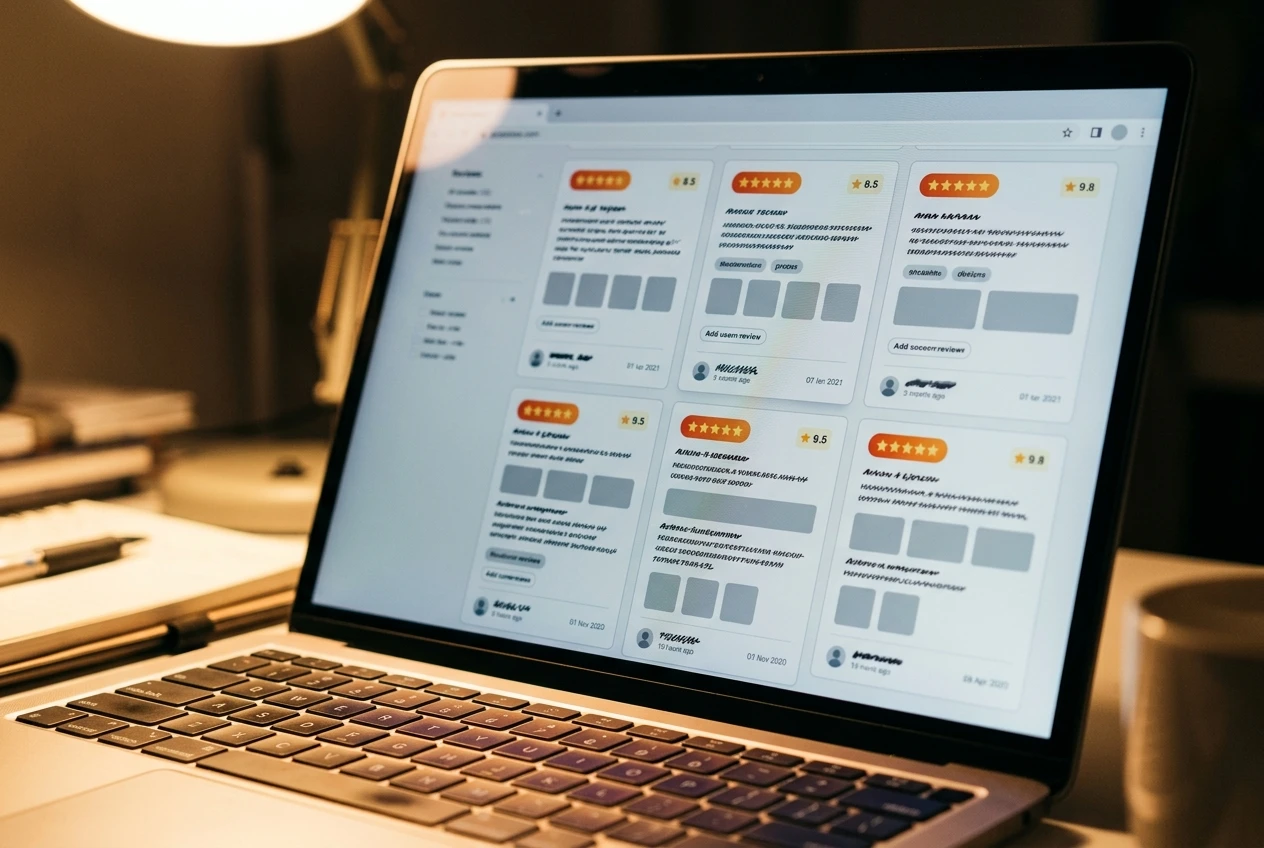
Consistently high ratings don’t automatically mean a website is dishonest. Some reviewers only cover products they believe are worth recommending. However, when every product receives glowing praise, the ratings deserve a closer look.
Affiliate commissions can create a potential conflict of interest. When a reviewer earns money from purchases made through their links, there’s a financial incentive to encourage readers to buy.
That doesn’t mean affiliate marketing is dishonest. Plenty of legitimate reviewers earn commissions while providing fair, balanced information. The important question is whether those financial relationships influence the reviewer’s conclusions.
Here’s what I recommend checking:
- Does the reviewer explain how the ratings are determined?
- Are there meaningful disadvantages listed alongside the benefits?
- Does the reviewer provide evidence of actually using or testing the product?
- Are there products the reviewer recommends avoiding?
- Does every review conveniently lead to a purchase recommendation?
A trustworthy review should help you decide whether a product is right for your particular needs, even when that means recommending against a purchase.
Before trusting a glowing recommendation, take a few minutes to compare other reviews on the same website. Look for consistency in how products are evaluated, not just how highly they’re rated.
Remember, a high rating isn’t necessarily a red flag. A high rating without supporting evidence is what deserves your attention.
Checking who is actually behind the site
Every legitimate review site has an owner who is willing to be found. Fake ones usually do not.
Start with the About page. Does it name a real person, or does it talk about “our team of experts” without naming a single one of them? Vague collective authorship is a common way to avoid attaching a real identity to claims that would not hold up under a name.
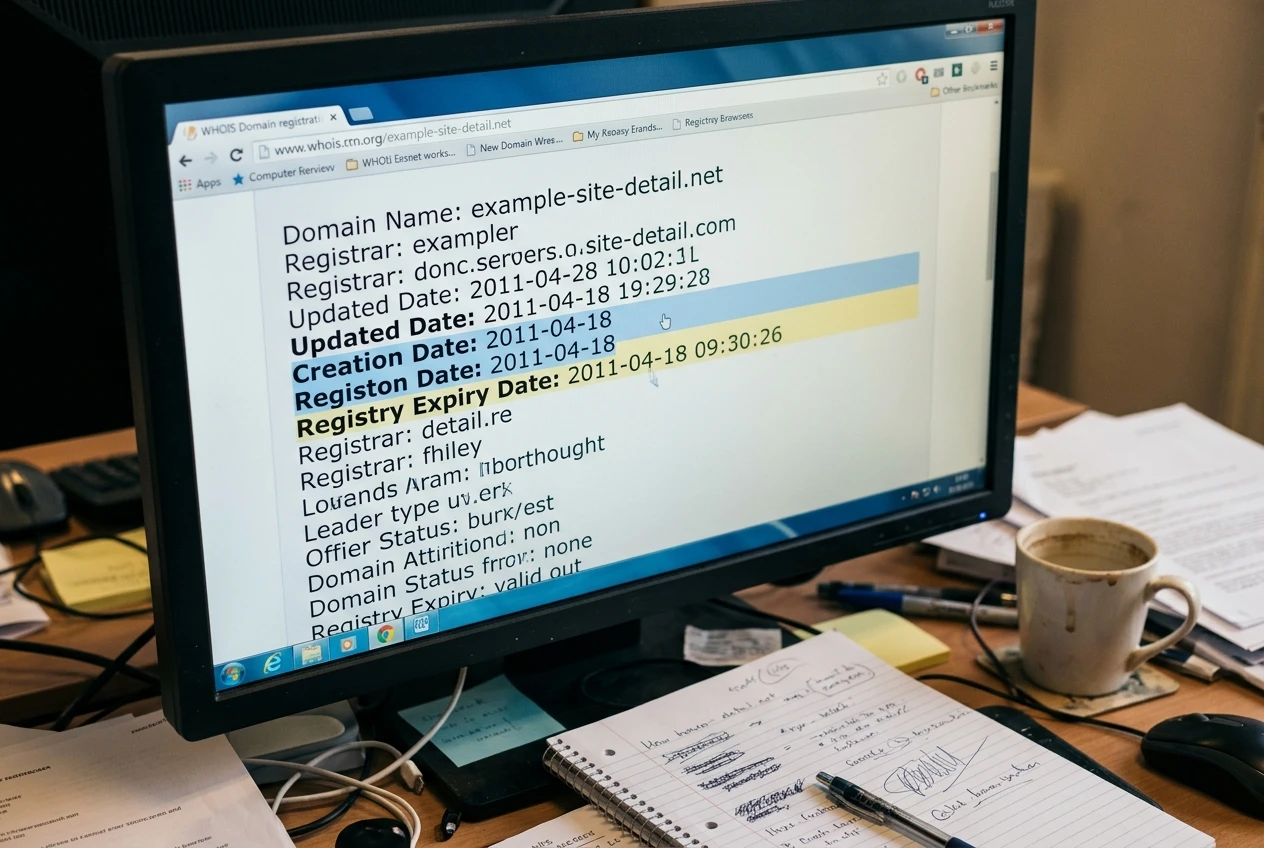
Next, check the domain’s age. Tools like Whois lookup services will show you when a domain was registered. A site that was registered eight months ago and already claims to have “tested over 200 money-making programs since 2015” is lying about its own history, and that is worth knowing before you read another word.
WHOIS records will also sometimes show the registrant’s country or organization, though many site owners use privacy services to hide this. That is not automatically a red flag on its own, plenty of legitimate sites use privacy protection, but combined with a vague About page and a suspiciously new domain, it starts to paint a picture.
A quick search for the site’s name plus the word “complaints” or “who owns” can also surface forum threads where other people have already done this digging for you.
Reading the affiliate disclosure for what it does not say
Almost every review site now has some kind of affiliate disclosure, because regulators require it and because its absence is an obvious red flag. But a disclosure existing is not the same as a disclosure saying anything useful.
Look for the specific relationship, not just the boilerplate. “This post may contain affiliate links” tells you nothing about how that relationship shapes what you are reading. Compare it to a disclosure that says something closer to: “I earn a commission if you buy through my link, and that commission can be as high as X, which is why you should weigh my recommendation against independent sources.”
Most fake review sites use the thinnest possible disclosure, often buried in a footer link or written in gray text on a white background, technically present but functionally invisible. The language itself is also worth reading closely. If the disclosure sits right next to a claim like “I personally use this every day and it changed my business,” ask whether that personal claim is doing more work than the disclosure is undoing.
A disclosure that tells you nothing concrete about the financial relationship is a disclosure written to satisfy a legal requirement, not to inform you.
Why screenshots of “earnings” prove nothing on their own
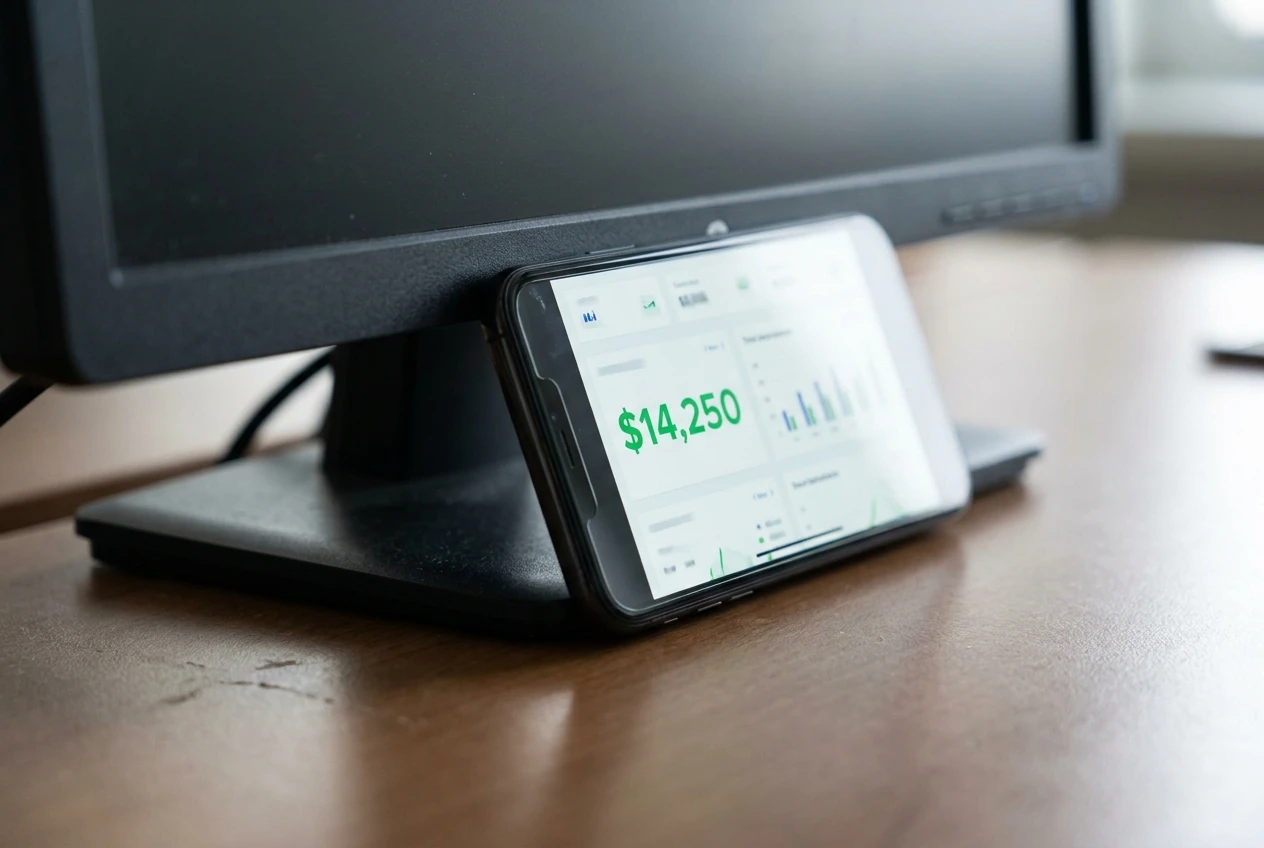
A screenshot of a dashboard showing a large number is one of the easiest things to produce and one of the hardest things for a reader to verify. It could be a real account. It could be a demo account. It could be someone else’s account used with permission, or without it. It could be edited.
None of this means every earnings screenshot is fake. It means a screenshot, by itself, is not evidence of anything, because there is no way for you to confirm the account belongs to the person showing it, that the dates are real, or that the number reflects profit rather than revenue before costs and refunds.
What would make a screenshot more credible is context around it: a video showing the dashboard being navigated live, a date-stamped series of screenshots over weeks or months rather than one isolated image, or a specific account of the traffic and spend that produced the number. A single cropped image with a big green total and no explanation of what produced it is the easiest kind of proof to fake and the hardest kind to check, which is exactly why it shows up so often.
Earnings screenshots are only part of the picture. Understanding how affiliate marketing actually works, including the time, expenses, and effort involved, is far more useful than looking at someone’s income dashboard. I explore these realities in my article, Does Affiliate Marketing Really Work?
Spotting templated language across supposedly independent reviews
Search engines reward specific phrases, and fake review networks often run dozens of sites off the same content template. The telltale sign is language that is too similar across sites that claim to be unconnected.
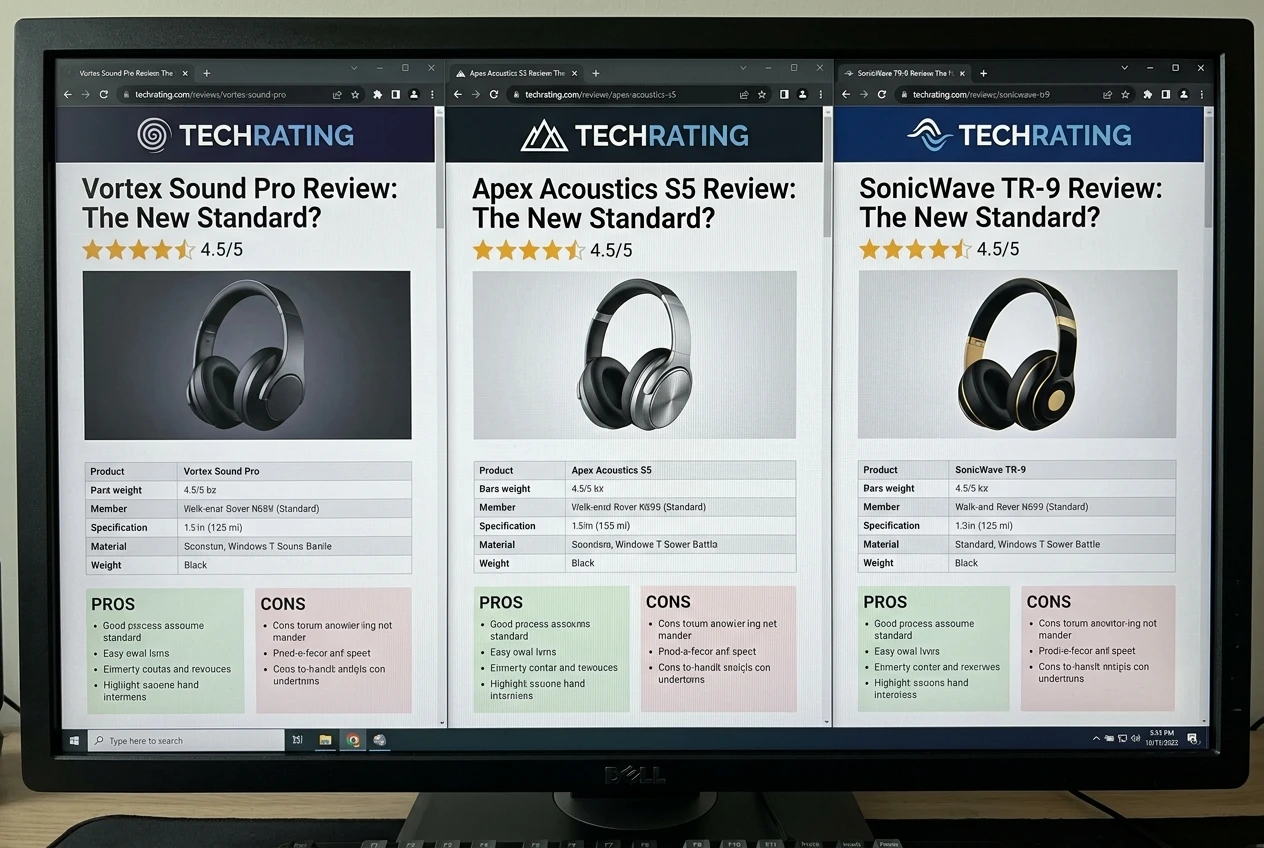
Try this: take a distinctive phrase from a review, something like “this program has helped thousands achieve financial freedom,” and search for it in quotation marks. If the exact same sentence appears on five other “independent” review sites, each claiming to be a personal, unaffiliated verdict, you have found a network, not five separate reviewers who happened to agree.
The structure of the reviews is another tell. Templated sites tend to follow an identical skeleton: a short intro, a bulleted list of “pros,” a shorter list of token “cons” that never actually disqualify the product, a pricing table, and a call to action. When the bones of the article are interchangeable and only the product name changes, the review was written to a formula, not from an actual evaluation.
Testing the comments section for real disagreement
A comments section with nothing but praise is worth treating the same way as a 9 out of 10 score on every product: suspicious by default.
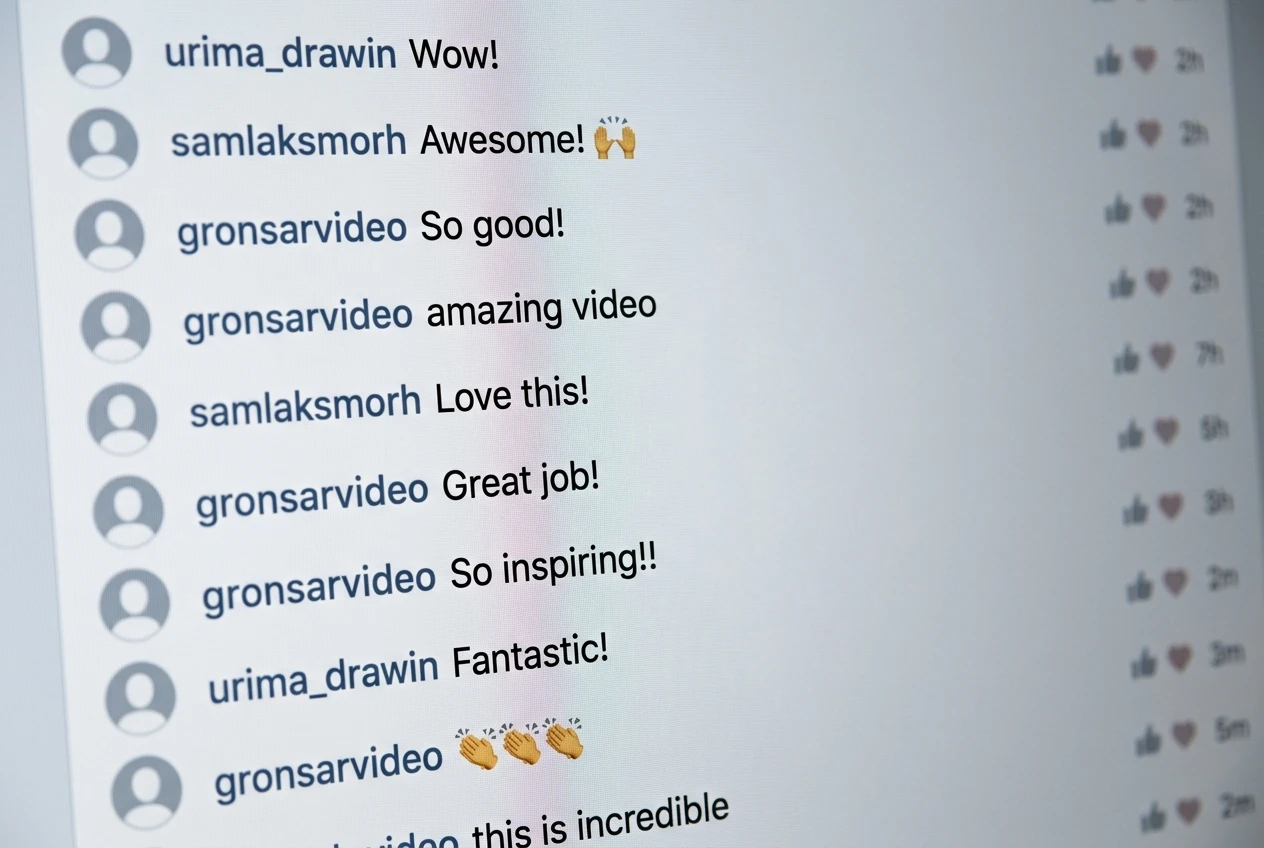
Real products attract real disagreement. Someone had trouble with the refund process. Someone found the course slower than expected. Someone got good results but thinks the price is too high for what is included. If a review has thirty comments and every single one says some version of “this changed my life, thank you so much,” check whether comments are moderated, whether they require approval before appearing, and whether the names and profile pictures look like real accounts or generic stock avatars.
You can also test this directly. Many review sites allow comments, and a specific, polite question, something like asking for more detail on a claim made in the review, will tell you a lot depending on whether it gets approved, how it gets answered, or whether it disappears entirely.
A five-minute verification routine you can run on any review
Put the checks above into a short sequence you can run on any review before you trust its recommendation:
- Scroll three or four other reviews on the same site and check whether the scores actually vary, or whether everything lands in the same narrow, favorable range.
- Check the About page for a named person, and run the domain through a WHOIS lookup to see how old the site actually is.
- Find the affiliate disclosure and read it for specifics: does it say how the reviewer gets paid, or just that they might?
- Note whether any earnings proof is a single screenshot or something with more context around it.
- Copy a distinctive sentence from the review and search for it in quotation marks to check for templated duplicates elsewhere.
- Scroll the comments and look for actual disagreement, not just a wall of praise.
None of these checks takes more than a minute on its own, and running all six together before you act on a review’s recommendation is a habit worth building, especially in a space where the review is often written by the same person selling the product through a different name.
This kind of structural checklist is just one layer. If you want a wider look at how these tactics show up across the make-money-online space, from fake urgency to manufactured scarcity to recycled testimonials, this piece on exposing online scams and the legit path to success covers the broader landscape and what a legitimate path actually looks like by comparison.
Interested in Learning Affiliate Marketing the Right Way?
Affiliate marketing is a legitimate business model, but success requires learning real skills, building trust, and putting in consistent effort. If you’re interested in exploring how it works, Wealthy Affiliate is one training platform I’ve personally used since 2014.
It isn’t a shortcut to easy money, and results are never guaranteed. But it may be worth exploring if you’re serious about learning how to build an online business.
Explore Wealthy AffiliateAffiliate disclosure: I may earn a commission if you join through my link, at no additional cost to you.
About the Author

I’m Jason, the creator of Scam Busters USA. I’ve been involved in affiliate marketing since 2014, and I’ve seen firsthand how difficult it can be to separate legitimate online opportunities from misleading promises and questionable reviews.
I created Scam Busters USA to help everyday people research online programs, recognize potential scams, and make informed decisions before spending their hard-earned money.
My goal isn’t to convince you that every online opportunity is a scam. It’s to help you recognize the difference between honest recommendations, aggressive marketing, and claims that deserve a closer look.
Affiliate Disclosure
Scam Busters USA is supported in part through affiliate partnerships. Some links on this website, including recommendations in the sidebar, may earn me a commission if you make a qualifying purchase, at no additional cost to you.
I have an affiliate relationship with Wealthy Affiliate, a platform I’ve personally used since 2014. While I may recommend products or services with which I have an affiliate relationship, my goal is to provide honest information, explain potential drawbacks, and help readers make informed decisions.
Affiliate relationships do not guarantee a positive review or recommendation.