
Every day, people sign up for affiliate programs thinking they’ve found the opportunity that’s finally going to work.
And most of the time…
They haven’t.
Not because affiliate marketing doesn’t work.
But because they never learned how to evaluate what they’re getting into.
They see the sales page.
They hear the income claims.
They get pulled into the funnel.
And before they even understand how the business works…
They’re already trying to promote it.
I’ve made that mistake myself.
I’ve promoted things I didn’t fully understand.
I’ve trusted systems that looked legitimate on the surface.
And I’ve spent time going down paths that were never designed to lead anywhere.
That’s exactly why this matters.
Because when you promote the wrong offer, you’re not just wasting your own time…
You’re attaching your name to something that can cost other people theirs.
This guide is here to help you avoid that.
? If you haven’t already, I recommend starting with my full breakdown here:
How To Make Money Online Safely (Without Getting Scammed)
That will give you the bigger picture.
In this article, we’re going one level deeper.
I’m going to walk you through how to verify affiliate marketing offers step-by-step—so you can understand what you’re promoting before you ever send someone else to it.
Why Verifying Offers Matters More Than You Think

Most beginners don’t think about verifying an offer before promoting it.
They assume if it looks professional…
If it has testimonials…
If other people are promoting it…
Then it must be legitimate.
That’s where things start to go wrong.
Because once you decide to promote something, you’re doing more than sharing a link.
You’re putting your name behind it.
And whether you realize it or not, people are going to associate your recommendation with their experience.
If that experience turns out to be:
- Confusing
- Misleading
- Or built around upsells instead of real value
That reflects back on you.
Even if you didn’t mean for it to.
That’s one of the reasons so many people struggle to gain traction in affiliate marketing.
It’s not always a traffic problem.
It’s a trust problem.
If someone clicks your link, goes through a bad experience, and feels like they were misled…
They’re not coming back.
And that’s a hard thing to recover from.
I’ve seen this play out over and over again—and I’ve experienced it myself early on.
? This is something I break down further here:
Why Most People Fail at Affiliate Marketing (And What It Really Takes to Succeed)
Most people focus on finding something to promote.
Very few take the time to understand what they’re promoting first.
That’s the difference.
Because when you understand how to evaluate an offer properly…
You stop chasing opportunities—and start making better decisions.
The Biggest Mistake Beginners Make When Choosing Offers
If there’s one mistake I see over and over again, it’s this:
Choosing an offer based on how it looks—not how it actually works.
Most beginners are drawn to the same things:
- High commission payouts
- “Done-for-you” systems
- Fast results with little effort
- Professional-looking sales pages
And on the surface, those things can be convincing.
But they don’t tell you anything about what’s really behind the offer.
What usually gets overlooked is:
- How the business actually works
- Where the money is coming from
- Whether there’s real training or just sales material
- What happens after someone signs up
That’s where the difference is.
Because a lot of these programs are designed to pull you in with the front-end…
Then make their money on the back-end through upsells, upgrades, and pressure-based selling.
If you don’t understand that going in, it’s easy to think:
“This looks legit. I can promote this.”
I’ve been there.
I’ve gone through programs that looked like the perfect opportunity—only to realize later they were built more around selling the system than actually helping people succeed.
? I break that experience down in more detail here:
Lessons Learned From A Failed Affiliate Campaign
That experience taught me something important:
Just because something looks like an opportunity…
Doesn’t mean it’s something you should attach your name to.
And once you understand that, your focus starts to shift.
Instead of asking:
“What can I promote to make money?”
You start asking:
“Is this something I would feel comfortable recommending to someone else?”
That’s the mindset that changes everything.
The 5-Step Framework To Verify Any Affiliate Offer
By this point, you understand why verifying an offer matters.
Now let’s break down how to actually do it.
This isn’t complicated—but it does require you to slow down and look at things most people ignore.
The goal isn’t to overanalyze everything.
It’s to make sure you understand what you’re promoting before you ever put your name behind it.
Here’s the framework I use.
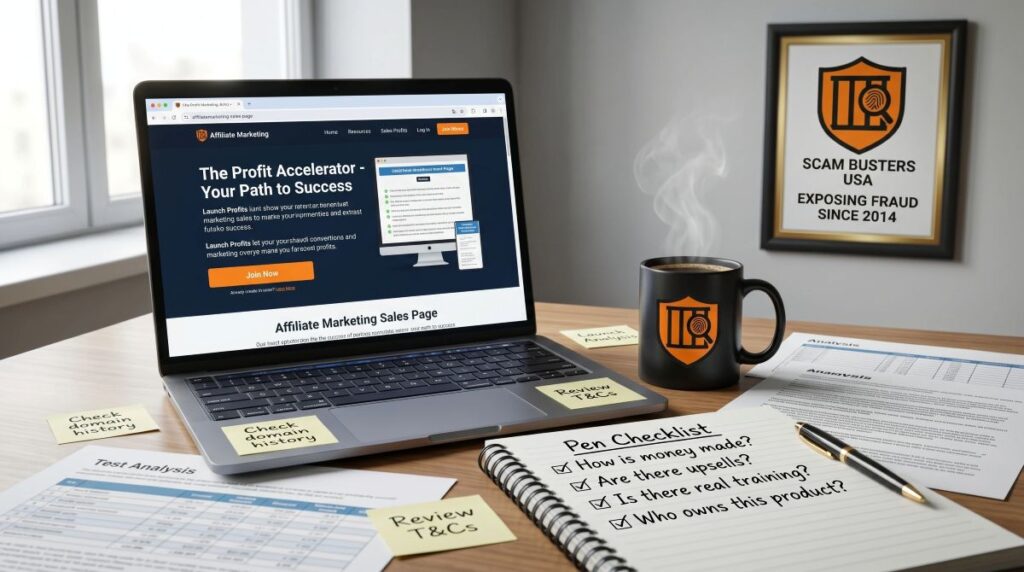
Step 1 — Understand How Money Is Actually Made
Before you promote anything, you should be able to clearly answer one question:
How does this business make money?
Not the marketing version.
The real version.
- Who is paying?
- What are they paying for?
- What value are they receiving?
If the answer is unclear—or if it relies heavily on recruiting other people into the same system—that’s a problem.
A legitimate business model should make sense without needing hype to explain it.
? If you’re unsure how affiliate marketing is supposed to work in the first place, start here:
Does Affiliate Marketing Really Work
Step 2 — Analyze The Funnel (Not Just The Front-End)
Most offers look clean and simple on the surface.
That’s intentional.
What you don’t see right away is what happens after someone signs up.
This is where a lot of programs make their real money.
Things to look for:
- Immediate upsells after purchase
- “Unlock the real system” messaging
- Multiple upgrade levels required to succeed
- Pressure to spend more before seeing results
This doesn’t automatically mean something is a scam.
But it does tell you how the system is structured.
And that matters.
? I’ve gone through this exact type of setup before, and I break it down here:
Step 3 — Look For Real Training (Not Just Sales Material)
A lot of programs talk about training.
But when you actually get inside…
It’s mostly focused on selling the opportunity—not teaching you how to build anything real.
There’s a big difference between:
- Learning a skill
- And learning how to promote a system
One builds long-term value.
The other keeps you dependent.
? If you want to understand what real skill-building actually looks like, start here:
Essential Skills For Online Entrepreneurs
Step 4 — Check For Community & Support
This is something most people overlook—but it makes a huge difference.
Ask yourself:
- Is there real support available?
- Can you ask questions and get meaningful answers?
- Is there an active community—or just a help desk?
When things don’t work (and they won’t always), having support matters.
Without it, you’re left trying to figure everything out on your own.
That’s where most people get stuck.
Step 5 — Test The Experience Yourself (Before Promoting)
This is the one that gets skipped the most.
People sign up for something…
And immediately start promoting it without ever going through the full experience.
That’s risky.
Because what you see on the front-end is rarely the full picture.
If you’re going to recommend something, you should know:
- What happens after sign-up
- What the user actually experiences
- Whether the training delivers on what was promised
That doesn’t mean you need to invest thousands of dollars into every program.
But you should understand enough to make an informed decision.
Because at the end of the day…
If you wouldn’t go through the process yourself—
You shouldn’t be sending someone else into it.
What A Legitimate Affiliate Platform Should Look Like
By now, you’ve seen what to look for—and what to avoid.
So the next logical question is:
What does a legitimate affiliate platform actually look like?
Not based on marketing…
But based on how it’s structured behind the scenes.
Because once you understand that, it becomes much easier to filter out everything that doesn’t belong.
A legitimate platform should do a few key things well.
First, it should clearly teach you how the business works.
Not just how to promote the system—but how affiliate marketing actually functions from the ground up.
Second, it should focus on building real skills.
Things like:
- Creating content
- Understanding traffic
- Learning how to help people solve problems
Not shortcuts.
Not “done-for-you” systems.
And not constant upgrades just to move forward.
Third, the structure should make sense.
You shouldn’t feel like you’re being pushed into the next purchase just to unlock what you were originally promised.
You should be able to learn, apply, and grow—without pressure.
And finally, there should be real support.
Not just a help desk…
But an actual community where you can ask questions, get feedback, and learn from people who are going through the same process.
That combination is rare.
Most platforms focus on selling the opportunity.
Very few focus on helping you build something real.
That’s why this matters.
Because once you understand what to look for, you start to recognize the difference immediately.
You stop chasing what looks good…
And start paying attention to what actually works.
? If you want to see a full breakdown of the platform I’ve personally been using since 2014, you can read my review here:
This is the kind of structure I look for before recommending anything.
Take your time with it.
The goal isn’t to jump into something new.
It’s to understand what a real platform looks like—so you can make a decision based on clarity, not hype.
Red Flags That Should Immediately Stop You From Promoting
After going through hundreds of these funnels over the past decade, the patterns become hard to ignore.
Different names. Different branding. Same structure underneath.
Once you see it, you stop chasing opportunities—and start evaluating them.
By now, you’ve got a framework to evaluate offers.
But sometimes, you don’t need to go through every step.
Because certain red flags are strong enough on their own to tell you:
This is not something you should be promoting.
Here are a few that should make you stop immediately.
Unrealistic Income Claims
If an offer is built around promises like:
- “Make $500 per day”
- “Quit your job in 30 days”
- “No experience needed”
That’s a problem.
Real businesses don’t guarantee income.
They require time, effort, and skill.
If the focus is on fast money instead of real value, that’s your first warning sign.
Pressure To Act Immediately
You’ll see this everywhere:
- “Limited time only”
- “Only a few spots left”
- “Act now before it’s too late”
These are designed to rush your decision.
And when you’re rushed, you don’t evaluate—you react.
A legitimate opportunity doesn’t need pressure to convert.
Upsells Before Real Value
This is one of the biggest ones.
If you’re being asked to upgrade before you’ve even received anything meaningful, take a step back.
Common signs:
- Low entry price → immediate upsell
- “Unlock the real system” messaging
- Multiple levels required to succeed
This doesn’t always mean it’s a scam…
But it does tell you how the system is built.
? I’ve personally gone through this exact type of funnel, and I documented everything here:
The Invisible Affiliate System Review: Why You Should Think Twice Before Joining
No Clear Explanation Of How Money Is Made
If you can’t clearly explain:
- Where the money comes from
- Who the customer is
- What value is being provided
You shouldn’t be promoting it.
If the business model only makes sense after multiple videos, upsells, or vague explanations…
That’s a problem.
Overuse Of Buzzwords
Be cautious of offers that rely heavily on terms like:
- AI automation
- Passive income
- Done-for-you system
- Secret method
These aren’t always bad on their own.
But when they’re used to avoid explaining how something actually works…
That’s when they become a red flag.
No Real Support Or Community
Ask yourself:
If something doesn’t work… who helps you?
Many programs:
- Have little to no support
- Offer generic responses
- Or disappear after purchase
That leaves you stuck—and usually starting over.
The goal isn’t to make you skeptical of everything.
It’s to help you recognize patterns.
Because once you see these signs consistently…
You don’t fall for them anymore.
And more importantly—
You stop putting other people in front of them.
How This Connects Back To Building A Real Online Business
At this point, you’ve probably realized something important.
Verifying an offer isn’t just about avoiding scams.
It’s about building something real.
Because every decision you make—what you promote, what you recommend, what you attach your name to—shapes how people see you.
And in this space, trust is everything.
You can have the best strategy…
The best tools…
The best traffic…
But if people don’t trust what you’re recommending, none of that matters.
That’s why this step is so important.
It forces you to slow down.
To think through what you’re doing.
And to build on a foundation that actually makes sense.
? If you want to see how this fits into the bigger picture, I break that down here:
How To Make Money Online Safely (Without Getting Scammed)
That’s where everything connects.
This article shows you how to evaluate offers.
That guide shows you how to build the right path.
Put the two together, and things start to get a lot clearer.
You stop chasing every new opportunity that pops up…
And start focusing on what actually works.
That’s where progress comes from.
Not from jumping between systems.
But from understanding what you’re doing—and committing to it.
Take your time with this.
You don’t need to figure everything out today.
You just need to make better decisions than you did yesterday.
And that’s exactly what this process helps you do.
Frequently Asked Questions
Should I promote an affiliate offer I haven’t tried?
No—or at the very least, you should understand exactly how it works before promoting it.
If you don’t know what happens after someone signs up, you’re taking a risk with your reputation. The more you understand the full experience, the better decisions you’ll make.
How do I know if an affiliate offer is legitimate?
Start by looking at how the business actually works.
If you can clearly explain where the money comes from, what the customer is getting, and what value is being provided, that’s a good sign.
If those answers are unclear—or hidden behind hype—that’s a red flag.
What’s the biggest mistake beginners make with affiliate marketing?
Most people choose what to promote based on income claims instead of structure.
They focus on commissions and hype instead of understanding the business behind the offer.
That usually leads to wasted time and poor results.
Do I need to buy a product before promoting it?
Not always—but you should understand the full process.
That includes:
- What happens after sign-up
- What the training or product actually includes
- Whether it delivers on what’s promised
If you wouldn’t go through it yourself, you shouldn’t recommend it.
What’s the safest way to start affiliate marketing?
Focus on learning real skills and understanding how the business works.
Avoid platforms that rely on hype, pressure, or constant upsells.
If you’re not sure where to start, go back to the foundation here:
How To Make Money Online Safely (Without Getting Scammed)
About the Author

Jason Taft, founder of Scam Busters USA
I’m not a guru, and I’m not here to sell hype.
I’m someone who’s clicked the ads, tested the systems, and learned firsthand how misleading the make money online space can be.
Some things worked.
A lot didn’t.
That’s exactly why I created Scam Busters USA.
To break down what’s real, what’s not, and help people avoid the same mistakes I made starting out.
Everything I share is based on real experience—not theory.
Affiliate Disclaimer: Some links on this page may be affiliate links, which means I may earn a commission if you decide to make a purchase through them. This comes at no additional cost to you. I only recommend platforms and products I personally use, trust, or believe may genuinely help my readers.
There are so many programs online that look attractive at first, but not all of them deliver real value. I like the focus on doing proper research before promoting anything, since building trust with an audience matters more than quick commissions. Do you think checking customer reviews is the most reliable first step, or are there other factors that matter even more?
Monica, that’s a great question, and I’m glad you picked up on the trust piece, because that’s really what this all comes down to long-term.
Customer reviews are definitely a good starting point, but I wouldn’t call them the most reliable on their own.
The problem is, reviews can be:
Cherry-picked on sales pages
Overly emotional (both positive and negative)
Or in some cases… not even real
So I treat reviews more like a signal, not a final decision.
If I had to prioritize, here’s what I personally look at before I trust any program:
1. Can I clearly see the business model?
If I can’t explain in simple terms how the program actually makes money, that’s a problem. Legitimate offers are transparent about this.
2. What happens after I join?
A lot of funnels look great upfront, but the real experience is buried behind upsells. I always try to find out what you’re really getting at the entry level.
3. Who’s behind it?
Real people with a track record and reputation matter. If ownership is vague or hidden, that’s a red flag for me.
4. Is it teaching skills or just selling a dream?
This is a big one. If the focus is mostly on income claims and lifestyle, but not on actual skills you’ll build, it usually doesn’t hold up.
Then I’ll circle back to reviews and see if they line up with what I’m already seeing.
You nailed it though, protecting your audience’s trust is worth way more than any quick commission. Once that trust is gone, it’s almost impossible to get back.
Out of curiosity, have you come across any programs recently that made you stop and question them?