
Last Updated 05/02/2026
If you are researching The Invisible Affiliate System, you are probably trying to figure out whether Adam Cherrington’s program is a legitimate way to build an affiliate marketing business or just another high-ticket funnel wrapped in big income claims.
That is a fair question.
Affiliate marketing itself is not a scam. It is a real business model used by major companies every day. The problem is that the “make money online” space is full of programs that take a legitimate business model, dress it up as a shortcut, and then sell it through aggressive webinars, emotional income claims, and expensive upsells.
That is where The Invisible Affiliate System raises serious concerns.
After looking at the way this offer is structured, the related programs connected to Adam Cherrington, and the complaints surrounding the funnel, I would not recommend The Invisible Affiliate System for beginners.
It may provide some real training, but the bigger issue is the business model being sold. This appears to be heavily tied to paid traffic, high-ticket coaching, and additional costs most beginners are not prepared for. If you are brand new, that can put you in a dangerous position before you even understand how affiliate marketing really works.
In this review, I’ll break down what The Invisible Affiliate System is, who Adam Cherrington is, the red flags I found, how it compares to other funnel-style programs I’ve reviewed, and why I believe beginners are better off learning affiliate marketing through a more transparent path.
The Invisible Affiliate System is a high-ticket affiliate marketing program promoted by Adam Cherrington that claims you can make money using paid traffic and simple funnels—but based on my research and experience, there are some serious red flags you need to understand before joining.
Quick Verdict (TL;DR)
- ✔ Is it legit? → Yes, but not as simple as advertised
- ❌ Beginner friendly? → No
- ⚠️ Risk level: High (paid ads + upsells)
- 💰 Real cost: Often much higher than the entry price
- 💡 Better approach: Build long-term assets instead of relying on paid traffic
Quick Verdict
The Invisible Affiliate System is not something I recommend for beginners.
While it may not be a scam in the strict legal sense, it has too many warning signs for me to call it a safe starting point. The biggest issues are the paid-ad-heavy model, vague pricing, aggressive upsells, refund complaints, and the pattern of similar offers being promoted under different names.
That matters because beginners usually do not fail at affiliate marketing because they are lazy. They fail because they are sold the wrong starting point.
Paid ads can work, but they are not forgiving. If you do not understand offers, funnels, conversion rates, tracking, compliance, and testing, you can lose money very quickly. That is why I believe most beginners should learn how affiliate marketing works first before risking thousands of dollars on traffic or coaching packages.
If you want the short version, here it is:
The Invisible Affiliate System may be real, but I do not believe it is beginner-friendly.
This post may contain affiliate links. If you choose to purchase through one of my links, I may earn a commission at no extra cost to you. I only recommend programs I trust and believe can actually help you build something real.
What Is The Invisible Affiliate System?
The Invisible Affiliate System is marketed as a way to make money online through affiliate marketing without building a personal brand, creating content, or showing your face.
Instead of focusing on long-term asset building like websites or YouTube channels, the system is built around a much faster approach:
- Choose an affiliate offer
- Set up a simple landing page or funnel
- Drive traffic using paid ads
- Send visitors directly to an offer or into an email sequence
On the surface, that might sound appealing—especially if you are new and looking for a way to skip the learning curve.
But here is the reality.
This is not a new or “secret” method. It is a paid traffic affiliate model that has been around for years. You will see the same structure repeated across multiple programs, often under different names, different branding, and slightly different promises.
That is why it is important to understand what you are actually buying.
You are not buying a unique system.
You are buying into a funnel-based training program that teaches you how to run traffic to offers, usually while being encouraged to upgrade into higher-ticket coaching or “done-for-you” solutions.
The model itself is not illegal, and in the hands of an experienced marketer, it can work.
But for beginners, it comes with a steep learning curve and a very real financial risk—especially when the full cost and required skill level are not made clear upfront.
How The Invisible Affiliate System Actually Works
Before you ever see the full system, you’re first pushed through a lead capture page like this:
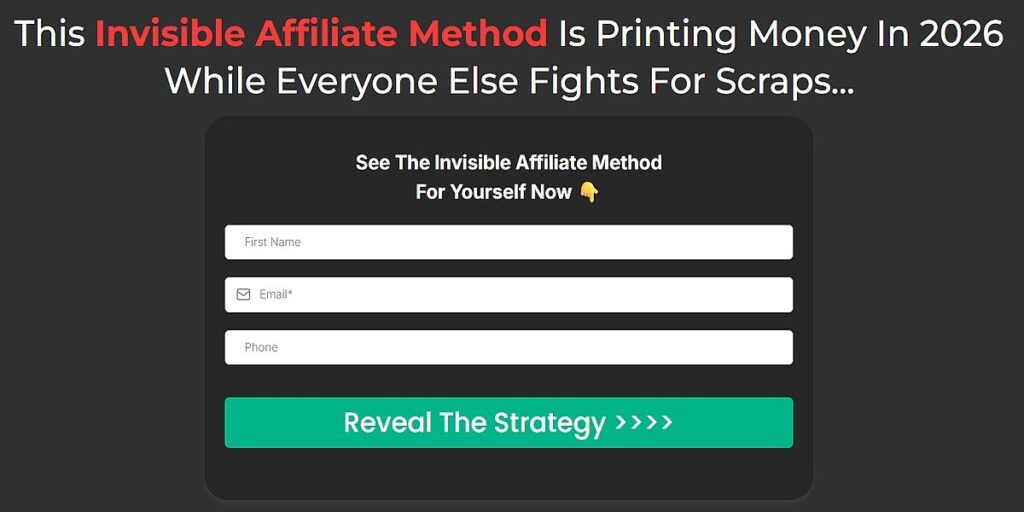
This is where the process really begins…
To really understand whether this system is worth your time and money, you need to look past the sales pitch and focus on how it actually works behind the scenes.
Because once you break it down, it becomes much easier to see both the opportunity and the risk.
At its core, The Invisible Affiliate System follows a fairly standard paid traffic funnel model.
Here’s what that typically looks like:
Step 1: You Enter the Funnel
Most people first encounter The Invisible Affiliate System through ads.
These can show up on:
- YouTube
- Native ad platforms
- Email promotions
The messaging is usually consistent:
- “No experience needed”
- “No content required”
- “No need to show your face”
- “Make money with a simple system”
This is designed to lower resistance and attract beginners who are looking for a faster path.
Step 2: Webinar or Sales Presentation
Once you click through, you are typically taken to a webinar or video presentation.
This is where the real selling begins.
The presentation usually:
- Builds up the idea that affiliate marketing is the opportunity
- Positions this system as the missing piece
- Shows income examples or testimonials
- Introduces a structured “blueprint” (often framed as a unique system)
At this stage, the goal is not to teach you everything.
The goal is to move you to the next step.
Step 3: Entry-Level Offer
After the presentation, you are offered an entry product.
This is usually positioned as:
- A “starter system”
- A “kickstart package”
- Or a limited-time opportunity
The price point is often lower than what comes next, which makes it easier to justify.
But this is where many people misunderstand what they are buying.
This is not the full system.
It is the front end of a larger funnel.
Step 4: The Call (Where Things Shift)
This is also the point where I start paying very close attention, because I’ve been through enough of these funnels over the years to recognize the pattern.
I’ve personally seen how these “strategy calls” play out. They are rarely about helping you understand the system. More often, they are designed to qualify you and move you into a higher-ticket offer.
That doesn’t automatically make it a scam, but it does change what you are really getting into.
You are no longer just buying a course. You are stepping into a sales funnel where the real goal is to move you up the ladder.
Shortly after joining, many users report being contacted for a call.
This is usually framed as:
- A strategy session
- A coaching call
- Or a success consultation
But based on what I’ve seen across multiple programs like this, this is often where the real selling happens.
Instead of a true coaching session, the conversation can shift toward:
- Higher-ticket coaching programs
- Done-for-you funnels
- Traffic packages
- Additional “essential” tools
This is where costs can increase quickly.
Step 5: Paid Traffic Becomes the Core Strategy
The system itself is heavily tied to paid traffic.
Instead of building long-term assets like:
- Websites
- Blog content
- YouTube channels
You are encouraged to:
- Run ads
- Test offers
- Optimize funnels
- Scale what works
Now to be clear — this model can work.
But it requires:
- Budget for testing
- Understanding of ad platforms
- Ability to analyze data
- Patience to lose money before finding winners
And this is where many beginners run into trouble.
Step 6: Ongoing Costs and Scaling Pressure
Even if you get everything set up, the work does not stop.
With paid traffic:
- You need to continuously fund ads
- Campaigns can stop working overnight
- Platforms change rules and pricing
- Competition increases costs
Unlike asset-based models, once you stop paying for traffic, your income typically stops as well.
I’ve reviewed enough of these systems in the last 14 plus years to know that most beginners don’t fail because they are unwilling to work. They fail because they are dropped into a model that assumes skills they don’t yet have.
That’s the part that rarely gets explained upfront.
Why This Matters
None of this is inherently “wrong.”
But it is very different from how affiliate marketing is often presented in the sales pitch.
Instead of a simple, beginner-friendly system, what you are really stepping into is:
- A paid traffic business model
- With ongoing costs
- And a steep learning curve
If you don’t fully understand that going in, it becomes very easy to get overwhelmed or spend more than you planned trying to make it work.
That’s why learning how to break down offers like this before jumping in is so important.
If you want a deeper look at how to evaluate these types of systems step-by-step, I break that down in How To Verify Affiliate Marketing Offers Before You Promote Them.
Who Is Adam Cherrington?
If you’ve been researching affiliate marketing programs for any amount of time, there’s a good chance you’ve come across the name Adam Cherrington.
He is the marketer most closely associated with The Invisible Affiliate System, along with other offers that follow a very similar structure.
On the surface, his story follows a familiar path.
He presents himself as someone who struggled early on, figured out how to make affiliate marketing work, and now teaches others how to do the same. That kind of story is powerful, especially for beginners who are looking for a way out of a job they don’t enjoy or a financial situation they want to improve.
And to be fair, there is nothing wrong with that.
Many legitimate marketers got started that exact same way.
But where things start to shift is when you look at how the business is actually built.
Instead of seeing a strong track record of long-term affiliate assets—things like authority websites, content platforms, or case studies showing consistent organic growth—you’ll notice that most of the visibility around Adam Cherrington is tied to funnel-based programs.
That matters.
Because it suggests the primary focus is not just affiliate marketing itself, but selling systems that teach affiliate marketing.
The Pattern Behind the Programs
After reviewing multiple offers in this space, you start to recognize a repeatable structure:
- A webinar or presentation that builds excitement
- A simplified “blueprint” or system
- A lower-ticket entry point
- Followed by higher-ticket coaching or upgrades
You’ll see variations of this across a lot of programs, not just this one.
Where the Concern Comes In
This doesn’t automatically make someone illegitimate.
But it does raise an important question:
Are you being taught how to build a business…
or being guided into a system that primarily generates revenue through upsells?
That distinction is everything, especially for beginners.
Because if the main path to success inside the program involves:
- Upgrading
- Spending more on traffic
- Or relying on additional services
Then you’re not just learning a skill.
You’re stepping into a model that assumes you already have:
- Budget
- Experience
- And a tolerance for risk
My Take Based on Experience
This is where I want to be clear.
I’m not saying Adam Cherrington is a scammer hiding behind a fake identity.
What I am saying is this:
After looking at how these programs are structured, and after seeing how similar funnels operate across this space, this is not the type of setup I would recommend to someone who is just getting started.
There’s a big difference between learning affiliate marketing…
…and being dropped into a funnel that expects you to already understand how to make it work.
Same System, Different Names (The Rebrand Pattern)
One thing that needs to be addressed directly is the way this system shows up under different names.
At the time of writing this review, The Invisible Affiliate System is not the only offer connected to this funnel.
You’ll also come across programs like Adam’s Method, (another Adam Cherrington funnel) and something called Hidden Traffic Affiliate Formula. On the surface, they appear to be different opportunities with different angles and branding.
But when you look closer, the structure is nearly identical.
The same style of presentation.
The same messaging around “simple systems” and “done-for-you results.”
And most importantly, the same underlying funnel.
This is not unusual in the make money online space.
When a program starts to pick up negative attention or simply runs its course, it is often repackaged with:
- A new name
- A new landing page
- Slightly different marketing angles
But the core system stays the same.
Where This Becomes a Problem
For beginners, this can be confusing.
You might think you’re researching multiple different programs, when in reality you’re looking at different entry points into the same funnel.
That matters because it gives the impression of choice…
when really, you are being funneled into a single ecosystem.
My Take Based on What I’ve Seen
This is something I’ve personally seen play out across multiple reviews on Scam Busters USA.
Different names.
Different branding.
Same outcome.
And it usually leads to the same structure:
- Entry product
- Upsell path
- Paid traffic focus
- Continued spending to “unlock” the real system
Again, that doesn’t automatically make something a scam.
But it does raise the level of caution.
Because when a system relies heavily on rebranding instead of long-term reputation, that tells you something about how it operates.
What You Should Take From This
If you take one thing from this section, it’s this:
Do not evaluate these programs based on the name alone.
Look at the structure behind them.
Because whether it’s called The Invisible Affiliate System, Adam’s Method, or something else entirely, the real question is always the same:
What are you actually being asked to do…
and how much is it really going to cost you to make it work?
How Much Does The Invisible Affiliate System Cost?
This is where things start to get a lot less clear—and a lot more important.
On the surface, The Invisible Affiliate System is presented as a relatively straightforward entry into affiliate marketing. But once you start looking past the front-end offer, the real cost becomes much harder to pin down.
And that’s exactly the problem.
The Entry Cost
Like many funnel-based programs, there is usually an initial price point designed to get you in the door.
This might be presented as:
- A starter system
- A limited-time offer
- Or a “kickstart” package
The price itself may not seem unreasonable at first.
But it’s important to understand what you are actually getting at this stage.
You are not buying the full system.
You are buying access to the front end of a larger funnel.
The Upsells (Where Costs Increase)
Based on customer reports and similar high-ticket funnels in this space, the total investment can go far beyond the initial entry price.
Some users report being pitched:
- Coaching programs ranging from a few thousand dollars to well over $10,000
- Additional tools, traffic packages, or “done-for-you” systems
- Ongoing costs tied to running paid ads
In some cases, the total investment can climb into the five-figure range when everything is added together.
Once you’re inside, this is where many users report the experience starts to change.
Instead of a complete, step-by-step system, you may be introduced to additional offers such as:
- Coaching programs
- Done-for-you funnels
- Traffic packages
- Advanced training tiers
Each of these can come with its own price tag.
And this is where the total investment can increase quickly.
The Real Cost Most Beginners Miss
This is the part that is rarely emphasized upfront.
The model itself is heavily tied to paid traffic.
That means you are not just paying for the program…
You are also expected to fund:
- Ad campaigns
- Testing budgets
- Ongoing traffic
And that adds up fast.
Even a modest testing budget can run into hundreds—or thousands—of dollars before you find something that works.
Why This Matters
This is not about saying “don’t spend money.”
Every business requires some level of investment.
The issue is transparency.
If you don’t have a clear picture of:
- The full cost
- The ongoing expenses
- And the skill level required
Then it becomes very easy to get in over your head before you even realize what you’ve committed to.
My Take
From everything I’ve seen, this is not a low-cost beginner system.
It is a model that can require:
- Continued spending
- Ongoing testing
- And a tolerance for financial risk
And if that’s not made clear upfront, it creates a gap between expectation and reality.
That gap is where most of the frustration comes from.
Red Flags I Found (What You Need To Know Before Joining)
After breaking down how The Invisible Affiliate System works, the next step is looking at where the biggest problems tend to show up.
And this is where patterns start to become very clear.
Misleading Income Expectations
One of the biggest draws of this system is the idea that you can start generating income quickly without needing to build anything long-term.
That’s a powerful message.
But it also creates unrealistic expectations for beginners.
Affiliate marketing is not a shortcut business. It takes time to understand offers, traffic, conversions, and how everything works together. When a system is marketed as a faster, easier path, it often leaves out the part where most people struggle.
I’ve seen this same pattern across multiple programs, including $500/Day AI Funnel, where the focus is on the outcome rather than the process required to get there.
Heavy Reliance on Paid Ads
This is one of the most important red flags, especially for beginners.
The system is built around paid traffic.
That means you are expected to:
- Spend money testing ads
- Optimize campaigns
- Scale what works
That can work—but only if you know what you’re doing.
If you don’t, it becomes very easy to lose money before you ever see a return.
This is something I’ve also seen in my Freedom Blueprint Review, where paid traffic is positioned as the main driver of results without fully addressing the learning curve behind it.
High-Pressure Upsell Structure
The deeper you go into systems like this, the more the structure starts to look familiar.
You enter through a lower-ticket offer…
Then you are introduced to:
- Coaching upgrades
- Additional tools
- Done-for-you services
And each step is positioned as the “missing piece.”
This is not unique to this program.
I’ve seen the same approach in the Shadow Affiliate System, where the initial promise quickly leads into a series of additional offers that increase the total investment.
Lack of Transparency
Another issue that comes up consistently is how unclear the full picture is before you join.
You may not know:
- The true total cost
- The level of effort required
- The ongoing expenses tied to traffic
Until you are already inside the system.
That lack of transparency is where many people run into trouble, because they make decisions based on incomplete information.
Weak or Incomplete Training (What You Actually Get)
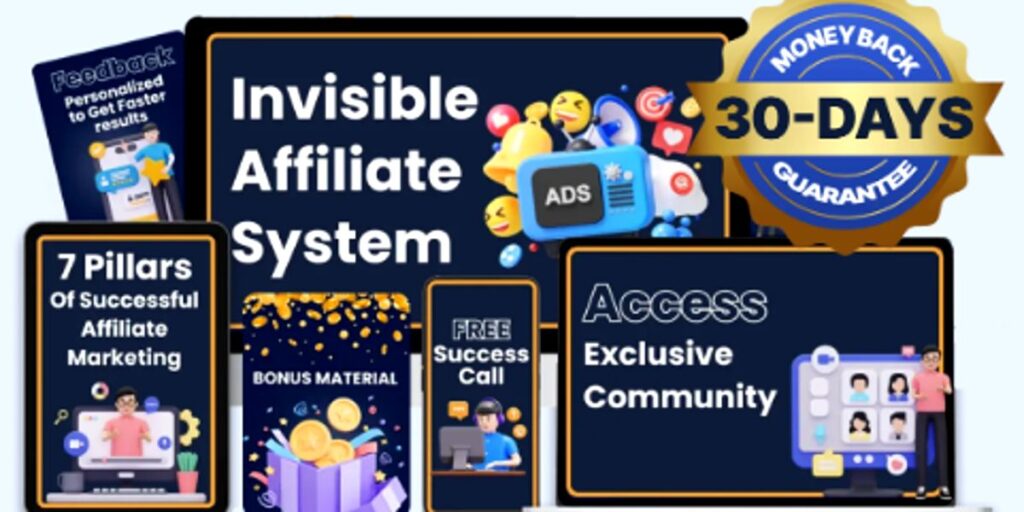
On the surface, the system is presented as a structured blueprint built around multiple “pillars”:
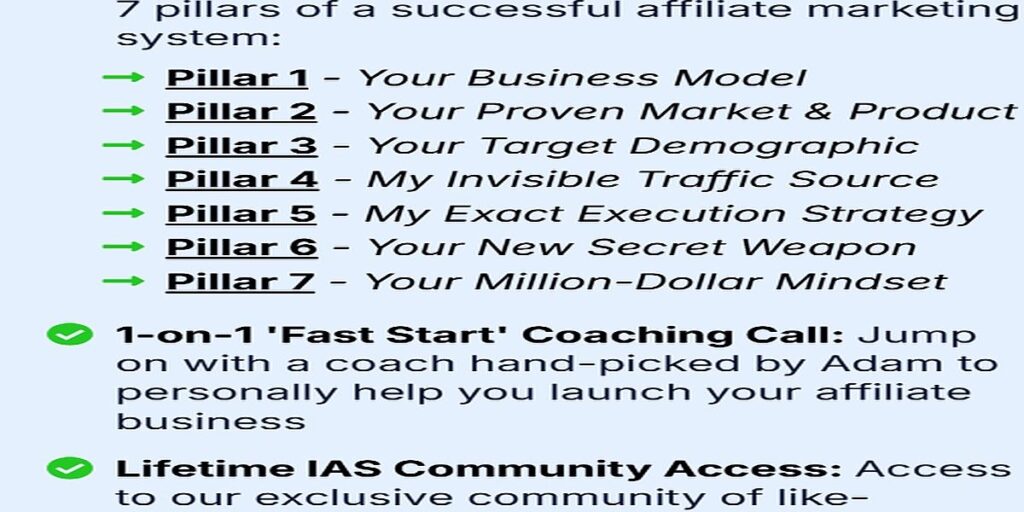
The issue isn’t the structure — it’s what’s actually delivered behind it.
This is one area where experiences can vary, but it’s worth mentioning.
Some users report that the training:
- Feels surface-level
- Lacks structure
- Does not fully walk beginners through the process
Instead, the focus shifts toward upgrading or accessing additional resources.
That’s not what most beginners are expecting when they invest in a system like this.
Coaching That Feels Like Sales
This ties directly into the upsell structure.
What is presented as “coaching” can sometimes feel more like a sales process.
Instead of helping you understand what you already purchased, the focus can shift toward:
- Upgrading
- Investing more
- Unlocking the next level
Again, that doesn’t mean every experience is the same.
But it is a pattern that shows up often enough to be worth paying attention to.
Refund Complaints
This is one of the more serious concerns.
While there may be a stated refund policy, multiple reports suggest that:
- Refunds can be difficult to obtain
- Requests may be denied based on terms
- Communication can become slow or unresponsive
When you combine that with the potential cost of the program, it becomes a much bigger risk for anyone getting started.
Why These Red Flags Matter
None of these issues exist in isolation.
When you start to see multiple red flags line up—income expectations, paid traffic, upsells, lack of transparency, and refund complaints—it changes how you should evaluate the program.
Individually, some of these could be manageable.
Together, they create a much higher-risk environment for beginners.
What Real Customers Are Saying (Reviews & Complaints)
One of the best ways to evaluate a program like this is to look beyond the sales page and see what actual users are saying after they’ve gone through it.
And when you do that, a pattern starts to show up.
Across multiple platforms—including Reddit discussions, Better Business Bureau complaints, and independent review forums—the same themes come up repeatedly.
Common Positive Feedback
To be fair, not every review is negative.
Some users mention:
- The idea behind the system makes sense
- The structure is easy to follow at a high level
- The concept of affiliate marketing is explained clearly
And in some cases, people with prior experience report small wins.
Where the Complaints Start to Stack Up
The bigger issue is consistency.
When you look across different platforms, the same concerns keep appearing:
- Costs increasing beyond expectations
- Pressure to upgrade into higher-ticket programs
- Difficulty getting clear answers after joining
- Refund requests becoming complicated or denied
- A gap between what was promised and what was delivered
For example, you can see similar concerns being discussed in this Reddit thread where users question whether these types of “guru-style” systems follow a predictable upsell pattern:
👉 https://www.reddit.com/r/Scams/comments/1kupjcb/is_this_a_typical_entrepreneurguru_scam/
You’ll also find complaint patterns tied to the business entity itself through Better Business Bureau records:
👉 https://www.bbb.org/us/tx/plano/profile/affiliate-marketing/cherrington-media-llc-0875-91331048/complaints?page=2
Why This Matters
Every program will have some negative reviews.
That’s normal.
But when you start seeing the same issues come up across multiple platforms, from different users who have no connection to each other, it becomes much harder to ignore.
That’s usually a sign that the problem is not isolated—it’s built into how the system operates.
My Take
This lines up with what we’ve already broken down in this review.
The structure, the upsell model, and the reliance on paid traffic all create a situation where beginners are more likely to struggle than succeed.
And when expectations are set high, that gap between promise and reality tends to show up in the reviews.
Pros and Cons of The Invisible Affiliate System
Every program has strengths and weaknesses. The key is understanding whether the overall structure actually sets you up for success.
Here’s how The Invisible Affiliate System breaks down based on everything we’ve covered.
Pros
- Introduces the concept of affiliate marketing
- Structured around a clear funnel model
- May work for experienced marketers who understand paid traffic
- Professional-looking presentation and branding
Cons
- Relies heavily on paid ads, which can be risky for beginners
- True cost is unclear upfront and can increase significantly
- High-pressure upsell structure
- Limited transparency before joining
- Reported issues with support and coaching quality
- Refund complaints across multiple platforms
- Similar systems promoted under different names
A Better Alternative (If You’re Starting From Scratch)
If you’ve made it this far, you’re probably already seeing the bigger picture.
The issue is not affiliate marketing itself.
The issue is where you start.
Most beginners don’t fail because they lack motivation. They fail because they are dropped into a model that assumes skills they haven’t learned yet—especially when it comes to paid traffic, funnels, and scaling.
That’s why I recommend starting with a platform that focuses on building the fundamentals first.
If you want a full breakdown of how this actually works (and why I’ve been using it since 2014), take a look at this:
That will give you a deeper look at the platform, how it works, and why I’ve been using it since 2014.
Why This Approach Makes More Sense
Instead of relying on paid ads from day one, this approach focuses on:
- Building your own website
- Learning how to create content that ranks
- Understanding how to choose offers properly
- Generating traffic without paying for every click
That means:
- Lower risk
- More control
- And a business that doesn’t disappear the moment you stop spending
If You Want To See It For Yourself
If you’re serious about building something long-term, take a look at the platform I’ve been using.
Final Verdict: Is The Invisible Affiliate System Worth It?
The Invisible Affiliate System is not something I would recommend for beginners.
While it may not be a scam in the strict legal sense, it carries too many risks to be considered a safe starting point. The reliance on paid traffic, the upsell structure, the lack of clear pricing, and the number of complaints all point to a system that is better suited for experienced marketers—not someone just getting started.
The biggest issue is not whether it “works.”
It’s whether it’s the right place to begin.
And for most people, it isn’t.
About the Author

Hi, I’m Jason Taft, the founder of Scam Busters USA.
After years of getting burned by make money online programs that promised everything and delivered very little, I made it a mission to break down these systems and show people what’s really going on behind the scenes.
Everything on this site is built around one goal:
Helping you avoid the traps I fell into and find a path that actually makes sense.
Have You Tried The Invisible Affiliate System?
If you’ve had any experience with this program—good or bad—drop it in the comments.
Your input could help someone else avoid making a costly mistake.
Visibility isn’t just about being seen—it’s about being real. When systems promise abundance but operate in shadows, I pause. As a woman who builds with intention and resonance, I know that true wealth flows from clarity, not illusion. Thank you for this honest review—it’s a reminder to trust our inner compass over flashy claims
That’s beautifully said. I think you nailed it, real wealth, in business or life, comes from clarity and honesty, not smoke and mirrors. The flashy stuff might grab attention, but it never lasts. Thanks for bringing that deeper perspective… it’s a great reminder for me too.
Jason
Interesting review! I’d heard of the Invisible Affiliate System through some ads but hadn’t looked into it much. Your headline alone makes me wary—did the sales page make any bold income claims or hide any upsells once you sign up? I always wonder what they’re teaching that isn’t already covered in more transparent programs or free training on YouTube. If you’ve dug into the materials, are there any actionable tips or is it mostly hype? The price point also seems steep from what I’ve heard; was there a realistic refund policy? Thanks for doing the research—curious to know if there are more ethical alternatives you’d recommend for beginners.
Great questions! You picked up on the exact concerns I had when I first looked into the Invisible Affiliate System. The sales page definitely leans on bold income promises, but once inside, it’s mostly surface-level training with heavy upsells lurking in the background. That’s what makes it tough, there aren’t really any new strategies you couldn’t already find on YouTube or from more transparent programs.
As for actionable tips, there are a few basics covered, but nothing that justifies the steep price tag. The refund policy also had some fine print that made it less beginner-friendly than it appears upfront.
If you’re looking for a more ethical alternative, I always recommend starting with Wealthy Affiliate. It’s far more transparent, beginner-friendly, and has been around since 2005. What sets it apart is not just the training but the community, support, and the fact that you can build a real, long-term online business without being hit with endless upsells. It’s slower than the “overnight riches” hype, but it’s sustainable.
Thanks again for your thoughtful comment, it’s refreshing to see people asking the right questions before diving in.
Excellent work deconstructing this system. You’ve perfectly highlighted the common playbook of these schemes: vague promises, social proof manipulation, and a funnel designed to extract maximum money from recruits rather than focusing on real customer value. Your point about the lack of a clear, tangible product is key—it immediately shifts the model from affiliate marketing to what is essentially a pyramid scheme. Thanks for providing such a clear warning and educating people on what to look for.
Thank you for taking the time to share your thoughts, I really appreciate your insight. You’re absolutely right: these programs follow a predictable pattern built on hype, not value. The flashy income claims and recycled funnels are all designed to keep money circulating upward instead of empowering people to build something of their own.
Real affiliate marketing is about trust, transparency, and serving others with genuine solutions, not baiting them into endless upsells. That’s why I always stress the importance of education and ownership when building an online business.
I’m glad this breakdown helped shine some light on how these systems operate. The more we expose them, the fewer people fall into the trap.
Jason
Wealthy Affiliate and The Invisible Affiliate System represent two very different approaches to affiliate marketing. Wealthy Affiliate offers structured, up-to-date training, transparent pricing, genuine community support, and a realistic path to building long-term online income, making it beginner-friendly and low-risk. In contrast, The Invisible Affiliate System, promoted by Adam Cherrington, relies on flashy promises of quick income, aggressive high-ticket upsells, outdated or shallow training, unfulfilled coaching, and refund difficulties, leaving many users frustrated and financially drained. While affiliate marketing itself is legitimate, the key difference is that Wealthy Affiliate prioritizes skill-building and transparency, whereas the Invisible Affiliate System prioritizes profit extraction, making it a risky choice for newcomers seeking real results.
Keep up the good work!
Hi there,
Really appreciate you taking the time to leave this, and thank you for your patience while I’m catching up on comments from the last couple of days. The Thanksgiving holiday had me a little behind, but I’m back on track now.
You summed it up exactly right. The core difference between Wealthy Affiliate and systems like The Invisible Affiliate System comes down to intent and structure. One is built to teach you skills and help you build something real over time… the other is built to extract as much money as possible before people realize the model doesn’t match the marketing.
Flashy funnels and big promises pull beginners in fast, but they don’t build long-term income. Skill, consistency, and transparency do, and that’s why programs grounded in real training always outperform the hype-based ones in the long run.
Thanks again for stopping by and sharing your thoughts. I’m glad the review connected with you, and I’m here anytime if you want to dig deeper into anything.
— Jason
I’ve seen a lot of “make money online” programs that look polished but end up pushing upsells and pressure. This article explains those red flags in a clear way, especially the promises, coaching issues, and refund problems. It helps people protect themselves before spending money. Thanks for doing the research.
Thanks, AJ, I appreciate you taking the time to say that.
You’re right, a lot of these programs look polished on the surface, but once you’re inside, the pressure and upsells start showing up fast. That’s usually where people get caught off guard.
My goal with reviews like this is simply to slow things down and point out the warning signs before money changes hands. If it helped you see those red flags more clearly, then it was worth digging into.
Thanks again for reading and sharing your thoughts.
Thank you for the helpful review — this definitely raised some concerns for someone new to affiliate marketing. Since I’m just learning about how these systems work, could you explain who Adam Cherrington is in the context of this industry and what his real track record looks like? For example, does he have publicly verifiable cases where he built long-term affiliate income through the strategies he teaches, or is his reputation mostly tied to selling programs? Understanding whether his success is based on actual performance versus promotional claims would really help beginners decide how much weight to put on his training and promises.
Great question, and this is exactly the kind of thing beginners should be asking before trusting any training program.
Adam Cherrington is a marketer who operates under Cherrington Media and has sold several affiliate marketing training programs over the years, including offers commonly known as Adam’s Method, Invisible Affiliate System, and similar funnels. These programs typically focus on paid traffic strategies such as newsletter ads and alternative traffic sources and are sold through funnels and strategy calls rather than transparent public pricing pages.
As for his track record, there is no publicly verifiable, independently audited proof showing long-term affiliate income results tied directly to the methods he teaches. There are marketing screenshots and revenue claims shown in promotions, but these are not third-party verified business records or audited performance statements.
What is publicly verifiable is:
His business has received multiple complaints on consumer protection sites and the Better Business Bureau related to refund disputes, unmet expectations, and communication issues.
Independent reviewers consistently note that his programs are high-ticket, require significant additional ad spend, and are not beginner-friendly despite how they may be presented in marketing.
There are very few independently documented student success stories that can be verified outside of promotional testimonials.
That doesn’t automatically mean someone cannot make money using paid traffic strategies. It simply means beginners should understand that the reputation around Adam in this industry is tied more to selling high-ticket programs than to publicly documented proof of long-term affiliate businesses built from those methods.
For someone new to affiliate marketing, that distinction is important when deciding how much weight to put on promotional claims versus verifiable evidence.
Hope that helps add some clarity.
You covered a lot in there, Jason, and it lines up with what I’ve noticed for a while with these types of programs.
In my experience, anything that blends MMO with FOMO usually ends up being part of a funnel that leads to regret. The upsells and vague training you mentioned sound all too familiar.
Maybe I missed it, but did you ever identify what they actually teach beyond “affiliate marketing”? That’s such a broad term. I’d be more interested in the traffic side of things. Is it SEO, social, paid ads, solo ads, or something else entirely?
From the outside, it feels like these models often lean toward paid traffic, which gets expensive quickly and tends to benefit the creator more than the person learning. Is that basically what they’re teaching once you’re inside?
That’s a sharp observation, Robert—and you’re absolutely right to zero in on the traffic side, because that’s where these programs usually reveal what they really are.
From what I was able to uncover going through the funnel and member area, the training itself stays very high-level. They talk a lot about “affiliate marketing,” but when you look for how to actually build something sustainable, it gets pretty thin.
Here’s what stood out to me:
No real focus on SEO or organic traffic
There’s little to no step-by-step training on building a website, ranking content, or generating long-term traffic. That’s a red flag right there because SEO is one of the most sustainable ways to grow.
Heavy lean toward paid traffic (without mastering fundamentals)
You nailed it—there’s definitely an underlying push toward paid methods. But instead of teaching you how to properly test, track, and scale ads, it’s more like: “send traffic into this funnel and upgrade for better results.”
Vague, recycled concepts
A lot of what’s presented is surface-level stuff you can find for free. There’s no deep dive into audience building, niche authority, or creating your own assets.
Funnel-first, skills-second approach
The system is built around plugging you into their ecosystem, not teaching you how to build your own. That’s why so many people end up stuck in the upsell loop.
And your point about cost is spot on too—paid traffic without a solid foundation is basically just fueling someone else’s funnel with your wallet.
That’s really the core issue here:
It’s not that affiliate marketing doesn’t work—it absolutely does—but when the training skips the fundamentals and jumps straight to monetization tactics, it usually benefits the system owner far more than the beginner.
Appreciate you bringing that up, because honestly, that’s one of the most important questions people should be asking before joining anything like this.
You’ve done an excellent job breaking this down with clarity and balance, especially in separating the legitimacy of affiliate marketing from the shortcomings of certain programs. The consistent patterns you’ve highlighted particularly around upsells, transparency, and support are critical for beginners to understand before investing. I also appreciate how you grounded your perspective in both research and practical experience, which adds credibility. Overall, this is a well-informed and valuable analysis that helps readers make smarter, more confident decisions.
Hi Kavitha,
I really appreciate you taking the time to read through this and leave such a thoughtful comment.
You nailed the exact reason I put this review together—affiliate marketing itself is a legitimate business model, but the way some of these programs are structured can create a very misleading experience for beginners. That gap between what’s promised and what actually happens is where most people get tripped up.
The patterns you mentioned—upsells, lack of transparency, and limited support—are things I’ve seen repeated over and over again across different funnels. Once you recognize them, it becomes much easier to step back and make a clear, informed decision instead of reacting emotionally to the sales pitch.
At the end of the day, my goal is simple: help people avoid wasting time and money, and point them toward a path that actually teaches the fundamentals the right way.
Thanks again for your insight—it really adds value to the conversation and helps others who are reading through this.
— Jason
I absolutely hate upsells. Just when you think you have paid what you need to, you are hit with something else you need to complete the puzzle. In this case it is things like done for you websites, which you actually need to learn to do yourself if you every want success online. It doesn’t help somebody else handing them to you on a platter otherwise you never learn how to generate your own income online. That is why I love Wealthy Affiliate as they teach you what to do step by step to build your own online business as well as grow it. This is the best way to go if you want to be successful long term.
Hey Michel,
I’m right there with you on the upsells, that’s one of the biggest frustrations with programs like this.
It creates this constant feeling of “almost there,” where you think you’ve got what you need, only to find out there’s another piece behind another paywall. For a lot of people, that turns into a cycle instead of actual progress.
You also made a great point about done-for-you systems. On the surface, they sound appealing, especially for beginners, but like you said, if you don’t understand how things are built and why they work, it’s really hard to sustain anything long term.
That’s a big reason I stress learning the fundamentals. Once you understand how to build, create, and drive traffic yourself, you’re no longer dependent on someone else’s system; you actually own what you’re building.
Appreciate you sharing that perspective. It’s something a lot of people need to hear before jumping into these types of programs.
— Jason
This hit on something a lot of people don’t talk about enough: the emotional pressure used in these funnels. Once a program starts leaning on urgency and guilt instead of clear value, that’s usually a bad sign. I’ve seen similar tactics before, and they always seem aimed at people who are already desperate for a real solution.
That’s a sharp observation, and you’re absolutely right to call that out.
The moment a program starts leaning on urgency, guilt, or pressure instead of clear value, it’s no longer about helping the customer, it’s about pushing a decision.
And like you said, those tactics are rarely random.
They’re often aimed at people who:
Are frustrated
Haven’t had success yet
Are actively looking for a way out
That’s what makes it so effective, and also why it crosses the line.
Instead of saying:
“Here’s what this is, here’s what it takes, and here’s who it’s for…”
You’ll see things like:
“You’ll miss out if you don’t act now”
“This is your last chance”
“If you really wanted this, you’d commit today”
That shifts the decision from logic to emotion.
And once someone is making a decision from pressure instead of clarity, they’re far more likely to end up in something that doesn’t actually fit them.
That doesn’t mean every program with urgency is a scam, but it’s a major red flag, especially when it replaces transparency.
At the end of the day, a solid opportunity should be able to stand on its own without needing to rush or guilt someone into joining.
Appreciate you pointing that out, more people need to recognize that pattern before they get pulled into it.
Hi Jason,
Honestly, this is the first time I go to know the term “The Invisible Affiliate System”, the way you broke down The Invisible Affiliate System really helps, especially for beginners who might get pulled in by the polished marketing. I think a lot of people don’t realize that affiliate marketing itself is legit it’s just these overhyped programs that give it a bad name. It’s crazy how many “systems” promise quick results, but when you dig a little deeper, things don’t always add up.
I also agree with your point about avoiding shortcut-style approaches. From what I’ve learned so far, building something sustainable online actually takes time, testing, and proper guidance, not just plug-and-play promises. I appreciate you putting together such a detailed and honest review. It’s the kind of content people need before spending their hard-earned money.
Hi Shafna,
I really appreciate you taking the time to share this—and you’re absolutely right in what you said.
Affiliate marketing itself is 100% legit. The problem isn’t the business model… it’s the way some of these “systems” are packaged and sold. When everything is framed as fast money, done-for-you, or “invisible,” it sets completely unrealistic expectations—especially for beginners who are just trying to find their footing.
That’s why I wanted to break that down in this review. Once you look past the polished marketing, you start to see that there’s usually a gap between what’s promised and what it actually takes to succeed.
And you nailed the key point: there are no real shortcuts here.
Building something sustainable online takes:
time
consistency
learning real skills
and having the right guidance along the way
It’s not always exciting, but it does work when you stick with it.
My goal with these reviews is to help people slow down, think clearly, and avoid spending money on things that don’t line up with reality.
Really glad you found it helpful—and I appreciate you being part of the conversation here.
The Invisible Affiliate System Review: Why You Should Think Twice Before Joining caught my attention as I was surfing the internet for articles to read.
Being aware of the scams are just as important and maybe even more important than knowing the legitimate programs online.
Misleading promises I have experienced always leads to a scam online, I thank you for pointing out that this program is promising unrealistic expectations. Affiliate marketing is not a way to get wealthy in a short time, like anything it takes consistent and persistent work.
Thank you for the heads up,
Jeff
Jeff, I really appreciate you taking the time to share that.
You hit on something that a lot of people overlook — learning how to spot the red flags is just as important (if not more) than finding the right opportunities. Most people don’t fail because affiliate marketing doesn’t work… they fail because they were introduced to it the wrong way.
That “fast money” angle is where a lot of these systems lose credibility for me. Not because results aren’t possible, but because the expectations being set don’t match the reality of what it actually takes.
Like you said, consistency and persistence are the real drivers here. The people who treat this like a real business over time are the ones who eventually see results.
Appreciate you reading and sharing your experience — that kind of perspective helps other people avoid going down the same path.
I’ve come across a few programs like this before, and they always seem appealing at first, especially with the promises of quick results. But once you look deeper, there’s usually a lack of real transparency about how things actually work.
From my experience, anything that doesn’t clearly explain the process or relies heavily on hype is usually a red flag. It’s better to take time and research than rush into something that sounds too good to be true.
Have you found any specific signs that help quickly identify these types of programs before people invest their time or money?
Monica, you nailed it—that “initial appeal followed by a lack of transparency” pattern is exactly what I’ve seen over and over again with these types of programs.
To your question, yes—there are a few quick red flags I personally look for now that can save a lot of time (and money) upfront:
Vague explanations of how money is actually made
If they can’t clearly show what you’ll be doing day-to-day (beyond “set up funnels” or “use our system”), that’s a problem.
Income claims without real context
Screenshots of earnings with no explanation of traffic source, time invested, or expenses are a big warning sign.
Heavy focus on the lifestyle, not the work
If the sales page is more about cars, vacations, and “freedom” than actual skills or training, it’s usually hype-driven.
Upsell-driven structure
When the real “training” is locked behind multiple paywalls, that tells you the business model is selling the system—not building a sustainable business.
No clear ownership or control
If you’re essentially renting their funnels, pages, or system instead of building something you own, that’s a long-term risk.
For me, the biggest shift was asking one simple question before anything else:
“If I stopped paying today, would I still have a real business?”
If the answer is no, I walk away.
Appreciate you sharing your experience here—it’s comments like yours that help others slow down and think before jumping in.